‘The Book of Goose’ Redefines Female Friendship

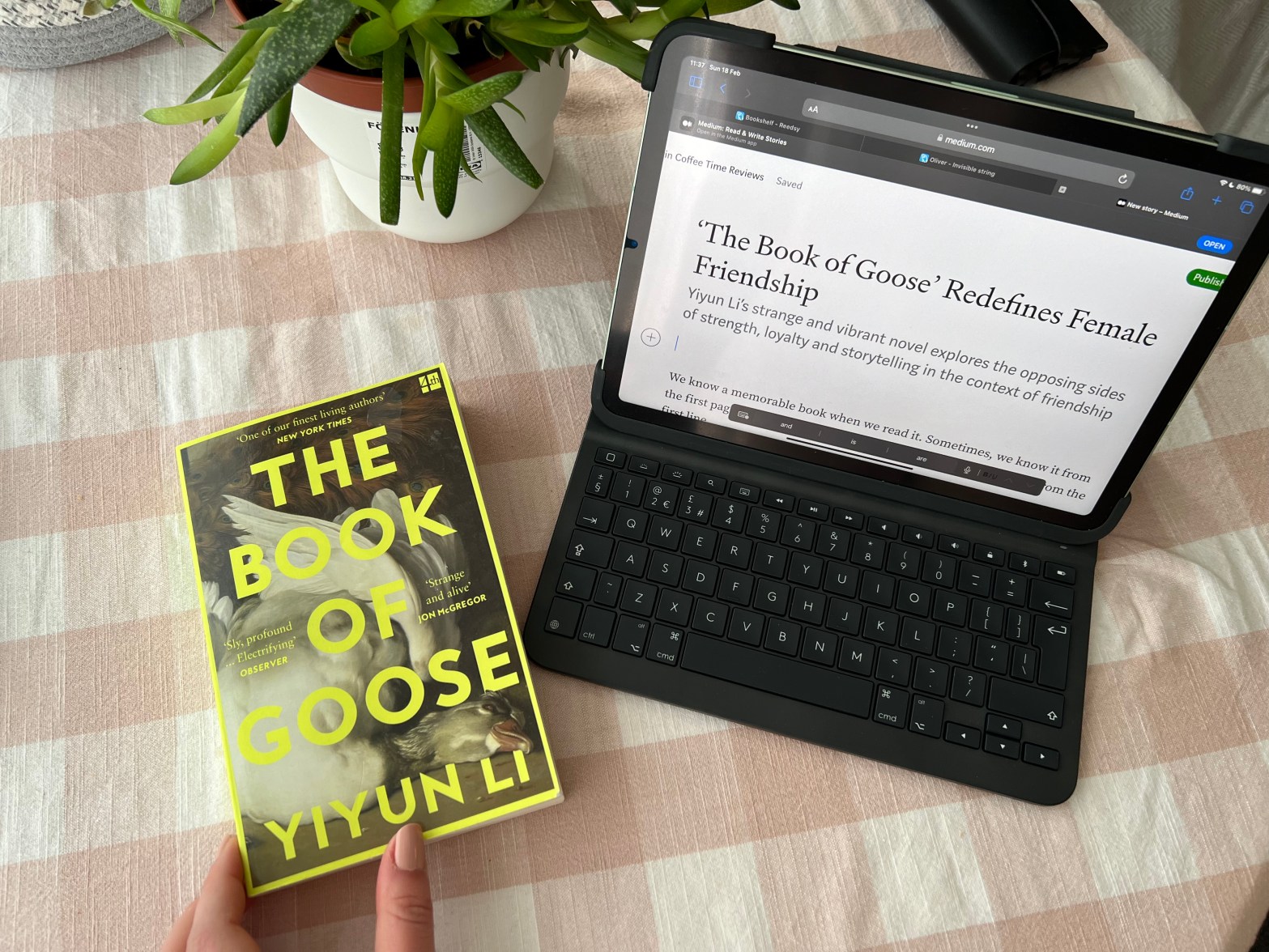
We know a memorable book when we read it. Sometimes, we know it from the first page. The Book of Goose by Yiyun Li is sure to stay with you from the first line.

I love a punchy first line. It sets the tone for the whole reading experience. Of course, with The Book of Goose, the title is in itself a whole thing to decipher. Going in, you have no idea what to expect. But a book that starts with such a first line can do one of two things: intrigue you or confuse you even further. This is how it starts:

You cannot cut an apple with an apple. You cannot cut an orange with an orange.

The Book of Goose, Yiyun Li

As you read on, you find out what this line means. It’s about contrast in human connection. The Book of Goose, as per its blurb, follows two best friends, Agnès and Fabienne, through their childhood and teens in the French countryside post-World War II. 

The chapters are short, so it feels like popcorn-reading. But it is so profound, strange and moving, that it feels almost wrong to turn the pages quite so quickly.

Agnès is our narrator and she tells the story in retrospect, once she finds out that Fabienne has died in childbirth at 27, a fate shared by her eldest sister back when the girls were very young. 

Stories are at the heart of their friendship. We follow the story of Fabienne’s unruly attitude to all living things and her wild imagination, the two sources of Agnès’s inexplicable fame. Because, as we find out early on, Fabienne made Agnès famous when they were still teenagers. I won’t divulge how. 

The role of Fabienne pulling the strings and Agnès playing along makes perfect sense to the type of characters they are. Even in telling the story, Agnès has this echo-like trait, as if Fabienne is speaking through her.

The girls are incredibly different. One is clever in a cruel way, making reality play by her own rules, while the other is witty in a solemn way, taking life as it is and knowing when to give in.

My name is Agnès but that is not important. You can go into an orchard with a list of names and write them on the oranges, but what difference does it make? What matters to an orange is its orange-ness. The same with me.

The Book of Goose, Yiyun Li

Fabienne insults her friend constantly, saying she is stupid and an idiot. This is an interesting dynamic hardly explored in female friendships. We don’t often call each other names to our faces. And when we do, the other doesn’t usually embrace or accept our harshness. 

But Agnès almost revels in Fabienne’s slander. She knows that her role in the friendship is to ask questions and bravely show her confusion at Fabienne’s antics. She knows Fabienne depends on this, it’s one of the roots that allow her to function.

All throughout their childhood and teens, the girls play pretend. They pretend they’re other people, they make up other worlds and inhabit them, they lay on gravestones until they turn “cold as death” just to test the limits of their bodies. 

It is when this ability to play their games and live in their imagination runs dry, that the girls drift apart. But here’s the catch: Fabienne is the game master and Agnès just a player. This is why losing Fabienne makes Agnès become lost herself. Now she has all the choices and freedom. What to do, without Fabienne to decide for her?

I knew I could never see anything she saw and it was for that reason that I could have no other friend but Fabienne.

The Book of Goose, Yiyun Li

We get an insight into how Agnès’s fame came to be, where it took her, from Paris to England and finally America, and how she felt living through it all. We see little snippets of life without Fabienne and we finally get an understanding of why Fabienne did it all. 

All I will say about the ending is that it left me having to process it for days. It’s easy, with a strong and well-defined character like Fabienne, to think she did it all for a laugh. She seems superficial and ruthless, never thinking about consequences. Fabienne never needs a reason.

When you do find out the reason, then, it takes time to ponder it. It’s an incredibly painful reason that makes perfect sense. It isn’t until the last page that Fabienne’s character becomes whole.

I hope this review convinces you to read The Book of Goose. It was an experience like no other for me. The chapters are short and no-nonsense, so it feels like popcorn-reading. But it is so profound, strange and moving, that it feels almost wrong to turn the pages quite so quickly.
I Read 45 Books in 2023. Here Are My Top 5

Hello, dear readers and happy Tuesday! I’m back with a bookish column today and we’re talking all about my favourite books of 2023, why I rated them so highly, and why you should consider reading them too.

Last year, I chose to set myself free of reading challenges and just see where reading takes me. I learned a lot from that decision, but the main thing is that it didn’t make me enjoy books any less. On the contrary, having no challenge meant I had no destination. It was all about the journey. And, what do you know, I ended up reading 45 books, which is the exact same number as in 2022.

I dabbled in many genres I normally would avoid and pushed myself out of my comfort zone a lot last year. I also strived to read more poetry, which ended up being a huge success, as four of the nine books I rated five stars were poetry books.

Today, I’m talking about five of those nine absolute favourites, choosing not to include rereads and an anthology from 2022.

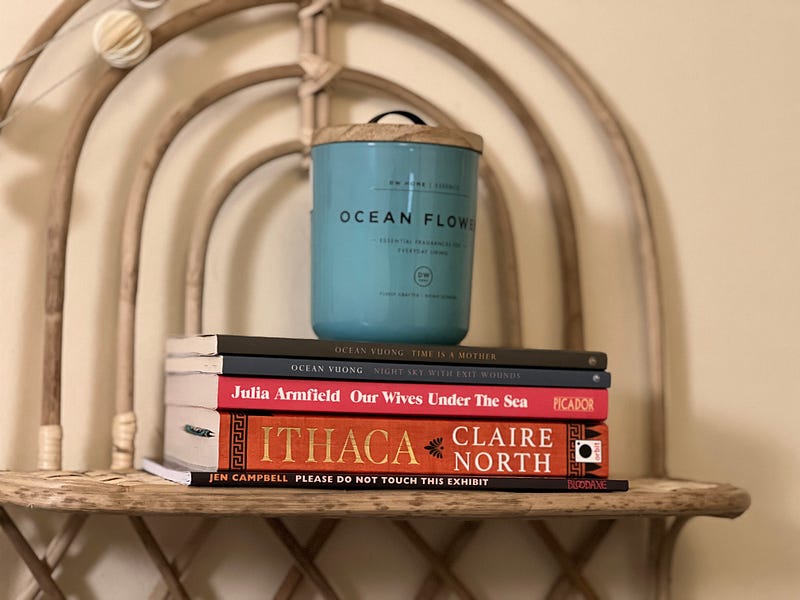
‘Night Sky With Exit Wounds’ and ‘Time Is a Mother’ by Ocean Vuong

Ocean Vuong’s debut collection, Night Sky With Exit Wounds, is what got me back into poetry this year. For context, I’m a poet and I used to be a lot more active in reading and interacting with poetry before I moved to the UK. Since being here, I’ve been dealing with more pressing things that have been keeping me tragically away from poetry. 

I’m so glad I got to experience Ocean Vuong as one of my first contemporary poets in English. I picked up his most recent collection, Time Is a Mother, shortly after Night Sky With Exit Wounds and I devoured both with the love and fierceness they deserve.

The imagery is so powerful it shakes you, the themes are raw and uncensored, and his lyrical voice so memorable you can’t ever forget it.

Here’s a snippet that rocked my world completely:

I remember it. His voice — 

it filled me to the core

like a skeleton. Even my name

knelt down inside me, asking

to be spared. — Ocean Vuong, THRESHOLD, from ‘Night Sky With Exit Wounds’

‘Our Wives Under the Sea’ by Julia Armfield

Our Wives Under the Sea by Julia Armfield is a tiny novel that packs a punch. When Miri’s wife, Leah, returns from an underwater research mission that ended in terror for the three-person crew, she is completely changed. What was supposed to be a standard three-week trip turned into a six-month-long ordeal, in which Leah and her two colleagues were trapped in a submarine deep under the ocean. Now back at home, Leah is acting strange, refusing to communicate, and displaying some strange physical changes.

We follow both Miri and Leah’s perspectives as we watch the mystery, as well as their relationship, unravel. The book is incredibly concentrated, with intense, convoluted emotions and a complex study on love, marriage, friendships, and nature that fascinated me page after page. If the motif of the sea with all its eerie and undiscovered depths intrigues you, this is a book you can’t miss.

‘Please Do Not Touch This Exhibit’ by Jen Campbell

Jen Campbell is an author and book reviewer who I discovered through BookTube. She is a queer, disabled author who writes about fairy tales, folklore, motherhood, disability and representation. Last year, I finally caved and bought her latest poetry collection, Please Do Not Touch This Exhibit, after reading the poem The Hospital Is Not My House when it won the Spelt Poetry Competition in 2022.

Please Do Not Touch This Exhibit is a magical and harrowing collection of honest, beautiful poems that treat the disabled experience as an inhabited space which the reader gets to explore. It’s an experience like none other and a collection that leaves you gasping for air and searching for your place.

Here’s an abstract from The Hospital Is Not My House:

The hospital is not a place for literature. The lights are out and the young girl tiptoes to the edge of a tree, by which we mean the edge of a bed. By which we mean the edge of a corridor, where she is searching for the bathroom. The bathroom being the wet field that half-hides the moon. Half-asleep, the girl questions how she can hold the moon when she cannot hold anything — Jen Campbell, The Hospital Is Not My House, from ‘Please Do Not Touch This Exhibit’

‘Ithaca’ by Claire North

I (like most people) am obsessed with Greek myth retellings. Ithaca must be one of my favourites. Told from the sassy and exquisite narrative voice of the goddess Hera, the book follows Penelope, Queen of Ithaca as she tries to keep reigns of her kingdom in the absence of her husband, Odysseus.

As Penelope receives suitors in her home to claim kingship of an island with almost no men (most men having been lost at Troy), we witness a quiet but fierce queen as she affirms her stance, cleverly manipulates those who plan to backstab her and ultimately creates a women-only army that defeats the nightly attackers who attempt to take over the island.

I enjoyed the dense story that swept me off my feet from the first few pages, the unique narrative voice that’s tired of everyone’s antics, and the quiet support goddesses give to their favourite queens.


Those were my most notable five-star reads from 2023. If you’d like to see my quick impressions on the two re-reads that made the list, watch my reel on the @coffee.time.reviews Instagram and give us a follow while you’re there! 

Coffee Time Reviews (@coffee.time.reviews) • Instagram photos and videos

Eliza x

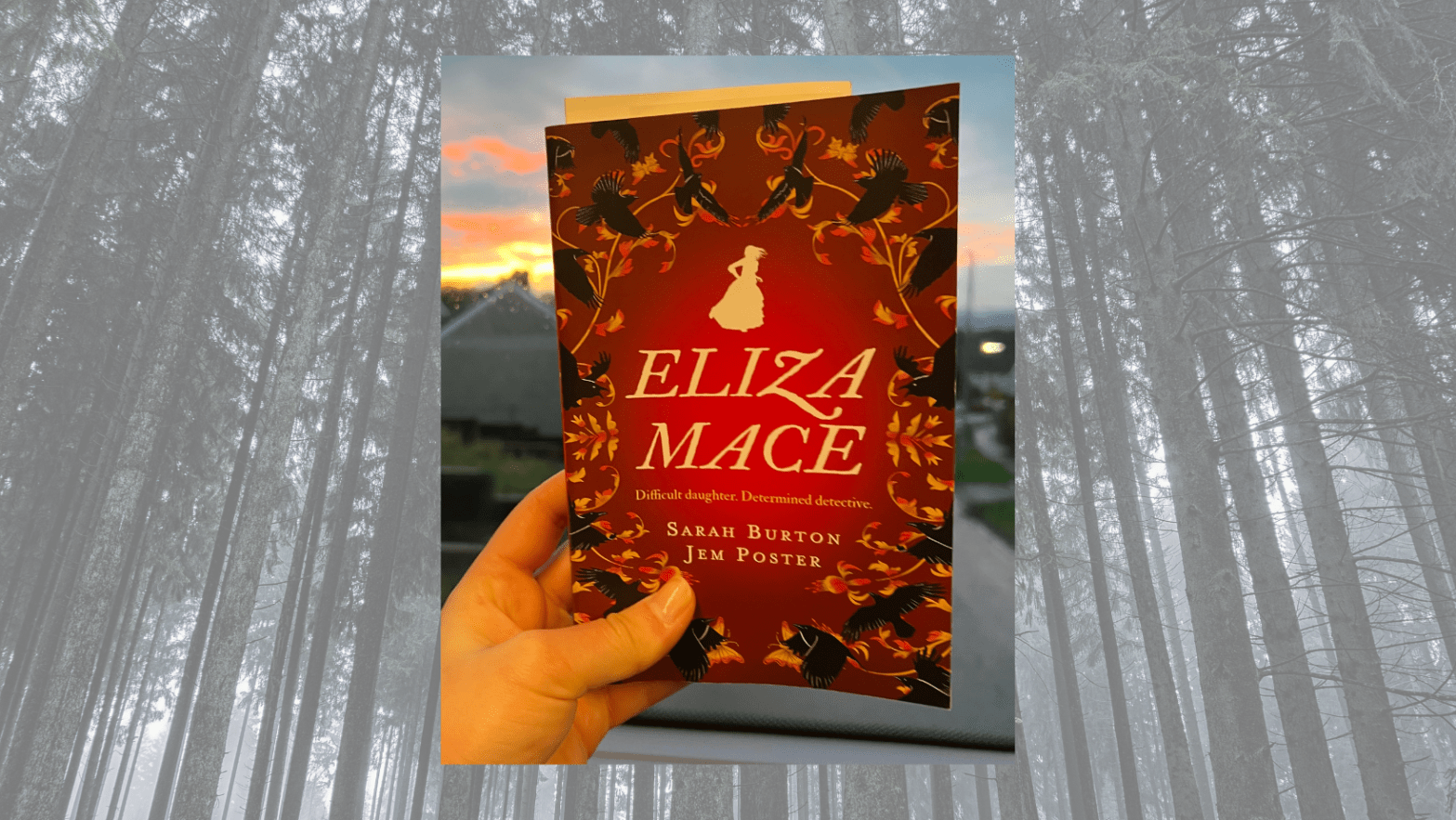
Eliza Mace Is The Teenage Poirot We Never Knew We Needed

Disclaimer: Please note I was sent a free Advance Review Copy (ARC) from Duckworth Books in exchange for my honest review.

I don’t (generally) reach for historical fiction, but Duckworth Books decided to force me out of my shell with this one. I devoured Eliza Mace in a couple of days for how witty, fast-paced and well-woven it was.

The book tells the story of 16-year-old Eliza Mace, who is trying to affirm herself and break free of a dysfunctional family that cages her potential and shadows her cleverness. When Eliza’s recluse of a father disappears one drunken night, she sets off to uncover just what happened to him, defying social norms and her family’s wishes over and over again in order to succeed.

We find out early on that Robert Mace, Eliza’s father, is in severe debt, having brought many people, including his own brother, on the cusp of ruin with his careless spending and so-called ‘business’ endeavours. Her mother, who is the rightful owner of the estate where the Maces live, is deeply disturbed by her husband’s antics, and even his mere presence throws her in a constant state of anxiety.

We then have Eliza’s uncle, James Mace, who lives on the estate, having otherwise no money to his name, but who has played a key role in Eliza’s upbringing and her wittiness and curiosity to escape the limitations of her own background.

When her father goes missing one night, following a violent argument with his closest servant, Eliza becomes set on one goal and one goal only: to find out what happened to him. She starts helping Dafydd, the new constable in town, to piece together the circumstances of the disappearance and becomes indispensable to finding the truth.

What I Loved About ‘Eliza Mace’

Despite her and I sharing a name, Eliza is nothing like me, in the best way possible. She is reckless, fearless and incredibly disobedient, constantly stepping over her mother and uncle’s advice to get what she wants. She is a quick-witted girl with strong principles, who never gives up on proving that she is not a child anymore.

I loved her character and can even say that I learned from her. I learned from her stubborness, her determination and her eagerness to stand her ground, which I often lack in favour of pleasing others. She has her flaws and is quick to admit being wrong when needed, but her confidence and drive are unbeatable.

Eliza’s complexity is not the only one that shines in the book, however. All characters are built in a solid, realistic way, making it easy to visualise them walking around in real life. For a book of under 300 pages, admirable care and attention is given to secondary characters and their back stories, which is what makes the book so engaging.

Despite being set in the 1870s, the book manages to combine historical nuance and societal aspects of the time with an organic sense of reasoning that perfectly suits modern-day readers. I so dread historical fiction books that dwell on what was wrong with society back then, making them impossible to digest and taking away from the story.

What to Expect From the Book

If you love mystery, strong characters and dark English settings, this is the book for you. You can expect so much from it:

  • a Poirot-esque protagonist whose wit is impossible to escape
  • adventure, mystery and thrill
  • a powerful and unlikely friendship
  • a varied and true to the times cast of characters
  • family drama

TW: Please bear in mind that there is a depiction of sexual assault.

Eliza Mace by Sarah Burton and Jem Poster comes out on 7 March 2024 from Duckworth Books. You can preorder your copy on their website.

January TBR and 2024 Reading Goals

Hello, dear readers, happy Tuesday and Happy New Year!

Yesterday, I sat down with my bullet journal and did some serious planning for 2024. I set my goals, resolutions, and themes of the year, and a lot of what went into that has to do with reading.

I thoroughly enjoyed 2023, reading-wise. It was a year of branching out, reading for knowledge and perspective, rather than just for comfort, and steering clear of reading challenges.

This time last year, I joined a modern classics book club, which has enabled me to discover some incredible books and authors I would have otherwise never picked up.

While mostly unintentional, 2023 was a year of mindful and active reading for me. I found myself getting into a nice routine where books became a constant and steady presence in my daily life, rather than coming in bursts of hyper focus or months-long slumps.

I found myself connecting more deeply with books, asking more questions of them, and thinking about them from different angles. That, and other lessons, I’m now taking over into 2024.

Reading Goals for 2024

My reading goals this year are in line with my overall themes: comfort and challenge. I want to keep sinking into books for the comfort and happiness they bring me, while also challenging myself to see past the hesitation that would usually keep me away from some genres, authors and themes.

Here’s what I’d like my reading to achieve this year:

  1. Consistency — allowing time for reading every day (as much as possible). I find that dedicating a set window of time each day works best. I read most of my books from 10pm to 11pm every day.
  2. Organisation — I have lots of books I keep meaning to read before I get distracted by other books. I think that’s because I never set myself a TBR. Monthly or yearly TBRs don’t really work for me, as I find them limiting. But I’ve been enjoying weekly TBRs. Every Monday, I decide on a ‘book of the week’, and that’s what I stick to for as long as I need to finish it.
  3. Open-mindedness — I want to read more genres that intimidate me. Nonfiction, sci-fi, magical realism, and classics all fit into this category.
  4. Reading for the craft of writing — reading more actively so I can write more book reviews, reading in order to understand how I can apply some tricks to my own novel writing, and reading more poetry to sustain my own poetry, are musts this year.
  5. Talking more about books — I have so many people in my life who love reading, yet we hardly ever talk about books. I’d like to initiate and encourage more such conversations this year. For my benefit, and theirs.

January TBR

I know I said monthly TBRs don’t work for me, but I’m only making an exception for January. This is because I have two books I absolutely must read (one for the book club, one to review), and because I’d like to not drown in the dreaded January slump that always creeps up on me.

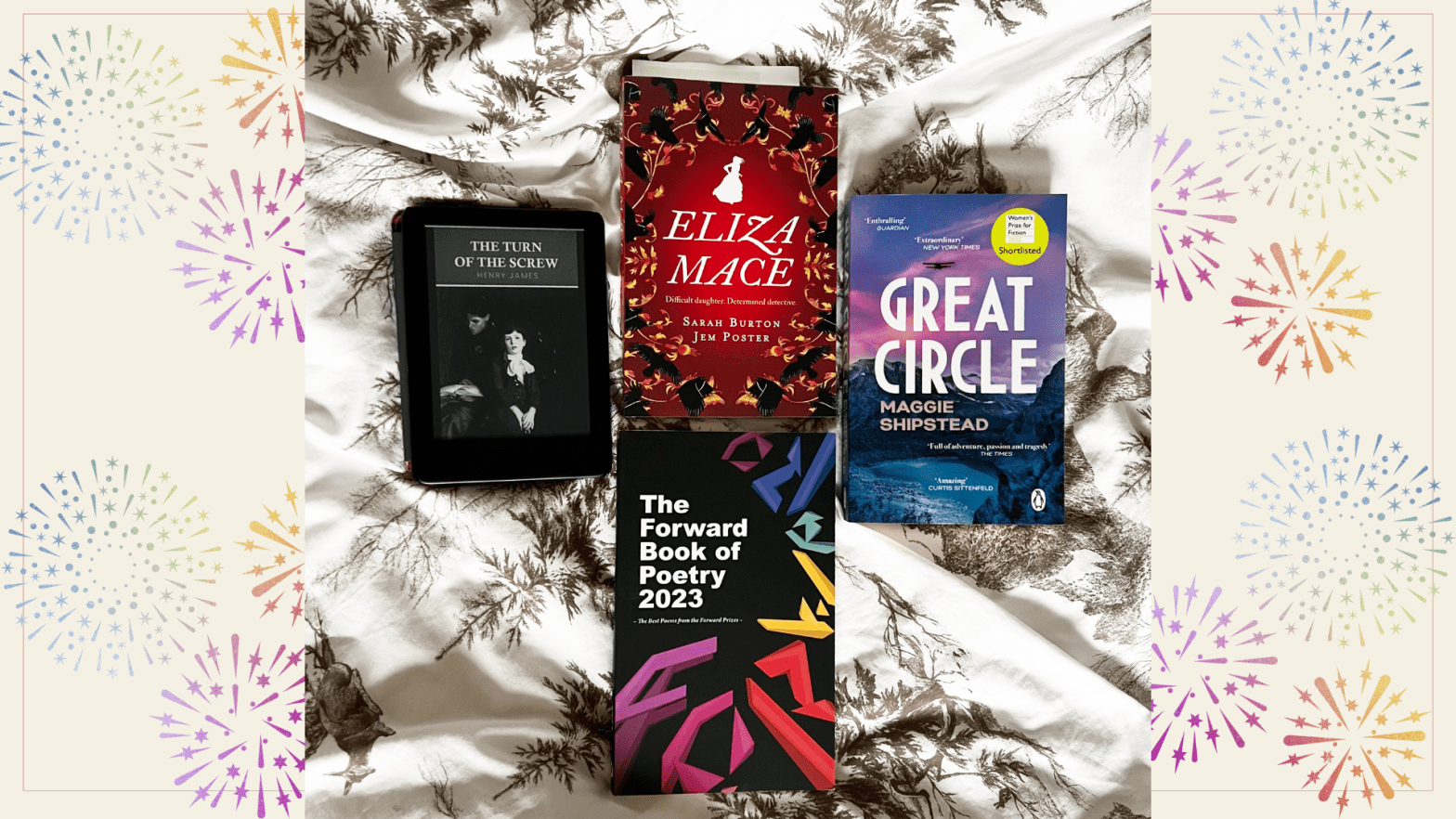
Here’s my TBR for the month, which I also covered in a post on the Coffee Time Reviews Instagram:

  1. Eliza Mace by Sarah Burton and Jem Poster is a historical fiction book coming out in March 2024, about a fierce young detective (whose name I happen to share), who embarks on a quest to find her missing father and claim her independence.

Thank you, Duckworth Books for sending me this ARC.

2. The Turn of the Screw by Henry James is my book club pick for this month. This is an 1898 horror novella considered to be one of the greatest ghost stories in English literature.

3. Great Circle by Maggie Shipstead is a 600+-pages beast, but a charming one at that. This book will scratch a very specific itch that I love and hardly ever see in literature: stories about cinematography that connects the past to the present.

Great Circle tells the story of troubled actress Hadley Baxter who is tasked with playing Marian Graves, a famous female aviator who disappeared in the 1950s. As Hadley starts looking into Marian’s life, she becomes strangely drawn to the ambitious and tragically lost woman who she now has to bring back to life, over 50 years later. As she does, she uncovers mysteries that could answer to Marian’s disappearance.

I’m so excited to dive into this one. There is something about January that begs for long books. Maybe the long nights?

4. The Forward Book of Poetry 2023 by the Forward Prizes is a yearly anthology that always helps me discover incredible contemporary poets. It’s very diverse and curated to reflect its time freakishly well. It’s relevant, powerful, and horizon-expanding. I’m reading this throughout the whole month and enjoying every minute.

What are you reading this month and have you set some goals for 2024? Let me know in the comments!

My Challenge-Free Reading Year: Reviving my Love for Books in 2023

After failing reading challenge after reading challenge, I finally decided that 2023 would be my challenge-free year. I admit, at first, I was scared.

I read quite chaotically (on a good day, I’d call it intuitive), so with nothing to keep me accountable and motivated, I feared my reading would plummet significantly.

This is where I was wrong. While grappling with Goodreads goals year on year, I’d forgotten how much I enjoy reading for the experience, not to tick a box or reach a set number. I’ve always loved books, and every time I read, I get this overwhelming sense of gratitude and passion for how wonderful the act of reading is.

Who did I think I was kidding when I feared I would read almost nothing without a challenge?

And while I didn’t read as much as in previous years, this year I’ve ticked off 43 books (so far), which is almost as many as last year. The difference is that I didn’t have the pressure of a challenge which, around this time last year, sent me into full obsession, thinking about all the ways in which I could tick off as many books as possible in the short time I had left.

None of that this year. I had months where I read one book and months where I read six or more. As is my style and will always be. But what made 2023 stand out was that every reading experience was fulfilling and savoured from the first to the last page.

I also ended up reading more physical/digital books and listening to less audiobooks, maybe due to having no pressure to fill every free minute with some kind of reading to tick off a box.

And although sometimes we need that motivation to get us out of slumps and remind us why we love reading, I found myself enveloped in this liberating relief all year, that’s more powerful than any Goodreads-induced motivation.

There were many good things about going challenge-free. But I’d like to recognise that there are some benefits to reading challenges too.

Benefits of a challenge-free year:

  • Enjoying books for the right reasons;
  • Being more in the moment and not scolding myself for taking too long to finish a book;
  • Reflecting more actively on my thoughts on books and often leaving a few days to take things in after finishing a book;
  • Observing what kind of books I naturally gravitate towards when I don’t have the pressure of numbers;
  • Mindfully picking books already on my shelves instead of going for short audiobooks or new books I was bound to finish faster;
  • Better attitude towards DNFing;
  • Diversifying my reading significantly.

Disadvantages of a challenge-free year:

  • Inevitably having a more relaxed attitude to how much and how often I read, which may have prevented a few books from making it on my TBR of 2023;
  • Listening to fewer audiobooks (I count this as a loss — I love audiobooks).

As things stand, I would say reading challenges are just another trend to make us treat our passion as a competition, or add unnecessary pressure to an otherwise relaxing and mindful hobby.

But I know they work to keep many readers motivated, and if that’s your vibe, keep at it. But I don’t think I’ll do a reading challenge in 2024 either.

Eliza Lita is a freelance writer based in the UK. She covers books and reading, health, fitness, lifestyle, and personal development. For more of her stories, please consider signing up for a Medium membership through her referral link.

Love-Hate Relationships With Books And Reading Updates


Hello, dear readers, and happy Tuesday! As the weather turns colder and the days become shorter, and as stick season (do you get the reference?) is upon us, my desire to curl up with books in soft light is now overbearing.

But first, a hot take on Spotify’s new audiobooks add-on. In short, I’m not keen. The selection of audiobooks is great, and I think offering this option to people who aren’t normally that invested in reading is a good initiative. But this is definitely not the best option for those of us who listen to more than one audiobook per month. 

When I saw that I could listen to audiobooks with my Spotify Premium subscription, I immediately went and paused my Scribd subscription (which is now called Everand — don’t even get me started). Imagine my surprise when I got to the tense part of a thriller and my audiobook stopped altogether, telling me I had used up my time and would have to wait another week or pay extra to keep listening. This is how I discovered the 15-hour listening limit for audiobooks on Spotify Premium. 

If you’re not majorly into audiobooks, this is fine, and you can, technically, buy more listening time. But it’s just not the most sustainable or cost-effective option for avid readers, so I’ll be returning to Scribd.

In other news, I have lots of bookish updates, from some recent reads I can’t quite make my mind up about, to a new reading routine I’m trialling, so let’s dig in.

Reading Wrap-Up

I’ve been reading more poetry this year, and the highlight of late has been Jen Campbell’s Please Do Not Touch This Exhibit, a wonderful collection on disability, motherhood, and fairy tales. This was a sure-fire five-star read, and I almost had to slow myself down and take in the poems while also wanting to read more and more. 

Now, this hasn’t really been the case with my other reads this month. I have two titles I can’t make my mind up on, because I kind of liked them but they also kind of awakened a sort of anger or annoyance, and I simply can’t decide.

Firstly, it’s Ghosts, by Dolly Alderton, a popular contemporary fiction from the beloved author of Everything I Know About Love. Ever since her first title hit the shelves, through a combination of fresh, cutthroat, excellent writing, and flawless marketing, Dolly Alderton has now become one of the most notable names in contemporary literature, at least here in the UK.

So, Ghosts. This novel follows 32-year-old Nina Dean through a full year of her life, as she contemplates, deals with, or learns to live with being single, her friends having children and getting married, her dad becoming terminally ill, and other real adult troubles, like a potentially dangerous and very disruptive neighbour, and some career downfalls.

I gave this book four stars because, from a strictly critical point of view, it’s great. The writing is sharp and witty, the characters are complex and have a strong development, the relationships are relatable and well-rounded. And yet, there was this sense of irritation that loomed over me every time I picked the book up. 

It could be the fact that Nina is only a few years older than me and even so, I’ve felt a few of her emotions. From the confusion of being content in your situation while also wanting what your friends have (marriage, kids, settling down), to the need to call your parents out for everything instead of trying to understand them, it’s all part of being an adult woman reaching a certain point in life.

Or it could be that Nina made quite a few mistakes that irked me, and although the mistakes were perfectly human and realistic, something about them, at times, made me physically squirm. Who knows, maybe I’ll revisit this in seven years and see how I relate to Nina then. Also — we share a birthday.

Keeping up with my poetry endeavours, the other book I want to talk about is Ted Hughes’s Crow, a true modern classic. The challenge with classics (or titles you hear about all your life) is that, if you don’t see the appeal, you end up doubting yourself.

I’m not only a dedicated bookworm, but I’m also a poet. Crow should be a point of reference for me. But much like Ghosts, while I could see the literary value, I was also haunted by an impending eye-roll every time I picked up this book. 

It could be that some of the poems could, in my humble opinion, use a second edit, as some of the wording really messed with the rhythm and impact of the imagery. Or it could be that Ted Hughes resorts too many times to referencing female genitalia in his metaphors. Something about every other poem in Crow gave me the ick. 

How can you like and dislike a book at the same time? The only other time this has happened to me so far was when reading 1984 by George Orwell. I remember vividly how uncomfortable and revolted I was throughout the whole thing, while also in awe of what Orwell managed to create and how he succeeded in awakening such strong reactions in me.

But with Ghosts and Crow, the feelings aren’t as black and white.

Have you ever felt anything similar about a certain book?


Trialling a New Reading Routine

For a few years now, I’ve been obsessed with the booktuber Regan from Peruse Project, who does very cosy and comprehensive reading vlogs. Whenever I’m in a reading slump, watching one of her videos gets me excited about books again.

She doesn’t even read the genres I enjoy, for the most part, but something about the structure of her videos, her aesthetic, and her commitment to books always draws me in.

I’ve become inspired to adopt her strategy for reading in a somewhat structured fashion, as currently I’m a bit of a chaotic reader. Regan’s vlogs usually span over weeks or weekends, and at the beginning of each one, she introduces a TBR — usually two or three books she aims to read during that time. At the end, she gives an overview of how many pages she has completed and of course her thoughts on the books.

So, for as long as my attention span allows, I’ll be doing the same. I’m now setting a TBR at the beginning of each week, and trying to stick to it before I move on. This week, my aim is to finish my current read, The Raven Spell, a witchy tale of adventure and mystery written by Luanne G. Smith (spoiler alert — I’m not a fan). 

Then, I’ll pick up Ithaca by Claire North and, for my audiobook of choice, Paula Hawkins’s A Slow Fire Burning is next.

How to Sound Smarter When Talking About Books

Passionate bookworms know the deflating feeling of wanting to eloquently articulate their thoughts about books, but often falling short. This is because, as I’ve come to learn the hard way, reading books isn’t enough to be able to talk about them in a clever and coherent way.

For about a year now, I’ve been in a modern classics book club with some very smart and well-read women. As classics aren’t my strong suit, I often feel out of my depth when talking about these books with my fellow club members, and it doesn’t help that most of them are real academics, while I’m not.

An avid reader nonetheless, and quite good at literary commentary, I’ve taken this in my stride and started treating the way I read, think, and talk about books in a more reflective manner.

I’d like to share some of my tips and tricks with you, as I’ve become more comfortable at articulating my critical thoughts and making stronger arguments on why I liked, disliked, or felt ambivalent about certain reads.

Slow Down

How many of the books you’ve read this year do you truly remember? How many of them could you talk about for longer than five minutes? Really think about that for a second, and consider why the number is most likely way lower than expected.

There are many reasons why we forget what we read. Information overload, life getting in the way, or simply because the book itself is unremarkable, would be some of them. But notice how the reader is removed from the agency here.

When truly, as I’ve been analysing the way I read, I’ve found that, in my case, I’m mostly to blame for not remembering even my favourite reads. It’s because I often read passively. And I think this is the case with most people.

How often do you stop to annotate or write down your immediate reactions or thoughts while you read? How often do you sit with the story for a few minutes, before going straight to your phone to doom-scroll after a reading session?

The way we read changes how we feel, think, and talk about books. If you read actively, take notes, write a quick review, or reflect on your reading experience, you most likely will have much more to say about it.

Be Specific

There are two aspects to consider when talking about books: the process of reading, which will provide a strong foundation for conversation, and the way we actually communicate.

When talking about a book in a casual way, most readers will blurt out their strongest opinions:

  • I liked it/I hated it
  • the characters were great (or not)
  • it was fast/slow

Instead of launching into a very personal account of your opinions, try questioning them, and being specific. Consider why you liked or disliked the book, whether the plot was fast, slow, gripping, or simply not a key element of the story (in Sally Rooney’s books, in my opinion, the plot is hardly important).

Consider the characters — did you relate to them? Why or why not? What are the specific character traits you appreciated and which ones fell flat? Consider the genre and ask yourself if you’re among the target readership. What kind of reader would benefit from and enjoy the book?

Even if you don’t talk about books that often, stopping to think about these key elements can shape the way you read and feel about books, making it a more fulfilling experience.

Read About Books

Don’t just read books. Read about books. Subscribe to book reviews sites (wink wink) or check that section of your favourite newspaper. I recommend the New York Times’ The Book Review podcast, for a varied and entertaining way to listen to experts talk about books. Consider why those conversations work.

How do reviewers convince you to read certain books? How can you evoke that in the way you talk about books? If you want your best friend to read a book you absolutely love, instead of going full fangirl and flippant with enthusiasm, but incoherent otherwise, think more carefully about the case you make for that book, and you’ll be more likely to succeed.

I’m speaking from experience. “This is so cute and sweet and amazing, you’ll laugh and cry and feel all the feels” is how I tried to sell Red, White and Royal Blue to my best friend. To my disappointment, she didn’t pick it up until I tried again, this time in a more considered way:

“It’s an entertaining queer romance that will surprise you with how many emotions it can awaken in you. The protagonists sound cheesy, but are explored more profoundly than you’d expect, and the iconic secondary characters truly drive the plot along.”

No matter how often and in what context you choose to talk about books, I hope these tips will help you organise your thoughts and articulate your feelings better. Plus, it feels awfully good when something clever and eloquent comes out of your mouth to prove your passion for books even more.

3 Quickfire Autumn Books I’m Excited About

Hello, dear readers, and happy Tuesday! Welcome to the new and revised Coffee Time Tuesday column. If you’re new here, let me fill you in.

Coffee Time Tuesdays are my way of checking in with loyal readers of Coffee Time Reviews. It usually covers my recent reads and a brand new book release (almost) every Tuesday. If you’d like to have a nosy at previous CTT columns, visit our Editor’s Picks page.


Starting today, though, I’m breathing fresh life into this column, making it more widely appealing and more spontaneous. Today’s theme is autumn reads.

Autumn is my favourite season, so for the remainder of August, I want to finish all the books I’ve started this summer and clear my calendar for some atmospheric fall books. Let’s dig in.


‘The Launch Party’ by Lauren Forry

Starting off strong with an Agatha-Christie-meets-Andy-Weir murder mystery, The Launch Party sounds like a cosy, gripping story to dig into on a rainy weekend.

Ten lucky people have won a place at the most exclusive launch event of the century: the grand opening of the Hotel Artemis, the first hotel on the moon. It’s an invitation to die for. As their transport departs for its return to Earth and the doors seal shut behind them, the guests take the next leap for mankind.

When one of the guests is found murdered, fear spreads through the group. But that death is only the beginning. Being three days’ journey from home and with no way to contact the outside, can any of the guests survive their stay?

I struggle with seasonal reads and get very easily side-tracked, so starting with a thriller is my strategy for success. And Then There Were None is one of my all-time favourite autumn reads, and there’s something about a locked-room mystery where the characters start dropping one by one that feels just right when the weather is all doom and gloom.


‘The Messenger of Measham Hall’ by Anna Abney


I’m not usually a historical fiction fan, but when leaves are starting to turn brown and the wind whooshes through the curtains, the sun sets too early and it’s time for candle-lit evenings, a story set in the distant past is charming, inviting even.

The Messenger of Measham Hall follows Nicholas Hawthorne, the Catholic heir to Measham Hall in Derbyshire, who gets tangled in the convoluted mysteries of his family. There are deeper and darker secrets even than his family’s outlawed religion.

As Nicholas starts looking for answers, England slides towards invasion by the Protestant forces of Prince William of Orange. It’s not long until our protagonist becomes entangled in conspiracies within King James’s court — and soon learns that both truth and love come at a high price.

I was kindly sent a copy of this book by Duckworth Books, and I’m excited to dedicate some cosy evenings in October to uncovering Nicholas’s family secrets.


‘The Devil in the White City’ by Erik Larson

If fiction is not your thing, worry not, dear readers, this one has you covered. I’ve had The Devil in the White City on my TBR for an embarrassingly long time. Larson is a journalist who investigates famous historical crimes and pieces the stories together into gripping, wonderfully authentic books.

The book uncovers the chilling murders at the Chicago World Fair in 1893, creating a compelling account of H.H. Holmes, the killer masquerading as a doctor, and Daniel H. Burnham, the architect who created the fair.

While Burnham overcame politics, infighting, personality clashes and Chicago’s infamous weather to transform the swamps of Jackson Park into the greatest show on Earth, Holmes built his own edifice just west of the fairground. He called it the World’s Fair Hotel — a sinister torture and murder space.

These two disparate but driven men are brought to life in this mesmerising tale of the legendary Fair that transformed America and set it on course for the twentieth century.


And that’s it for today’s column. Autumn’s in the air, and mystery is on my mind, ready to grip me on chilly, rainy nights. What books are you excited to read this coming fall season? Let me know!

Coffee Time Tuesdays: A Birthday Book Haul and Other Updates

Hello, dear readers, and happy Tuesday! Huh, it feels good to write that sentence again. It’s been a minute since I last wrote this column, or indeed, since I last wrote at all.

I’ve been doing a lot of thinking, over the past few months. About myself, my writing, my editing, and running Coffee Time Reviews. I’ll do a separate update about CTR and my plans for it going forward.

But, more importantly, I’ve done a lot of thinking about Coffee Time Tuesdays. This column started nearly two years ago now, as a way to encourage me to read more, reflect more about my reading experiences, and also write more. It’s easy, when running a publication, to fall behind the scenes and not write your own articles anymore. 

For a long time, CTTs were my only articles going out online. The only thing that kept me on Medium as a writer. But, as you may or may not have noticed, my niches on Medium have changed over the past few months. I am now a lot more active in the ADHD and mental health topics, and I’ve also been exploring themes of immigration in my writing.

The truth is, Coffee Time Tuesdays need a fresh start. I still absolutely adore the idea of checking in with you weekly and sharing what I’ve been reading. I also love recommending new books in every column. 

But, as far as numbers go, this column is barely breathing. I have a few dedicated readers for each issue, and a handful of issues have truly blown up. But mostly, CTTs don’t make much sense, as they are now. I want to keep the column going, but it will look slightly different going forward.

More on that in a future article, though. For now, indulge me in writing the last Coffee Time Tuesday column in its original shape.


The Big Update

I turned 25 last Thursday and, as it seems to have become our habit for my birthday, my partner took me book shopping on the day. I left with no less than four books, and a newfound excitement for reading.


When I go book shopping with my partner (which happens rarely, granted), he always chooses a book for me, while I go for the others. This time was no exception. My birthday book haul consists of:

  • The Book of Goose by Yiyun Li — this was my literary fiction pick, a safe choice

Publisher summary: Fabienne is dead. Her childhood best friend, Agnès, receives the news in America, far from the French countryside where the two girls were raised — the place that Fabienne helped Agnès escape ten years ago. Now, Agnès is free to tell her story.

As children in a backwater town, they’d built a private world, invisible to everyone but themselves — until Fabienne hatched the plan that would change everything, launching Agnès on an epic trajectory through fame, fortune, and terrible loss. 

  • Ithaca by Claire North — another safe bet, I love Greek myth retellings

Publisher summary: This is the story of Penelope of Ithaca, famed wife of Odysseus, as it has never been told before. Beyond Ithaca’s shores, the whims of gods dictate the wars of men. But on the isle, it is the choices of the abandoned women — and their goddesses — that will change the course of the world.

  • The Launch Party by Lauren Forry — a thriller. Funny, seeing as I decidedly told my partner, when we entered the bookshop, that I wasn’t at all interested in crime and thrillers anymore. Readers, I nearly bought three crime books that day.

Publisher summary: Ten lucky people have won a place at the most exclusive launch event of the century: the grand opening of the Hotel Artemis, the first hotel on the moon.

When one of the guests is found murdered, fear spreads through the group. But that death is only the beginning. Being three days’ journey from home and with no way to contact the outside, can any of the guests survive their stay?

  • The Whalebone Theatre by Joanna Quinn — this was my boyfriend’s pick. The interesting thing about other people choosing books for you is that you get to understand how your reading tastes come across. He always surprises me with his choices, but I always end up enjoying them.

Publisher summary: This is the story of an old English manor house by the sea, with crumbling chimneys, draping ivy and a library full of dusty hardbacks. It’s the story of the three children who grow up there, and the adventures they create for themselves while the grown-ups entertain endless party guests.

This is the story of a whale that washes up on a beach, whose bones are claimed by a twelve-year-old girl with big ambitions and an even bigger imagination. An unwanted orphan who grows into an unmarriageable young woman, fiercely determined to do things differently.

But as the children grow to adulthood, another story has been unfolding in the wings. And when the war finally takes centre stage, they find themselves cast, unrehearsed, into roles they never expected to play.

They raised themselves on stories. Now it’s time for them to write their own…


And that’s it for today’s Coffee Time Tuesday column! I have been reading, though not as much, but I’m now excited to dive into these amazing stories. I will report back. Thanks for sticking around and I’ll write to you again next time, in a fresh and new way.

Eliza x

‘Black Butterflies’ Reveals the Humanity Behind War

Disclaimer: Please note I received a copy of this book from the publisher in exchange for my honest review.

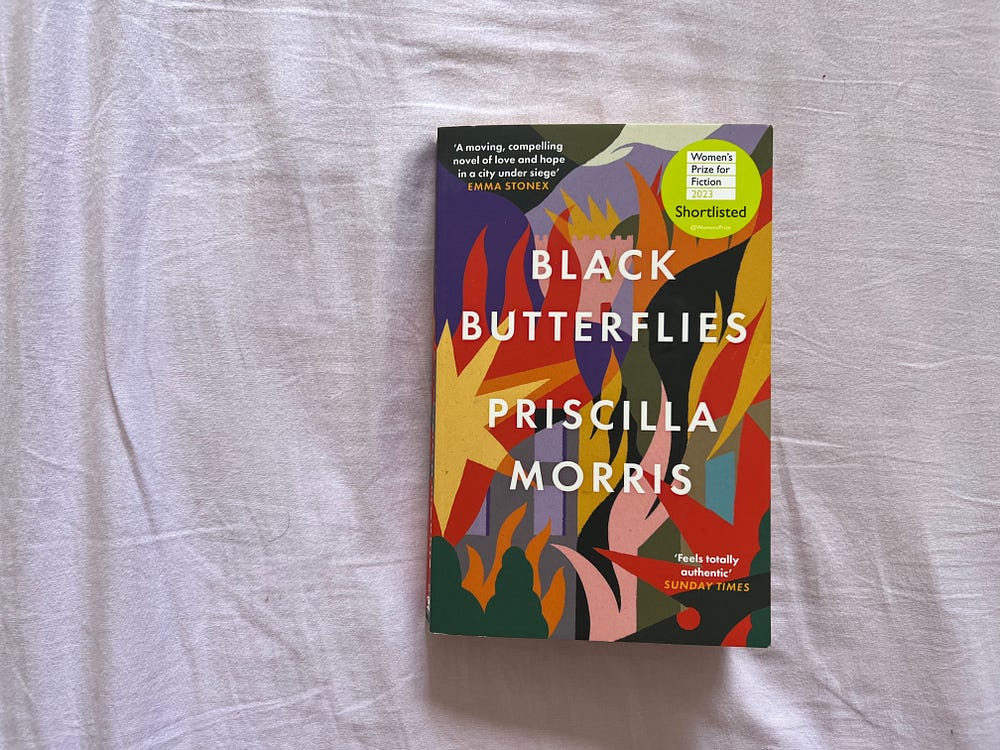
As one of the shortlisted books for this year’s Women’s Prize for Fiction, I expected Black Butterflies to be a valuable read. What I didn’t expect, though, was how important, relevant, and deafening this story truly is. During the time ridden with conflict that we find ourselves in, now’s the moment for Priscilla Morris’s incredible story to shine.

Black Butterflies is a character-driven novel about Zora, a painter caught in the siege of Sarajevo, who experiences first-hand the tragedy, destruction, and helplessness of war. The book starts with Zora’s husband and elderly mother preparing for a trip to England, to visit Zora’s daughter, Dubravka, and her family. Zora decides to stay behind and join them later. What Zora never expects is for her beloved city to be taken over by rebel forces and armed military, rendering her hostage in her own home.

We follow Zora and her close friends left behind in a constantly attacked Sarajevo, as they adapt to this new, unfathomable reality, and as their basic needs and rights are being taken away one by one. The war story starts with a powerful scene of a friendly dinner, where Zora and her neighbours gather to celebrate one of their group. As they talk and rejoice in the abundance of food, the floor above them gets shelled and everything comes crashing down.

This is how life as they know it starts folding into itself, becoming smaller and more dangerous, the sound of explosions taking over birdsong each morning.


The Power of People During War

The true value of this story is in showing just how resilient people are in finding something to live for. 

The siege of Sarajevo is dark, violent, bloody, it takes away all of our characters’ freedoms, it leaves bodies behind in the streets, and it burns universities and libraries. The plot is developing in a dark, dusty context, with sounds of guns and explosions disrupting what’s left of the civilians’ lives.

But this is not just another account of war, it transcends way beyond that. Black Butterflies kept me hooked, clutching at the pages as I strived to find out more and more about Zora’s daily life in Sarajevo. I longed for her beautiful moments of friendship with Mirsad and her other neighbours. My heart melted every time Zora gave painting classes to her little neighbour, Una, a seven-year-old who had no business walking close to walls to avoid being gunned down. A child who deserved to live her young years away from death and hatred.

I hoped with all my might that Zora would continue to teach art at the university, and that her students would keep coming. I was greedy for all the ways in which she kept painting, kept sculpting, kept clutching at her dreams. 

Living away from conflict can render you numb to what really goes on in war zones. We associate wars with men in uniform gunning each other down. We associate it with violence, blood, noise, and trenches. But we rarely think of the civilians caught in-between. How do they go on living? How do they adapt? How do they walk down the street?

Priscilla Morris’s most outstanding success with this book is, in my opinion, how she created such a strong, self-sufficient main character, that following her daily life in Sarajevo is enough. You don’t hope, as the reader, for an end or an escape route for Zora. You just take it one day at a time, just like she does.


Women’s Prize for Fiction 2023

The winner of the Women’s Prize for Fiction 2023 will be announced tomorrow, 14 June. To find out more about other books on the shortlist, visit the Women’s Prize for Fiction website.