Seven Halloween Short Stories from Serious Authors

Horror stories, ghost stories, gothic literature — they tend to be a bit looked down on in the general book-going community. “Yes, it’s fine, but it’s not really ‘literature’ is it?” Well, actually yes, it is. And as it goes, some of the most influential writers in history have dabbled in the dark arts. Literary arts, of course.

The authors on this list wrote world-changing books that are still considered essential reading today.

There are seven nights until Halloween and below I have included links to seven short stories — one story each night to prepare you for fright.

Edith Wharton

The Age of InnocenceEthan FromeThe House of Mirth. All three of these incredibly famous books are wonderful and regularly studied at universities around the world. Edith Wharton is one of the most prolific female writers in history. In addition to 16 novels and 7 novellas, she also wrote non-fiction, poetry and many short stories. A good portion of those short stories were ghost stories!

Wharton reportedly loved ghost stories as a child. When she was not travelling the world, organising wartime relief, travelling to the front line as a war correspondent, or explaining to the public the proper way to decorate and garden, this incomparable lady was penning short stories.

Like her novels, the ghost story titled The Lady’s Maid’s Bell takes a look at her society and in particular women’s relationships, options, limitations, and condemnations.

Elizabeth Gaskell

North and South is one of my all-time favourite novels. It shone a harsh light on the horrific conditions of the working class in England that was often ignored by the upper classes until her ground-breaking novel. As an aside, this is the novel that Charles Dickens reportedly held back from publication and plagiarised to create Hard Times. Gaskell’s is clearly the superior novel but that is a discussion for another day.

Gaskell’s other most famous works include Mary Barton and Cranford which show us two very different worlds in Northern England, both beautifully realised. She had a way of summing a person up completely in one delicate sentence and her social commentary was subtle yet fierce. She is an absolute delight.

Of course, she also wrote ghost stories. One of her most popular is The Old Nurse’s Story and that is for good reason. Gaskell was a writer with a strongly feminist drive and those themes are apparent beneath the surface of this unsettling ghost story.

Robert Louis Stevenson

Okay, it may not come as a huge surprise that the author of Dr Jekyll and Mr Hyde also wrote short horror stories. It is definitely worth celebrating the range of a man who also penned Treasure Island and Kidnapped among several other novels.

Stevenson came from a long line of lighthouse architects and he was expected to carry on the family tradition. As a child he was taken on his father’s work expeditions around the coast of Scotland, inspecting lighthouses. The beauty of this rugged coastline inspired many works and it also influenced his horror story, The Merry Men. Stevenson’s style is always inviting and engaging and this tale is no exception.

Henry James

James wrote one of the most famous horror stories of all time: The Turn of the Screw, so it will come as no surprise he was also a master of the short ghost story.

That said, he wrote a lot of novels and short stories that are nowadays lauded as some of the greatest literary works in history. These include The Portrait of a LadyThe Bostonians and The Ambassadors. These works are “high literature”, not the sort of thing associated in the public consciousness with stories for Halloween. If we look a little deeper though, we can see that tales such as The Real Right Thing dissect the very way we engage with the literature we are reading. It’s high time to get meta with Henry James.

Vladimir Nabokov

When he wasn’t writing books involving the sexualisation of children or inviting readers to attend beheadings, Nabakov sometimes took to spooky stories.

Nabokov studied zoology and Slavic and Romance languages at Cambridge University and it was during his time there that he became aware of and enamoured with the ghost stories of that famous Cambridge alumni, MR James.

Nabakov’s short story, The Visit to the Museum is very “Jamesian” and an original and delightful Halloween read.

Harriet Beecher Stowe

Stowe wrote one of the most famous American novels of all time, Uncle Tom’s Cabin. This was one of 12 novels she wrote, in addition to a play, several non-fiction works and dozens of short stories.

Stowe also wrote several ghost stories and The Ghost in the Cap’n Brown House is a particularly fascinating one. What at first appears to be a basic apparition story is actually asking us to look deeper into the way we view respectability and decency and the way we judge people based on their sex, class and background.

Somerset Maugham

The creator of bestselling works including Of Human Bondage and The Moon and Sixpence was another incredibly prolific writer. He was reportedly the most well-paid writer during the 1930s and in addition to his many novels, his short stories are seemingly endless.

Just a quick note that I could not find a print version of this story to read free online so below I have linked to an audiobook.

Colonialism is a recurring theme in Maugham’s writing and the supernatural short story The Taipan is no exception. Take a closer look at the unrelenting, misplaced pride of the men who carelessly sliced off as much of the world for themselves as they could.

The genre of short horror stories is often overlooked so I hope this list of influential and important writers who enjoyed the tradition will inspire some to explore this world a little further.

If nothing else, may these Halloween tales carry you through to a fantastic evening on the 31st of October!


Stuck for what to read next? Check out our Reading Recs page. And if you’d like to support our work, please consider making a donation via our Donations page. We’re trying to raise money for paid commissions, so any contribution will bring us closer to that goal. Thank you for reading!

‘Nothing But Blackened Teeth’: Both Grotesque and Gorgeous 

If you follow the horror book community you’ve probably seen this book floating around for a bit. It’s been hyped up and anticipated and is finally available now that October crawls to an end. 

You can purchase a copy of ‘Nothing But Blackened Teeth’ by Cassandra Khaw here.

TW include but are not limited to death, gore, and self-harm.

Summary

A group of frienemies stay at an old haunted Japanese mansion for a wedding and pretty much get what they asked for. It’s not a typical haunted house story but familiar enough you’ll appreciate all the chills.

What I liked (no spoilers)

A fun and different concept

The concept is what got me interested in the first place. I like the haunted house trope and have always been interested in Japanese horror mythology. I’ve read plenty of gothic horrors that take place in England and of course the US but this was a refreshing take on the trope.

The writing is grotesquely purple and pretty

This book is written beautifully, with lots of purple prose. I’ll admit it borderlines on being pretentious but hey, writers gotta write. I ain’t mad. Some people won’t care for this and I’ve seen reviews complaining the author was trying to be clever. Yes, and she succeeded.

Yes to all the creepy vibes

The creepy factor was on high and that’s what I’m here for. Do you see that cover? Not a marketing gimmick, the book delivers on it. The tension build-up, in the beginning, was well done and it’s usually my favorite part of horror stories. This goes back to the writing, some of those descriptions are just perfect.

Neutral observations (no spoilers)

These are things I noticed that didn’t bother me while reading but are worth mentioning for casual readers.

You don’t need to know everything

You won’t get much explanation about the character’s background or anything else for that matter. You as the reader are a fly on the wall, you’re just kind of thrown in the story to watch what happens. Accept this and go with it.

You would not want to be friends with these people

The characters aren’t traditionally likeable but in horror, they don’t need to be. People don’t always act their best during scary, intense situations and this book showcases that in all its messed-up glory. Be glad they aren’t your friends.

Opportunities to learn something different

The reader is given no explanation of Japanese mythology or words. Unless you are familiar with the culture, its mythology, and language you might have to Google a few things. But don’t let this phase you. You can Google what you don’t know, or pass entirely and still understand what’s going on. It’s okay to look stuff up and learn.


Final Thoughts (no spoilers)

Overall, I thought this was a good quick read, especially during the last bit of October. It gives all the creepy feels and doesn’t require a long commitment. It’s the kind of book where you just go along for the ride. You’re going to have lots of questions but forget those and enjoy the dark metaphors.

Spoilers below

What I didn’t like

The length 

Not really the book’s fault but mine for not paying attention when I ordered it. I was expecting a full-length novel, especially for the price, and got a 130-page novella. But I think some of the developmental aspects could have been helped with more detail. The characters aren’t well-rounded and fall flat because they don’t get enough screen time and the whole plot felt rushed.

It has meta-references

There are sections in this book where characters call out popular horror tropes and then the book does those tropes. Unless it’s a satire this doesn’t really work for me. Maybe I completely missed something but I don’t think this book was meant to be funny. 

Calling out a lazy trope or cliche and then using it doesn’t make it okay that you did the thing. If anything, it’s worse because you know you’re being bad and still doing it.

Profanity

Can’t believe I’m complaining about this. My favorite four-letter word starts with “F”, and it’s not “food”. With that, I’m not a big fan of it being used frequently while reading. Not sure why, but seeing it more than once in a sentence of dialogue feels clunky to me. If it’s narrowed down to one character, who happens to speak that way, fine, but when every character talks like a sailor, they all start to sound the same and I think that was the problem here.

The ending was meh

I didn’t love or hate it, it just kind of happened and I accepted that. When all the creepy stuff gets turned up to 11 the characters seem to ignore the supernatural like it’s normal. And that kind of ruined all the wonderful tension built up in the beginning. It was like the author constructed an amazing setup and then discarded it on the side of the road. 

Also, the trope subversion of killing off the all-American, pretty boy was called out by the comic relief character in the middle of the story. Lin tells you exactly who is going to die with no spoiler warning. But that goes back to the book trying to be meta. 

Let’s End on a Good Note

No book is perfect and it’s important to recognize flaws but I like to end things on a positive note. This was an enjoyable book that only took a few hours to read. I loved the writing and the creepiness that seeped off the page and fit perfectly with October vibes. This was a fun addition to my horror reading list and I recommend it’s worth checking out. 


Stuck for what to read next? Check out our Reading Recs page. And if you’d like to support our work, please consider making a donation via our Donations page. We’re trying to raise money for paid commissions, so any contribution will bring us closer to that goal. Thank you for reading!

What Kristin Hannah’s ‘The Four Winds’ Says About an Author’s Duty

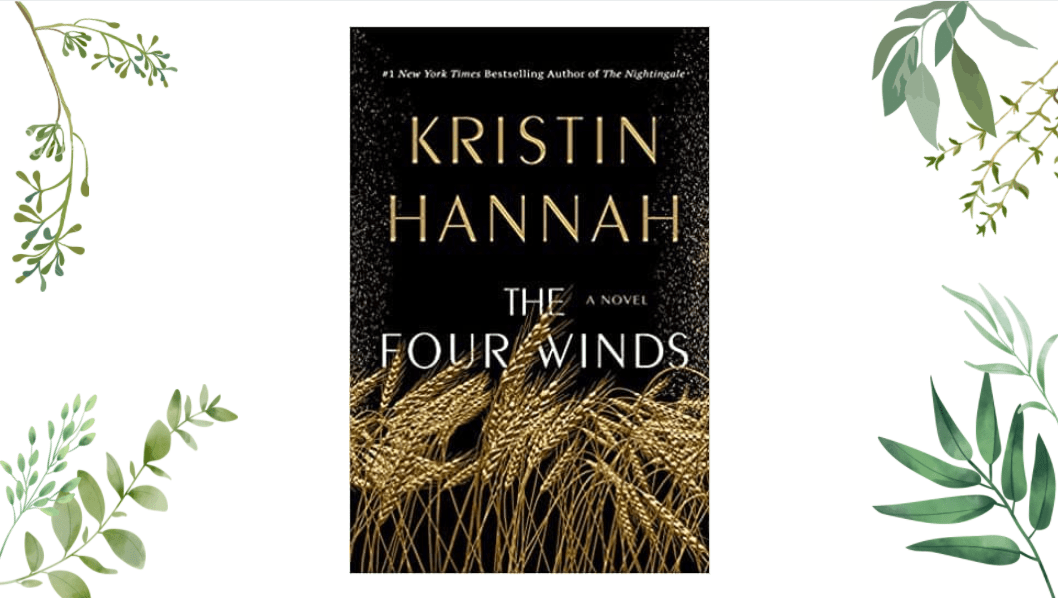
Let’s get this out of the way, Kristin Hannah is a seriously talented writer. There is no doubt about that. The Nightingale is about to be made into a movie, The Great Alone is being developed into a film, and Firefly Lane is already a show. She is a New York Times bestselling writer whose works are translated across the globe.

The Four Winds debuted at number 1 on both the NY Times bestselling list and USA Today. I can only imagine it’s a matter of time before the book gets transformed into a movie, which I think might be a mistake. (More on that later.)

So, she’s worth a read, and this book is certainly no exception.

Though being perfectly honest, I’d call it more of a vanity read and not something you do for pleasure. (I couldn’t put the book down, but that doesn’t mean I enjoyed it.)

Spoiler alert

This book has a significant twist. I’m going to tell you what that twist is. Read the book first and then read this.

The Plot

The book traces the life of a young woman during the Great Depression / Dust Bowl. We pick up her story as a teenager living at home with her parents and follow her to her death in California. (Now you know the twist.)

It’s helpful to divide the book into smaller parts based on where Elsa, the main character, lives. The book opens with her living with her parents at home, then moves to her in-law’s farm, and finally ends in California with an epilogue back in Texas.

Home

Elsa was sick as a child, so her parents are over-protective, limiting her time away from the family.

They also don’t think she is attractive and tell her so often. They don’t feel she will ever find a husband.

Her parents are, in fact, physically and emotionally abusive.

Elsa rebels and takes steps towards standing on her own two feet. Woot, right?

Except, the first guy she sleeps with gets her pregnant, and to boot, the sex wasn’t even remotely good. Plus, he’s engaged to marry someone else. Yikes.

Farm

So, her parents disown and kick her out, sending her to live with the boy’s parents. The in-laws also don’t want her, as their son was going to go off to college and now has to stay home and get married, to the wrong girl.

She wins them over and finds a place on the farm. She has a daughter and a son, and everything seems okay for about five minutes in the book until the Great Depression / Dustbowl happen.

The husband leaves his wife, kids, parents and flees the farm. Her son gets sick. The government comes to help, but they cannot help right away.

We get unending dust storms, in addition to one disaster after another. As a result, this part of the book is not a particularly pleasant read.

However, it also left me feeling claustrophobic; I was living through those times with Elsa. Cool right? (Credit K. Hannah)

Elsa is a rock who keeps the family together with her constant hard work. She deals with the dust bowl and depression by getting out of bed each and every day and doing her best to make life a little more livable.

The reader can’t help but admire her strength.

Her son’s health is in jeopardy because of the dust, so Elsa and her kids decide to leave the farm and flee to California, touted as the land of Milk and Honey.

California

As you might guess, California is in no way, shape, or form the promised land, and in fact, the family struggles to survive, living cotton harvest to cotton harvest.

They live in a field with a group of other “Okies.” Life is a constant battle, occasionally better, but never okay. She makes friends, but then her best friend dies.

She moves out of the field and into a cabin… But, she is a sharecropper who sees her family falling deeper and deeper into debt each day.

A man enters the picture.

Ending

The man is a Communist labor organizer, and attraction grows between the two.

She ponders returning to her in-law’s farm. Life has to be better back there, right? The labor organizer will drive her and the kids.

The one and only thing I wanted from the book at this point was a happy ending. It’s so close; you can almost feel it. We have love, family, stability, a home, and all they have to do is return.

A happy ending would have paid off all of my emotional investment.

However, the labor organizer does what labor organizers do and organizes a protest, and Elsa dies in the protest.

In the epilogue, the son and daughter return to the farm, which is indeed doing better. The daughter ends up going back to California for college.

My Thoughts

This book is compulsively readable, flying from one crisis to the next. I wanted to read ahead; I yearned to Google the ending. It’s that great.

But you already know that.

Yet, I don’t know that I would recommend the book to a friend, and I certainly won’t read it again.

It’s a very well done slog through a sea of misery. Elsa is a compulsively engaging character, and we want her to be happy. We care about her, BUT she never gets the happy ending she deserves.

The ending felt quick, fake, and more than a little cheap. Elsa’s death serves no point in the plot.

Compare this to the following quote by George R. R. Martin.

“I’ve been killing characters my entire career, maybe I’m just a bloody minded bastard, I don’t know, [but] when my characters are in danger, I want you to be afraid to turn the page (and to do that) you need to show right from the beginning that you’re playing for keeps.”

Death in his books has a purpose. But, in The Four Winds, it does not.

One could argue many things about her death: Happy endings were few and far between during the Great Depression, maybe her death serves to highlight her great strength throughout her life, perhaps her death is a sort of happy ending as she can finally rest?

Maybe Hannah wrote the book this way, knowing it would generate publicity?

I don’t know.

In this case, the lack of a happy ending diminishes a book that could have been every bit as great as The Nightingale.

I will not be going to the movie.

The answer

A writer owes nothing to the reader save for respecting the reader’s time and emotional investment.

Kristin Hannah most assuredly respects our time, she doesn’t however, respect our emotional investment.

She just doesn’t give us the ending we so badly want.

It left me empty.

How about you?

6 Publishing Trends that Stop Readers From Buying Books

Reading is one of my favorite past times but purchasing actual books is an expensive hobby. I have to be selective on what books I get physical copies of. Whenever possible I try the library, 2nd handbook stores, ebooks for 99¢, etc. Can’t be having my book spending cost more than my utility bill, no matter how much I’d like to. 

But sometimes you want to splurge on a brand new book. You want to feel an embossed hardcover or flip one of those extra floppy paperbacks between your fingers. Some covers are so beautiful you want to admire them on your shelf and some stories are so beloved you want to feel them in your hands for the rest of time.

Money’s tight though and you have to be selective of what books you decide to purchase. And when you do, it can be a big letdown seeing publishers going for some of the most commercial marketing trends that rather ruin the book, in my opinion.

1. Replacing the original cover with the TV/Movie image

Most bookworms would agree with this one. If you wanted a movie poster you’d buy one so you definitely don’t want it on your book. We all know the book is usually better than the movie anyway so why do this?

Marketing. When a book becomes a film, the majority of people will associate it with the movie. Everything you see on a book cover is used to market and sell and films sell a lot easier than books to a mass market.

Also, the unremovable stickers that go along with these covers are annoying as well. “Now a major motion picture” or “ Now a Netflix Original Series”. Stop double dipping in your marketing and give me a better cover. 

2. Rough cut/Deckled Edges looks sloppy and unprofessional

If you don’t know, this is when the edges of the book are uneven and don’t line up together. Back in the day, when books were bound this couldn’t be avoided. They didn’t have the precise technology we have nowadays to get the pages to line up properly. So, for older books, this makes sense and adds to their charm.

For modern books, these edges don’t fit the actual book. The cover will be bright and gorgeous but then the side of the book looks like someone dragged it along a concrete sidewalk. It makes fanning the pages to get that book smell in your face a disappointing chore. 

If you’re spending $18 or more on a book you don’t want it to look like the pages were individually ripped and rebound by a child.

3. Book covers that don’t cover the actual book

Picture provided by the author (Why are they doing this to books?)

This is a trend I’ve noticed with a lot of popular books and I absolutely despise it. The whole point of the cover is to actually cover the book, the entire book. The name says it all: “cover”. How are they screwing this up? When you spend hard-earned money on a book you want the cover to do its actual job.

I can’t really figure out why publishers do this either. The one book I own with this awful type of cover is The Seven Husbands of Evelyn Hugo by Taylor Jenkins Reid (good book, by the way) and I tried really hard to find a copy with a normal cover. All this weird cover does is make the 2nd page of the book more accessible because it’s partially exposed beneath the cover.

Do you know what’s on that easy to flip to 2nd page? Praise quotes from magazines I don’t read. Honestly, who cares what the Associated Press says about a fictional book anyways?

These inferior little book covers serve no purpose and look more like a mistake than a professional marketing technique.

4. Poorly written, confusing, or plain bad synopses/summaries

If a book cover has managed to grab your attention chances are you’ll flip to the back to skim the synopsis. In just a few sentences the synopsis has to summarize the book in simple terms, hit the right genre, and intrigue you with a question that you’ll have to read the book to solve. 

If the book blurb can’t cover most of these points, you aren’t going to it. The worst offenders I’ve seen lately have been in Fantasy and Young Adult. They try to fit a whole prologue on the back of the book. Instead of selling you the story in short easy to skim sentences, they try telling the whole back story in two convoluted paragraphs.

You need a gist of what the book is about so you have a vague understanding of what to expect. If the book blurb isn’t captivating or is confusing you, you aren’t going to chance the entire book being any better. 

5. Marketing books in the wrong genre 

This one doesn’t usually stop readers from buying books initially but after you’ve been burned once, you get stingier in your selections. I’ve noticed this growing problem in recent books. Publishers will market books in genres that they really don’t belong in, in order to boost sales.

Some books are difficult to categorize but most will fall into a broad definition of one of the major genres: Fantasy, Science Fiction, Horror, Romance, Young Adult, etc. If a book doesn’t fit comfortably into one of these categories, publishers need to find a sub-genre for it and market it accordingly. There’s an audience for almost any book, find it and sell it to them. 

Nothing is more irritating when you buy a book from your preferred genre only to realize afterward it’s something else entirely. Books not only cost a pretty penny these days but they are time-consuming. You don’t want to waste your time or money on something you’re not interested in to begin with.

6. “This book is the next (insert famous book series)!”

Then why was it written? Honestly, do you really want to read another Game of Thrones or any other famous book? No, you don’t. You’ve read those stories, fell in love with them, and now you’re ready to move on to new worlds and adventures. 

There’s a reason those books are famous. Most people like them and enjoy them because they were different and well written. So, why do publishers try to push the same old stories on us? I realize this is again, a marketing decision but it’s one that can turn readers off because they’re looking for something different to devour and instead are being served leftovers. 

Takeaways

I might be nitpicking here, and these are subjective but everyone has an opinion on what they are willing to spend their money on. For the average person, books ain’t cheap. And when you do decide to buy one or many, you want them to measure up to the cost you end up paying. 

‘In the Dream House’ Is the Queer History Lesson You Need Right Now

TW: This review contains mentions of domestic abuse.

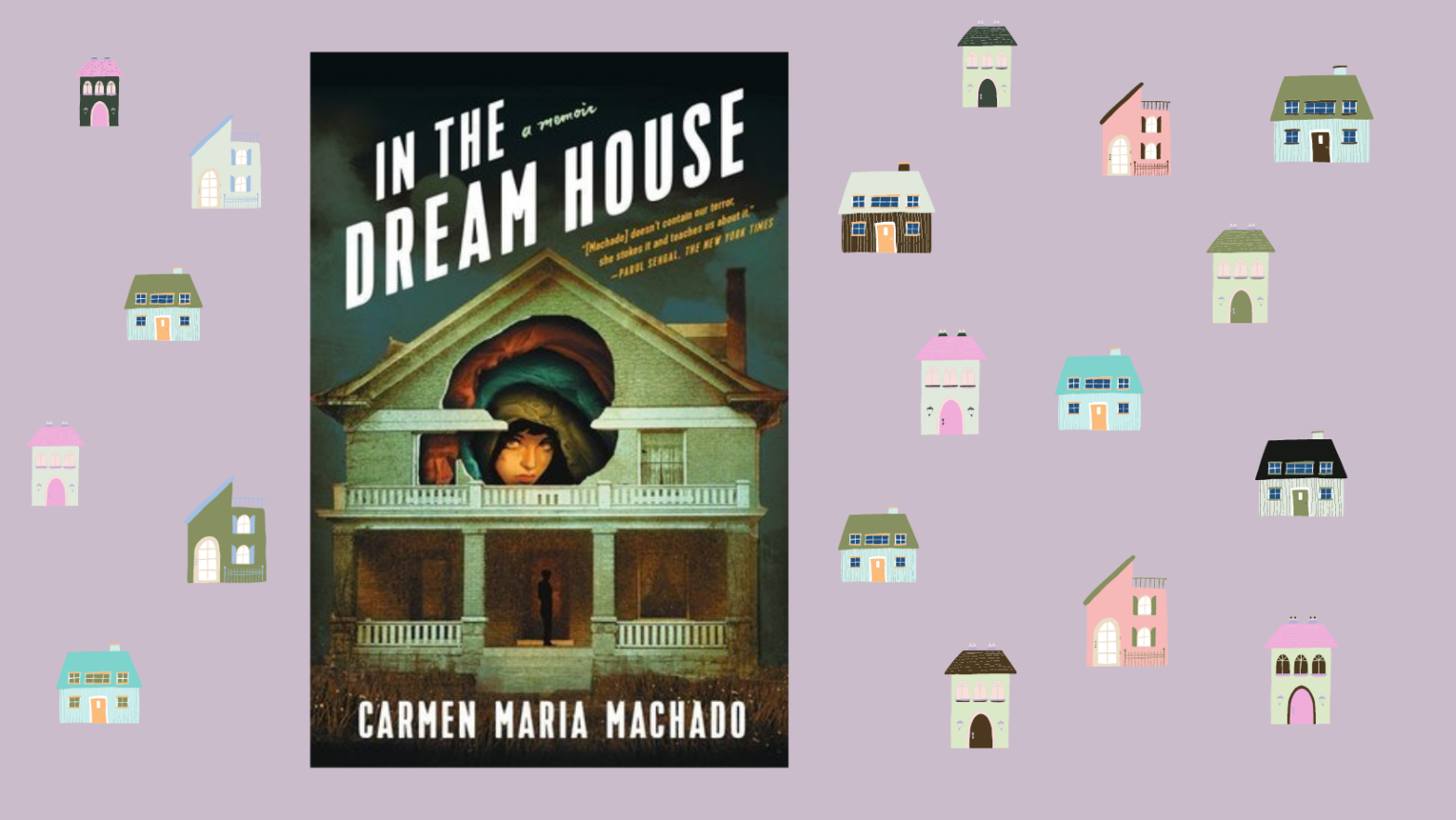
In the Dream House is a literary masterpiece of unimaginable proportions. Normally, you’d expect a memoir to tell someone’s experience, to be firmly grounded in reality and offer an insight into the writer’s story. Which is fine, it’s what memoirs are for and why they’re so appreciated.

But then Carmen Maria Machado said: hold my pen, I’ll give you the memoir experience of your life. And so she did, giving us not only a heartbreaking memoir about domestic abuse but also a lesson in queer history, exposing the gaps in knowledge we desperately need to fill, and a subtle lesson in writing because she’s that good.

In the Dream House tells the story of Machado’s toxic relationship with an unnamed woman about ten years ago. The relationship started like any other, with a lot of passion, love and devotion, but took a toll for the unimaginable, as Machado’s girlfriend started displaying abusive behaviours.

The book is constructed in a creative way, each chapter reimagining the dream house as something else, ranging from feelings, to stories, to cultural references. The dream house was, in reality, the house Machado and her girlfriend shared while they were together.

As she masterfully puts it, “places are never just places in a piece of writing. If they are, the author has failed”. This statement almost brings the house to life, making it an accomplice to the story, as you witness it changing from a safe love nest to a trauma-inducing space as the couple’s dynamics degrade.

The chapters are very short and always end with a bang. One of the very few negative reviews I’ve seen blamed Machado for taking us out of the story every so often and telling us about other, unrelated (in appearance) episodes in history, religion or pop culture.

I’m sorry for this reader. They missed the point entirely. The author never really takes you out of the story, she just uses alternative means to tell it. Without being able to make the connection between, say, the random Star Trek scene she recounts in one of the chapters and her relationship story, you won’t be able to enjoy the book to its full extent.

The Book as Queer History Lesson

“We deserve to have our wrongdoing represented as much as our heroism, because when we refuse wrongdoing as a possibility for a group of people, we refuse their humanity.”
― Carmen Maria Machado, In the Dream House

In trying to evade the disbelief most people certainly felt when reading about the mere possibility of an abusive same-sex relationship, Machado researched everything she could possibly find on the history of domestic abuse within queer couples. Unsurprisingly, she didn’t find much. But what she could find showed a grim reality.

In many cases of domestic abuse within lesbian couples, nothing was done to ever believe the victims when they reached their breaking point. Machado recounts a couple of cases in history where one of the partners killed their abusers, to then not receive the same treatment as women who killed their husbands as a result of domestic abuse. The reason simply being that society saw the power dynamics in same-sex couples rendering abuse impossible.

“This is what I keep returning to: how people decide who is or is not an unreliable narrator. And after that decision has been made, what do we do with people who attempt to construct their own vision of justice?”
― Carmen Maria Machado, In the Dream House

“You can be hurt by people who look just like you. Even if the dominant culture considers you an anomaly, that doesn’t mean you can’t be common, common as fucking dirt.”
― Carmen Maria Machado, In the Dream House

The Book as Cultural Metaphor

“Reader, do you remember that ridiculous movie Volcano, the one with Tommy Lee Jones? Do you remember how they stopped eruption in the middle of downtown Los Angeles? Sweet reader, that is not how lava works. Lava keeps leaking down my slopes. You should have listened to the scientist. You should have evacuated earlier.”
― Carmen Maria Machado, In the Dream House

I mentioned above that Machado uses countless references to create a well-rounded account of her story. She doesn’t spend the entire book recounting real situations. She weaves these with cultural, literary and even religious references.

This is a smart way of writing. It’s show-don’t-tell. I’m sad to think how many readers may have missed it, blindly looking for the satisfaction of the classic memoir.

If a memoir is someone’s real story, aren’t we supposed to listen?

“Putting language to something for which you have no language is no easy feat.”
― Carmen Maria Machado, In the Dream House

This is the last phrase in a short chapter, called Dream House as Naming the Animals where Machado wonders for a page or two how terribly confused Adam must have been when God asked him to name all the animals he’d created. This chapter is not at all unrelated to the story. It painfully hits at the last minute: she was being abused, she was suffering, but didn’t know it yet.

The Book as Final Thoughts

I could go on and on but don’t want to give away too much. I loved, admired and suffered for this book in sync with the characters. I’ve taken the different shapes of the Dream House and I felt like a silent witness to something unspeakably inhumane.

On many occasions, I felt powerless, I felt angry, sad, perplexed. But every time, with every closing sentence in every strong chapter, I learned. Not only about this individual story among so many other horrible individual stories, but also about a history no one cared to ever expose before.


Stuck for what to read next? Check out our Reading Recs page. And if you’d like to support our work, please consider making a donation via our Donations page. We’re trying to raise money for paid commissions, so we can support and work with more writers from underrepresented backgrounds, who cannot afford to write for free. Thank you for reading!

Why I Said Goodbye to the Paperback

Don’t come for me just yet. I’m still a bookworm through and through, despite only owning less than 20 physical books in total. I love the books industry and I love holding, smelling, buying, and turning the pages of real books.

But I’d be lying if I said I read physical books anymore. I don’t. In fact, for the past 2 years, I’ve read less than 10 physical books, of the total of over 100 books read since early 2020.

You can be a fully dedicated bookworm without the coveted and ever-so-popular bookshelves full to the brim

At first, it was a lifestyle thing. I’ve always loved reading, but my proper bookworm peak was reached back in my first year of university. Ever since, my reading goals have been getting more and more ambitious, my tastes have broadened and I’ve discovered countless new authors I now read regularly.

As a university student in a foreign country, owning as many physical books as I wanted to read would have been impossible. For the past 4 years, I’ve moved no less than 5 times, with no car or anyone to help, and no permanent space at my disposal, to leave some of my possessions.

After moving everything I owned in two suitcases from London to Leeds (which took 4 coach trips and a lot of back pain), I learned to own as little as possible. When you have to move every 10 months, every extra object counts. 

Since I wasn’t ready to slow down on my reading, I dove into alternative methods that made me say goodbye to the paperback for good (well, mostly).


My Reading Habits Now

My Holy Grail: the e-reader

Around 80% of what I read is now on my Kindle e-reader. I love the convenience and accessibility of it, despite the drawback of it not feeling like holding a book. But the advantages outweigh this inconvenience so, really, I can’t fault my Kindle.

I know from an industry perspective, reading on Kindle means I support Amazon over other booksellers. And as much as it pains me that this is true, as things stand right now in my life, Kindle is the only logical option for me.

As much as I’d like to spend hundreds on books every month, I genuinely can’t afford to

I won’t be settling into a permanent home any time soon. What’s more, as an immigrant, I travel a few times a year, which makes my Kindle all the more useful. When I visit my family on the other side of the continent, I spend a good few weeks there, so having a digital bookshelf full of options in my coat pocket is the way to go.

Accessibility is probably the most important part of reading on an e-reader. I’m a busy, busy bee, so my reading time is scarce. I have a full-time job, a very active lifestyle, I spend a lot of time with my partner and a lot of time keeping my publication (this publication) going. I’m writing a novel and a poetry collection, doing a social media marketing course, writing on Medium, and I also strive to cook every meal for my partner and me.

Do you get my point? I barely have time to do anything else with my life. When I find time to read, it’s usually at night, or in the drowsy hours of the morning. It’s also usually dark when that happens. So an e-reader with an adjustable display brightness is literally my best (and probably last) resort.

Financially, Kindle makes sense too. I don’t earn a lot, just enough to get by, afford rent in this super expensive country, and save a little each month towards a flat I’m planning to buy in a few years.

As much as I’d like to spend hundreds on books every month, I genuinely can’t afford to. I periodically find best-sellers on Kindle for less than £5, sometimes less than £1 even. This allows me to read as much as I want without diving into my savings.

Listening to books

Audiobooks are also my saving grace when I’m in over my head with tasks and can’t find the time to actually sit and read. When I cook or do a tedious task at work, or when I run errands, audiobooks are there with me.

I am sometimes sad that I can’t take the ‘stack of books’ photo when I write a reading wrap-up, but ultimately, reading is about making it work for your circumstances

Ever since I’ve discovered Scribd, at the end of 2019, I’ve been hooked. Scribd is a much more affordable option than Audible, as you only pay for the monthly subscription to get access not only to audiobooks but e-books too, at no extra cost. I mainly use it for audio, though, as Scribd e-books aren’t compatible with Kindle, but even so, the subscription is worth it.

My reading goals have been kept afloat by audiobooks for the past couple of years, and they have added to the number of books I read significantly. Plus, it’s a refreshing, alternative way to experience books.


Did I Really Stop Buying Physical Books for Good?

As seen in my most recent tweets, not exactly. 

But I only ever buy physical books in exceptional situations:

  • if I’ve already read the book, am obsessed with it, and I must have it
  • if I see a particularly stunning book and can’t say no, but I also must be absolutely certain I’ll enjoy it
  • if I buy them second-hand so I can then donate them once I’m done

The main idea is accumulating as few extra heavy objects as possible, although sometimes that breaks my bookworm heart. Books I receive as gifts are also probably the biggest exception. I will never, ever pass on a book I received from someone I love. 


Final Thoughts

You might think this article is a big ode to digital reading. It’s not. I’ve decided to share my reading habits in order to show you can be a fully dedicated bookworm without the coveted and ever-so-popular bookshelves full to the brim and the size of your wall.

I am sometimes sad that I can’t take the stack of books photo whenever I write a reading wrap-up, but ultimately, reading is about making it work for your circumstances. I chose to experience books over owning them. And although one day I’m sure I’ll have the covered and ever-so-popular bookshelves, that day is still far into the future.

Thoughts on Life in the Library

Chances are…

If you’re reading this, you like books. If you enjoy books, you undoubtedly go to the library. Let’s face it. A limited amount of space exists for books in our homes, and libraries are the only practical solution.

An ordinary bloke can read about 75 books a year. So, the question becomes, how much time will we dedicate to re-reading books? I hate to re-read, there are so many wonderful books, I can’t stand the thought of reading a book over, and missing something better.

Most of my life, I’ve collected books because books bring me joy, and I always thought I would pass them on to the next generation. But, alas, not a single solitary soul wants my books, and thus they sit, so I stopped buying and started going to the library.

As it happens…

I work in a school library. I’m currently in the middle grades, but I’ve spent the last two years in primary school libraries.

And, well, I have some stories, thoughts, and observations. If there is interest, I’d love to turn this into a weekly column.

I work in a large urban setting. It’s a minority, majority school, where roughly 90% of the kids live in poverty.

I should also mention that I am the assistant person, the guy that checks out the books and puts them away on the shelf.

I’m a certified teacher but I have no desire to get my librarian license. Cancer knocked me out of teaching, and bad luck, I got cancer again. Worse luck, both cancers could return.

So, no more higher education for me.

Thoughts on Culture

School #1

Kids walked into the library without talking. We had stars on the floor, and kids had to stand on the stars and wait for the librarian to dismiss them to the tables. They had assigned seats at the tables. When kids left the library, they had to line up on the stars, wait until they were silent, and then follow the teacher into the hall.

We had two doors in the library; if a student came in the wrong door, they were told to go back out and come in the right door. We had lines on the floor and instructed students to follow the lines when checking out a book. If nobody was in line, and a student came right to the desk to check out, they were made to go back and walk the line.

We gave the students red book placeholders. We taught them to put the holder on the shelf when they took a book. That way, they would know where to put the book back.

What happens if you have overdue books? No placeholder for you, too bad so sad. This was deemed a consequence.

School #2

None of the above exists. Kids can come and check out a book during their 4 minute passing time. We’ll write them passes to get back to class. Not only do they talk, but we ask questions.

Nothing is on the floor, not one thing.

Kids check out up to 3 books.

Kids may check out additional books, even if they have missing or over-due books. I’m encouraged to gentle mention the lost books, but that’s it. Kids can get more books, if it’s the start of the weekend, or are checking out the next few books in a series, or child’s simply read a lot.

The guiding philosophy in this library is to get books in kids’ hands.

Now, I ask you:

Which library would you want in your child’s school? (Yes, it’s not an entirely fair comparison as school # 1 has younger kids than school # 2, but still.)

Do you even have to think about it? School # 2 is where I would want my daughter to go and it’s where I currently work.

A Guiding Principle

Kids learn more when they are happy, engaged and actively taking part in their learning, and sometimes that gets a little messy, and that’s completely, utterly and totally okay.

Teaching in the Key of Life is an outstanding book by Mimi Brodsky Chenfeld, that I frankly think ought to be required reading for all teachers.

Sharing humor and playfulness with children works many wonders. It breaks open and rearranges closed ways to thinking, relieves tension and anxiety. and multiplies the fun of learning.

Neat right? How does it work in actuality?

Go into any elementary school and you will see classes of kids in the hall walking in a straight line with hands to themselves, and absolutely no talking. The teacher has a grim expression, and now and then gives the particularly troublesome kids a stern look.

What if we played the child’s game “Simon Says,” when walking? Could we actually get the kids to stay quiet and have fun?

I thought it was worth a try.

I did a lot of subbing in a rural elementary school. I told the kids they had to stay silent, but that they also had to copy me when we walked from one spot to another. I pretended to be an airplane; the kids did too; I skipped, the kids skipped also; I danced and boy did they laugh at my dancing. So I stopped.

A little fun is great, too much fun is not. I wish I had a video, I had an entire class of kids pretending to be airplanes. How cool is that?

As it turns out, school can be enjoyable, while at the very same time being a rich learning environment.

Question authority, hell question rules, and by all means, make the library a safe spot for all kids, so they can read the nuggets of joy that we call books.

‘The Parted Earth’: Bringing Partition’s Darkness to Light

TW: This review and the book mention loss of a parent, suicide, and miscarriage.

There are situations in life in which arbitrary decisions make sense. Whether or not to get ice cream after dinner, for instance. Or choosing a pair of socks to wear to the gym. Drawing boundary lines for a country… Not so much. 

Such was the case with the 1947 partition of India. This was the division of British India into what are present-day India, Pakistan, and Bangladesh. Religion played the decisive factor in spawning a desire for partition in the first place. 

However, the final boundary lines were drawn hastily and with ill knowledge. The man given the job had never even visited India. Nor did he know any Indians on a personal level. Pandemonium ensued, leaving a trail of blood, hunger, and tears in its wake. 

As many as 20 million people were displaced, and one million lost their lives. Aggressions developed between India and Pakistan, which persist to this day. 

Though this horrific event took place less than one hundred years ago, I feel guilty in admitting that I couldn’t feel farther from it. Not just chronologically, but emotionally. My grandparents were only children or teenagers during this time, and one was yet to be born. Plus, my predecessors lived in the western part of India, which wasn’t as directly affected by the partition. 

However, when I read stories like Anjali Enjeti’s The Parted Earth, I’m reminded of partition’s significance in what makes South Asia what it is today. With over a billion people living on this side of the globe, and with the world’s largest diaspora, the aftermath, though not as explicit as it once was, is anything but invisible. 

Enjeti’s spectacular novel, while fictional, captures the all-too-real challenges brought about by the partition of India. The story oscillates between past and present, taking us to India, Pakistan, London, Amsterdam, and the U.S. The author shows us how far-reaching and interwoven the impacts of partition have left behind, rippling out across generations and country lines. 


Synopsis

A forbidden romance blossoms within the wake of increasing hostility in 1947 Delhi. Deepa, a sixteen-year-old Hindu girl, and Amir, a Muslim boy from her school, have been secretly communicating via origami love letters. 

When Amir tells Deepa that his family will be relocating to Lahore (in modern Pakistan), where they will be safer, a dilemma develops. How will the pair carry on their relationship? How will they marry? Hit by unforeseen circumstances, Deepa’s world soon turns upside-down. She has no choice but to leave India altogether. 

Fast-forward to present-day Atlanta, where Deepa’s granddaughter, Shan, is struggling to overcome a miscarriage and a divorce. At forty-one, Shan has always remained detached from her Indian identity. Her mother was white, and her father, while Indian, passed away when Shan was a little girl. 

Shan befriends Chandani, an elderly new neighbor, who is also grieving, having recently lost her husband to suicide. Over traditional food and cups of chai, the women discuss their losses and the nuances of their heritage. 

Chandani shares her late husband’s experiences of narrowly escaping persecution in the aftermath of partition, though he carried the emotional wounds with him throughout his life. Hearing Chandani’s stories, Shan is compelled to seek out her grandmother, whom she hasn’t seen or spoken to since childhood. 

Shan’s search leads her on a path of uncovering her family’s dark and tumultuous past. She realizes that her own flesh and blood carry secrets that have been buried. Secrets that tear through Shan and leave her spinning. 

While the truth pains, it carries with it opportunities to reconnect with those she’d lost and those she thought she’d never find. And she uncovers a newfound bond to her motherland. 

Takeaways

Many history classes, at least here in the U.S., don’t discuss major world events such as the India partition. It has left intergenerational trauma and confusion in its wake, as evidenced by Shan’s character in the book. 

I could relate to the feeling of separation from my grandparents’ realities of living in pre-independence India, versus the modern westernized society we find ourselves in today. And I can feel the disorientation that comes with grappling to piece together a narrative that perishes with our predecessors.

Enjeti demonstrates how understanding our forebears can help us better understand who we are. When we see ourselves as not independent parts, but connected to a whole that extends centuries — millennia —  beyond ourselves, we are better able to step into our humanity. 

And our identity, the elusive force, becomes clearer. Such is the power of oral traditions, which we then keep alive through the written word.

Videos and historical books depicting partition can be unsettling to watch. Enjeti employs a calm, even tone in relaying her story, humanizing each of her characters and expressing them with intentional variations. This allows us, as readers, to step into their reality and see partition through the lens of these individuals. I appreciate historical fiction novels in this regard because they can bridge gaps that nonfiction accounts fail to overcome.

Overall, I thought this was a well-articulated and easy to follow story surrounding partition. Of course, it’s by no means all-encompassing but it accomplishes the goal of imparting a concrete understanding. There were times that I felt the pacing and transitions from past and present could have been smoother. But with several characters’ points of view being shared, I suppose there wasn’t a seamless way to go about it.

A Parted Earth reminded me a bit of Yaa Gyasi’s Homegoing, in that it used devastating colonial events to demonstrate how generations could become locked in the struggle for identity and freedom. 

Hopefully, stories like these can continue to find their ways into the hands of publishers, and onto our bookshelves.


Let’s continue the book chat and share reading recommendations… Follow me on Twitter or Instagram

TikTok Rescued Me From the Longest Reading Slump

I was once in a reading slump. A very, very long reading slump.

Definitely a multi-year slump.

Ever since I was old enough to hold a book and independently read words on a page, I’ve been a bookworm — constantly, physically attached to a book no matter where I was.

The pace of my reading never really slowed down… until I was in the middle of my undergrad studies. I read fewer and fewer books each year after university. It was a struggle finding narratives that were capable of holding my attention.

But I still wistfully remembered all the days I spent getting lost in other worlds…

Several years ago, I realized I might be attempting to read the wrong books.

Quite by accident, I spent a few years reading only books by women. It was my first attempt to get back to my pre-university churn through books. This was 2018 — and it felt like breathing fresh air for the first time after being indoors too long.

I realized, after the third book in a row that really held my attention that year, I’d been missing this female voice and a perspective that felt a bit homier. I loved it. Each character’s inner life was, if not more relatable, more nuanced and engaging.

I knew, then, I needed a new source of reading recommendations… because the mainstream bestsellers just weren’t living up to the hype.

I never expected TikTok to solve my problem.

As a social media manager, I shouldn’t have resisted TikTok as long as I did.

Almost immediately, I found #booktok and book reviews short enough to hold my pandemic-damaged attention span. Bonus! These titles weren’t the same ones I’d seen over and over.

Additionally, many of the TikTok recommendation lists featured authors who are all women of color.

As soon as I started reading — and then energetically jumping to the next rec — I knew I’d beat my reading slump… Finally. Each new writing voice, with the flow of their prose, pulled me in immediately and didn’t let me go.


The Three TikTok Book Recommendations That Saved Me

Image created by author in Canva

‘This is How We Fly’ by Anna Meriano

This is How We Fly’s main character, Ellen Lopez-Rourke, is 17, vegan, sarcastic, insecure, and outspoken about her feminist values. It’s a contemporary Cinderella retelling, including a rocky stepmother relationship, adorable half-sister, and still-living father.

Ellen gets grounded almost immediately after her high school graduation, and the only place she can go unsupervised is Quidditch practice. Readers will not be in doubt about whether or not the author supports JKR’s recent, harmful statements. There is a very clear condemnation of TERFs.

Casual Potter references — and casual JKR putdowns — made me laugh all the way through.

As a fairly sporty person, I identified with the competitive characters… But I also saw pieces of my younger self in Ellen as she learned to handle her strong convictions outside of the theoretical vacuum of her thoughts.

It was a fun, easy read that left me wishing I’d found a Quidditch team to join during my college days — thanks to the secondhand thrill of various game victories.

I gave it a four-point-five out of five stars.


Image created by author in Canva

‘A Song Below Water’ by Bethany C. Morrow

I always fall in love with well-done, real-world but just-a-bit-magical stories… and that’s what A Song Below Water is.

Magical creatures are real and fairly “normal” to the rest of the world, including sirens. Sirens, however, are heavily discriminated against. Because their voices have such power, sirens who are outed publicly are forced to keep their powers locked up.

There’s a family secret, sisterly love, social justice, and magical intrigue — including but not limited to a mysterious gargoyle protector.

Every other chapter is written from the first-person perspective of either Tavia or Effie. They aren’t biologically related, but they love and support each other as close-knit sisters should. Trying to keep Tavia’s siren voice a secret while they also deal with misogyny, racism, and typical high school drama shows how deep their relationship runs. And that was my favorite part of this book!

I gave it a four-point-five out of five stars, simply for some of the pacing.


Image created by author in Canva

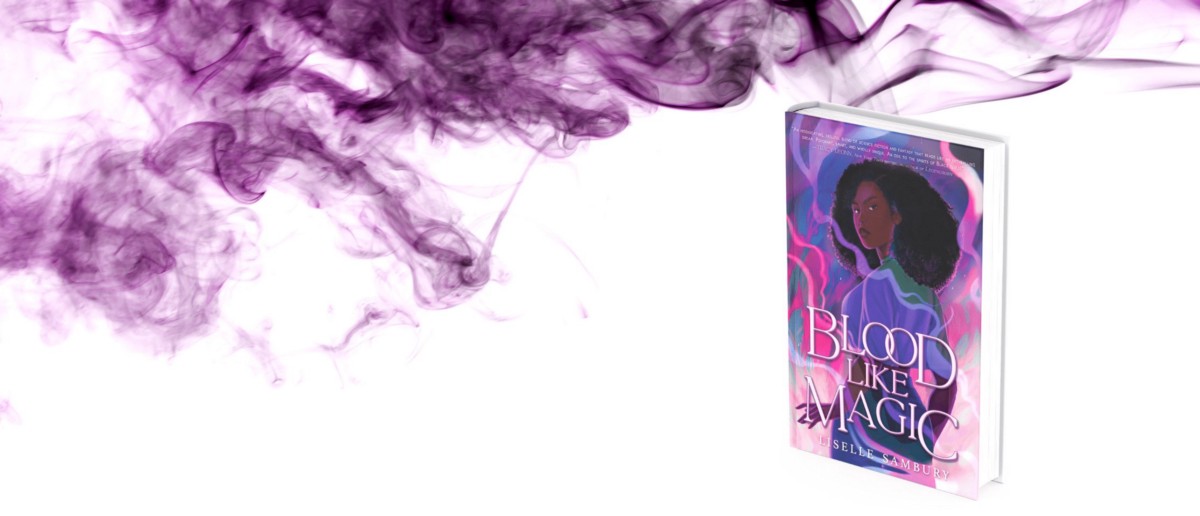
‘Blood Like Magic’ by Liselle Sambury

I really never thought I’d use the adjective “gripping” unironically in a book review, but here we are. Blood Like Magic was legitimately gripping all the way through. Imagine that one social media episode of Black Mirror with a side of secret magic society, and you’ll have a good grasp of the science-fantasy setting.

Voya is 16 years old in a futuristic Toronto, where she grew up in a family of Black witches. During her magical initiation, she has to choose between killing her first love or letting her family’s magic disappear forever. The catch is… She’s never been in love before. It’s a coming-of-age story with very high, very witchy stakes — but there’s no wand-waving.

The family’s power, as the title suggests, is in their blood. And Voya’s power is in her decisions.

This might be one of my favorite first-person narratives ever. I legitimately cannot think of another author who has woven a first-person perspective with such in-character, yet poetically eerie descriptions. It never took me out of the story — my heart pounded and I was hyper-focused until the end.

This was the feeling I wanted to find again when I was trying to get back from my bookless existence. I was one hundred percent engaged while thinking about important relationships and decisions in my own life that I’ve made. I’m energized and ready to pick up the next book.

Actually, I’m also inspired to write.

I gave it five out of five stars… I also put a calendar reminder for myself in early 2022 to check on the release date of the sequel.

Note: There are content warnings in the foreword of the book and on the author’s website: 

“Whipping scene within the context of slavery, gun/police violence, discussion of and character with an eating disorder, blood/gore/violence, death, substance abuse/addiction, mentions of child neglect. There are mentions of systems existing in the book which misgender trans people that is discussed by the characters.”


I’m Still Reading!

The way these amazing women wrote believable, nuanced, inspiring heroines — and other supporting characters — made reading exciting again, instead of a chore I only attempted.

And I’m still picking up more books! Usually, books I see mentioned, of course, on TikTok.

I’ve only recently picked up With the Fire on High by Elizabeth Acevedo, but I do have high hopes. So far, it has a compelling start with gorgeous prose! Warning — many delicious recipes are in these pages, you should not read this on an empty stomach. On second thought, you probably shouldn’t read Blood Like Magic on an empty stomach either.

So, here’s to inspiring recommendations from surprising places!

‘Between Two Kingdoms’: The Power of Owning Your Story

[TW: This post and the narrative of the story center around cancer, trauma, and illness]

I’m a memoir gal through and through. They make me feel less alone, even when the author and I have lived vastly different lives. There’s something about the vulnerability memoirs offer. Especially when the day-to-day can feel as if we’re forced to uphold a façade of happiness. (Thanks, social media.) 

I’ve developed a fondness for cancer memoirs in particular. I lost my grandmother to uterine cancer when I was 11, and memoirs provide insight into the physical pain she underwent. 

Not to mention the emotional challenges that accompany a cancer diagnosis. So when a friend recommended Between Two Kingdoms, I instantly put it on hold at the library. (And later purchased my own copy, ’cause it was that good.) 

Its author, Suleika Jaouad, answers a question that a lot of people tend to gloss over in the cancer world. The prevailing narrative is that remission is the endpoint. That once the malignant cells die away, a person is back to their old self. But what really happens once remission is achieved? How do you enter the world of “the living” again, and reclaim a semblance of your normal life? 

Synopsis

Imagine this. You’re twenty-two, just moved to Paris, and are in an exciting new relationship. Baguettes, wine, and ample cuddles from your beau form the foundation of your existence. Life’s good. No —  life’s a dream

But then the rash and fatigue you’d chalked off to stress and excessive partying don’t seem to let up. In fact, they proliferate into fevers and anemia. You can’t deny the fact that you feel completely unlike yourself. 

French physicians can’t determine the cause, so you’re sent back to the states. And that’s when the truth hits. You’re diagnosed with Acute Myeloid Leukemia, with a 35% chance of long-term survival. This is the blunt reality that Suleika faces. 

Over the next four years, Suleika endures grueling chemotherapy, a clinical trial, life-threatening infections, and a bone marrow transplant. She’s tested in more ways than one, from navigating a body that feels as if it’s revolting against her, to grappling with strained relationships. 

However, the most difficult part of Suleika’s cancer journey comes after she attains remission. Doctors send her on her way, back into a world where most people her age have been living active lives, juggling careers, and entering marriages. 

Suleika is hit with a level of disorientation she hadn’t anticipated. There’s no plan of action when it comes to reclaim her “life interrupted.” No way to navigate the grief and PTSD that engulfs her. No understanding of who she is now.

Seeking answers and clarity, Suleika embarks upon a road trip across the United States. She visits many of the people who wrote to her during her treatment (she had a column in the New York Times). Her travels ensue in sojourns with fellow cancer survivors, and with people who have had their own lives interrupted in a significant manner. 

These new friends impart wisdom upon her, sharing how they navigated their own roadblocks in life. This allows Suleika to embark upon the journey of healing emotionally. She’s finally given the space to move forward and carve out terrain for the new version of herself. 

Ultimately, Suleika finds that the line between the sick and the well is “porous.” That the majority of us will spend our time on earth oscillating between these “two kingdoms,” finding our paths halted by illness, loss, or other life-altering traumas. 

Overarching Messages

A large chunk of this book focuses on Suleika’s post-remission life. I think a lot of people expect life to return to the way it was after any kind of trauma — be it an illness, injury, or anything else. 

And it can be frustrating when others still cling onto an old version of the person who’s gone through the challenge. But Suleika highlights the fact that this simply isn’t so. She talks about the idea of post-traumatic growth, using adverse experiences to reshape one’s outlook on life.

“I used to think healing meant ridding the body and the heart of anything that hurt. It meant putting your pain behind you, leaving it in the past. But I’m learning that’s not how it works. Healing is figuring out how to coexist with the pain that will always live inside of you, without pretending it isn’t there…”

As a writer, I also resonated with the focus Suleika places on the written word. During her cancer journey, it felt like her life was being scripted by forces beyond her, that the story to which she’d become attached was being rewritten. 

By sharing her experiences as a New York Times columnist, and then in her memoir, she takes ownership of her narrative. She’s able to tell things from her stance, the way that she’s seen and experienced them. And this is empowering. Ultimately, writing allows her to connect with others, as well as herself. 

The book places a large emphasis on relationships — those lost, those gained, and those strained. Anything as magnanimous as cancer has the potential to reshape the landscape of a person’s social life. Some friends will pull away, others may come out from the shadows. 

Family members and significant others can face caregiver burnout. Suleika demonstrates that the hardships we face, though they can often feel lonely, never exist in a vacuum. They ripple out to those in our lives, whether we are aware of it or not. 

This memoir will be with me for a long time. It’s one of those books that you highlight and take notes from, because of it’s ability to extract from the inner depths of the author. From places many of us seldom give ourselves permission to go within ourselves. 

P.S. If you’re into journaling, I strongly recommend Suleika’s newsletter. Her quarantine project, the Isolation Journals, delivers thought-provoking journal prompts to your inbox each Sunday. 


Want more bookish content? Let’s connect on Bookstagram or Twitter. You can also subscribe to my newsletter, where I share book recs and examples of powerful storytelling!