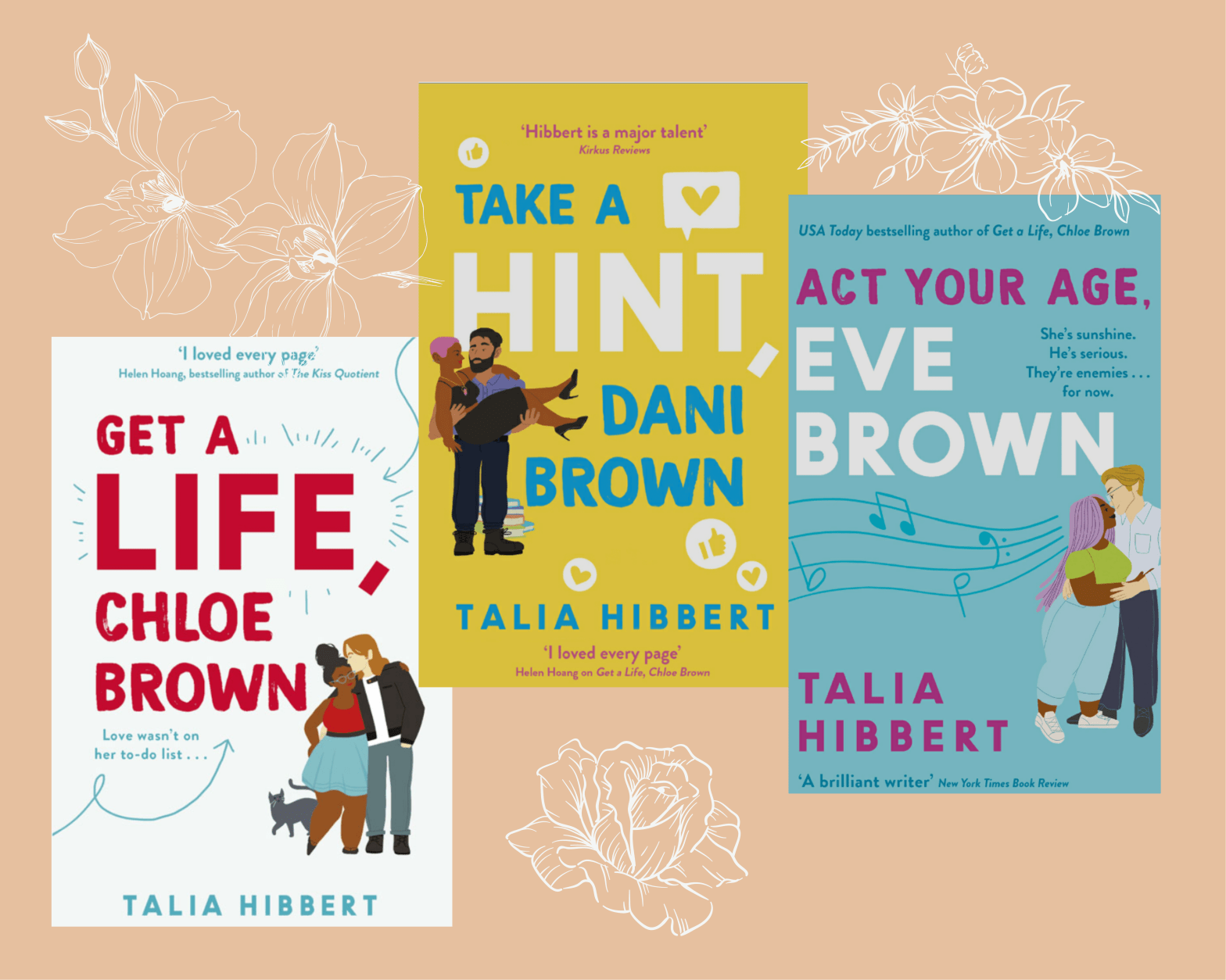
The ‘Brown Sisters’ Series by Talia Hibbert Spoke to All My Personal Quirks

I found myself in Chloe, Dani, and Eve in different ways, and it felt like the i’s and t’s in myself were finally dotted and crossed.

Get a Life, Chloe Brown got me straight from the title. After all, I’ve always been told to get a life. I’ve always been geeky, responsible, the kind of good girl who always opted for a Pepsi lemon at a party, to my friends’ evergreen despair and raised eyebrows. So when Chloe Brown decided to make a list of activities to help her get a life, I felt like nothing else could sum up my life better than that. It was exactly what I’d do: tired of my monotonous, way-too-calculated existence, in an attempt to become more spontaneous and adventurous, I would, without hesitation, start with a list. Because how else would someone without a life get a life?

I was surprised on how many other levels Chloe and I were the same. As a chronically ill web-designer, Chloe’s daily life is fogged by the pains she has to deal with every time she does anything remotely uncomfortable, like moving too much or too suddenly. This is where the book got interesting for me. No, it wasn’t the heart-pounding, steamy romance (although Redford is without a doubt my type). Chloe’s chronic pains, I realised, a few chapters in, were shockingly similar to the horrendous backpain, leg pain, and headaches I was dealing with on the daily back in the summer of 2020, when I happened to read this book. I was never diagnosed and the one chiropractor I went to for back pains said I was simply too weak and had to strengthen my muscles through exercise if I wanted the pains to stop. I suspect he dismissed it a little too easily.

Whenever Chloe would deal with her pains, I felt seen. I felt represented. Like my suffering was suddenly not just a sign of mere fatigue or lack of exercise anymore, but something a lot more serious. Much like Chloe, I had moments when the pain got so excruciating and intrusive, it would cloud my reason. I became scared to carry anything lighter than an almost empty backpack and the idea of walking to work terrified me. Because I knew what would follow. My pains have stopped months ago, for whatever reason, be it that I became more active or stopped mentally indulging them and got on with my life. But Get a Life, Chloe Brown was there to tell me I wasn’t complaining about nothing.

Dani Brown’s story followed and it spoke to my workaholism way, way too clearly. Pink-haired, decisive, responsible Dani is an established academic with a slight obsession for her work. Sounds familiar? To me, it hit home. Take a Hint, Dani Brown is probably the most see-saw-like story of all three, with a fake dating narrative that keeps you on the edge, but again, I came for the romance and stayed for the familiarity. Dani Brown refuses to let anyone distract her from her work. At her desk, in the library at the university where she teaches, in the café, Dani will always do research, or write, or read, and it feels like she can never stop. Although I fully resonated with Dani and her stubborn refusal to allow anything to interfere with her rock-hard focus, observing someone like that from the outside felt like an awakening. I felt like I’d been caught in the act and it made me re-think my work habits. I hope Dani has reached that point too.

Ah, Eve Brown. Confused, immature, one-job-today-no-job-tomorrow, I-ran-my-boss-over Eve Brown. Act Your Age, Eve Brown was one of many reminders I need, much like any other person in their early 20s, that everything will work out in the end. Maybe not next week, next month, or next summer. But things will work out and there is a place for me out there. I’ve been having symptoms of what I think is job-seeking anxiety for a while now. Which is, to be honest, a small thing to deal with in comparison to all the panic, confusion, and identity crises I’ve seen around me from people in my position. It often feels like you’re pulling a weight towards no direction in particular. Like everything you do, although progressive, leads nowhere significant, and the more you pull, the more you want to stop.

Act Your Age, Eve Brown opens with yet another fail for Eve in her pursuit of a dream career. At 26 years old, she has tried it all. Setting up her own business (several times), getting a degree, getting a qualification, working a regular day job, working for her parents, working in the creative sector. And every time something goes wrong, she bails. Until, through the most unlikely, most random set of circumstances and a decision to interview for a job completely unprepared (then proceeding to run her future boss over, which I related to to a concerning extent), Eve Brown finally finds her calling. And a deep, deep sigh of relief escaped my chest like it had been trapped there for years. Because it made me reconsider my constant fear I’m not doing enough and every second I don’t apply for a job is another missed opportunity. I’ve had plenty of Eve Brown-like random experiences that proved life-changing. And I need to keep reminding myself they will keep happening, and I will be there to catch the right train and build the life I want.


Did you enjoy this book review? Read more about what books inspired and moved us on our Latest Posts page. If you’d like to join us in raving about our favourite reads, check out our Write for Us page, where you’ll find more details on how to become a contributor. Thank you for reading!

Introducing: Coffee Time Reviews

A publication for pour-your-heart-out book reviews and any other kind of books-related content.

I launched Coffee Time Reviews for one main reason: I’m tired of being told how to write book reviews. I’m tired of respecting a certain format, making sure I always do it in a particular, rigid way, that severely limits what I truly want to say about how that book made me feel

I’ve been living with this frustration ever since I reviewed one of my favourite books of all time for a university assignment, and I was severely downgraded because I didn’t criticise it enough. I understand balance is important in journalism. But I also know the beauty of reading lies in how you connect and relate to a book, and a review should give you the freedom to fully embrace and express the emotion that a book awakens in you.

I’ve been a top writer in Books and Reading on Medium several times, but, oddly enough, the only true book review I’ve ever written since joining the platform is this one, in My Selection. The reason for that is I always hesitated to write just a book review and strived to add more value to every piece. All my reading-related pieces have mostly been published in Books Are Our Superpower and A Thousand Lives, both of which are incredible publications I love contributing to. BAOS does not publish straight-up reviews which I appreciate, but that wasn’t the only reason why I’ve struggled to put my reviews out there. The main reason was I never thought there would be enough interest in my reviews, and I was also held back by what I’d been taught a book review should include.

But after a while, I started questioning whether there was really not enough value in a book review. Because a lot of my favourite, sometimes life-changing reads came from watching or reading book reviews, so surely, my determination to always twist every review idea into something more, wasn’t always justified. When I started reviewing books in my head, because I always hesitated to write them down, I realised how much I’d really wanted to write an honest and unhindered book review. A good review can encourage conversations, lead to empathy and networking, and ultimately point others to books that could significantly improve their lives. That’s when the idea of Coffee Time Reviews popped into my mind.

Coffee Time Reviews does not aim to be a competitor to any other books-focused publication, but rather a place where writers can pour (coffee pun very much intended) their hearts out on how they feel about books, without thinking they should critically analyse what they review. Writing is all about emotion and passion, and I believe imposing rigid guidelines on writers can limit them unnecessarily.

So this is how the concept of pour-your-heart-out book reviews was born. And it is the key to writing for Coffee Time Reviews. Whenever you want to just take out on paper everything you feel about a book, you now have a publication more than happy to show it to the world. You never know how many other readers feel the same, or how many people could benefit from how a book moved you — maybe it will move them even more.

Reviews are our focus at Coffee Time Reviews, but our content aims to go far beyond that. Basically, whatever you want to write about your passion for reading, would perfectly fit our publication. All you need is substance and emotion to drive your writing. If you want to write for us, make sure it’s out of pure love for books.


If you believe in the same philosophy and would like to become a writer for our publication, please visit our Write For Us page for more details. We’d love to welcome you on board!

‘The Music of What Happens’: a Queer Love Story on How to Navigate Trauma

CW: Mentions of discrimination and assault

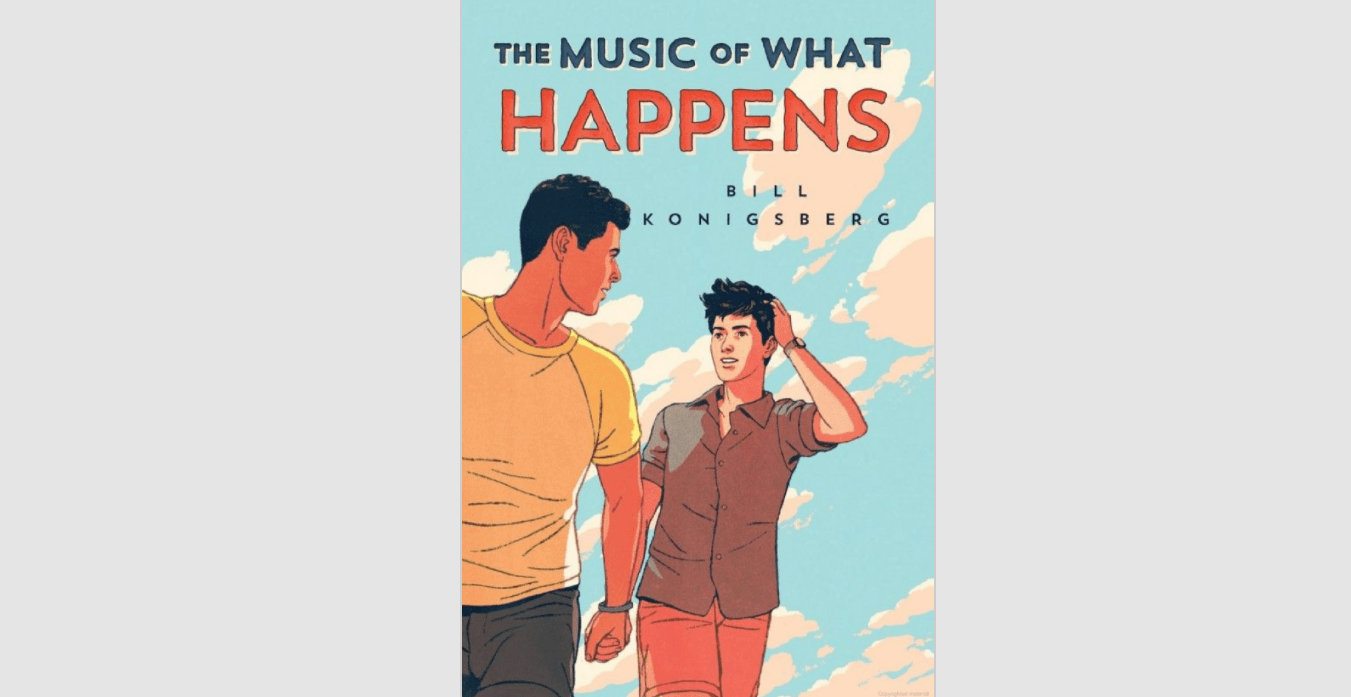
I didn’t relate much to Bill Konigsberg’s The Music of What Happens. But its character development, and the heart-warming love story between two teenage boys who find a way to navigate trauma together moved me to tears and made me root for the protagonists until the very end.

Max and Jordan remotely know each other from school. But when Max accidentally witnesses Jordan’s mum breaking down on their very first day of trying to build a business and get their lives back on track, the two boys become inseparable on a beautiful, but challenging journey. Max is of Mexican origin and openly gay, which has been met with its fair share of discrimination and raised eyebrows, even from his own father. Because of that, he develops a coping mechanism, where he sees himself as a superhero whenever he feels emotionally frail. On top of everything, Max suspects he has been assaulted without even realising, which drives him into self-doubt and confusion.

Jordan is grieving his father and trying to protect his mother, a fragile woman with a gambling addiction, who hasn’t recovered from her husband’s death. When Jordan’s house is in danger of being taken away, he tries to re-start his late dad’s business, a food truck that used to be their main source of income. But his mum is unable to cope, so they hire Max to help along. Bonded over this sad, but urgent issue they have to overcome, Max and Jordan start having feelings for each other. The intense traumatic experiences both boys have gone through makes them become indispensable to each other while they slowly reach out for help to deal with their experiences.

The book has a lot to offer particularly if you’ve gone through similar situations as the protagonists or if you’re queer and find yourself in one of them. As a straight woman, I didn’t relate to Max or Jordan much, but that didn’t keep my heart from squeezing when they were in difficulty. A key way in which The Music of What Happens moved me was the gender stereotypes projected on Max in particular. When his dad would tell him that real men don’t do certain things or act certain ways, thus invalidating a very dangerous experience that had to be addressed, Max started imposing the same things on himself unawares. I felt so deeply for him when he thought he was weak just for realising he had been assaulted. Because similar things are imposed on women and girls from a young age, which often turn severely damaging later in life. Max being told to always be strong resonated with how I was told to always be graceful and sit up straight, or control my emotions in public.

All the issues the book approaches are dealt with sensitively, but seriously, acting as reassurance for anyone who may have gone through similar things. It deals with grief, addiction, toxic masculinity, race and sexuality, and it shows all the ways in which parents can contribute to the struggles of their children without even knowing it. For any queer young adult who can identify with either Jordan or Max, I’m sure this book will act as a beautiful place of comfort and representation, that shows them they are not alone, and adults don’t always have the answers.

The love story is gentle, supportive, and strong, often acting as a safety net when everything falls apart for the two protagonists. Both Jordan and Max are sensitive and, although not entirely alienated, lonely in many different ways. They both experience the absence of a helpful paternal figure, although Max’s dad is simply impossible to get to, while Jordan has lost his father altogether.

The Music of What Happens made me a silent, but thoroughly involved observer to a teenage experience that has lived it all, from all the ways generations clash, which I’ve felt in myself and my parents over the years, to all the reasons why teenage love isn’t as meaningless as we’re told growing up. Particularly for marginalised genders and sexualities, books like this speak volumes about how intense and profound a connection like Max and Jordan’s can be, as they’re tied through their mutual struggles as queer men, but also through family struggles and mental health traumas.

I started this piece by saying I didn’t relate much to The Music of What Happens. I mentioned I’m a straight woman, so Max and Jordan could only be relatable to a very small extent. But in a few years I will be the sister of a teenage boy. One day I might be the mother of a struggling teenager. I might witness my friends’ children discover their sexualities or find it difficult to fit in. I might be asked for advice or support by someone in a similar situation as any of the two protagonists. And for those hypothetical situations alone, for how The Music of What Happens shaped my behaviour in the most subtle ways and made me think twice about parenthood and being an adult figure to a teenager, it was worth every gut-wrenching, heart-warming second.


Have you read The Music of What Happens or any other book you’d like to write about? Consider becoming a contributor for Coffee Time Reviews! More details here. If you liked this review, please consider subscribing, or giving us a follow on Medium and Twitter. Happy reading!