‘Expectation’ Validates All the Ugly Mistakes of Adulthood and Not Being Able to Avoid Them

It took me months to read Expectation.

Not because it’s not good but because it’s difficult. Not complicated, but difficult. Like eating a heavy chocolate cake, this book can only be consumed in small bites that you savour, otherwise, it will make you feel overwhelmed.

If you’re a woman, it hits particularly hard.

The way the characters develop with age and all the pressures they have to bear is a little too relatable for comfort. That being said, I’m glad I powered through those moments because the book rounds up to form a candid and human picture of adulthood, very appropriate to the life stage I’m at right now.


From the Publisher

What happened to the women we were supposed to become?

Hannah, Cate and Lissa are young, vibrant and inseparable. Living on the edge of a common in East London, their shared world is ablaze with art and activism, romance and revelry — and the promise of everything to come. They are electric. They are the best of friends.

Ten years on, they are not where they hoped to be. Amidst flailing careers and faltering marriages, each hungers for what the others have. And each wrestles with the same question: what does it take to lead a meaningful life?


My Thoughts

Anna Hope built the story in a way that mimics life itself as the reader advances through the book. When you read, you feel everything from hope, empathy, heartache, frustration, fear, stress (what a unique feeling to be triggered by a book), forgiveness and finally acceptance.

The dreams, the spontaneity of youth, the potential of time stretching out infinitely ahead, the carelessness, the safety of making mistakes, all get ground to dust as the three main characters get older.

The profound exploration of womanhood and friendship is truly at the centre of what makes Expectation so good. Hannah’s frustrations about struggling to become a mother, Cate’s post-natal depression and constant doubt that she deserves to be where she is, and Lissa’s tight clutching at straws as she tries to come to grips with her changing beauty in middle age are all very human, very common struggles women face as they get older.

I thought the male-female relationships in the book also shined, particularly through the humanity of the characters. Everyone in the novel is so relatably flawed that you can’t help but root for all of them. No one is glorified and no one is antagonised, they’re all average people living average lives and trying to be happy. We need more books with average characters.

I could go on and on about the characters and the symbolic of their relationships. The book explores different kinds of generation gaps, as well as grief, parenthood in its many forms, single-parent families, and the idea of not wanting children.


‘Expectation’: An Excellent Analysis of Womanhood

Anna Hope excels in her subtle but strong portrayal of womanhood in its many complex forms.

From motherhood, to career life, to marriage, to the status of daughter, sister or best friend, Expectation is a realistic and hugely complete representation of what it means to be a woman.

The friendship element is the key theme of the book, but its true potential shines as it branches into other aspects of life and in how it explores each woman’s feelings about the lives of her other two friends.

Hannah, Cate and Lissa all want something the others have, from children, to beauty, to careers, to relationships. As women, the pressure to have it all figured out and do it well as we age is a lot heavier and the consequences feel a lot harsher when we inevitably fail to be the perfect mother, wife, friend, and daughter.

It is therefore human and justified to long for things other people have that you lack, a feeling that has been always vilified especially in women. The misogynistic stereotype that women are mean to each other and envy other women is largely based on the very common and natural instinct to feel frustrated when others have what you need.

The way Anna Hope explores this theme and makes the reader strongly identify with it, helps reshape our mentalities and encourages us to be kinder to ourselves and to those around us.

I gave it 4/5 stars.


Eliza Lita is a freelance writer based in the UK. She covers books and reading, health, fitness, lifestyle, and personal development. For more of her stories, please consider signing up for a Medium membership through her referral link.

A Powerful Act of Reckoning and the Forgiveness of Betrayal

Disclaimer: I received a review copy of this book from Bloomsbury India. However, all opinions expressed are my own.

One of my 2022 reading resolutions was to read more books by women. Considering that March 8 is International Women’s Day, I seem to have been solely picking women’s writing this month. 

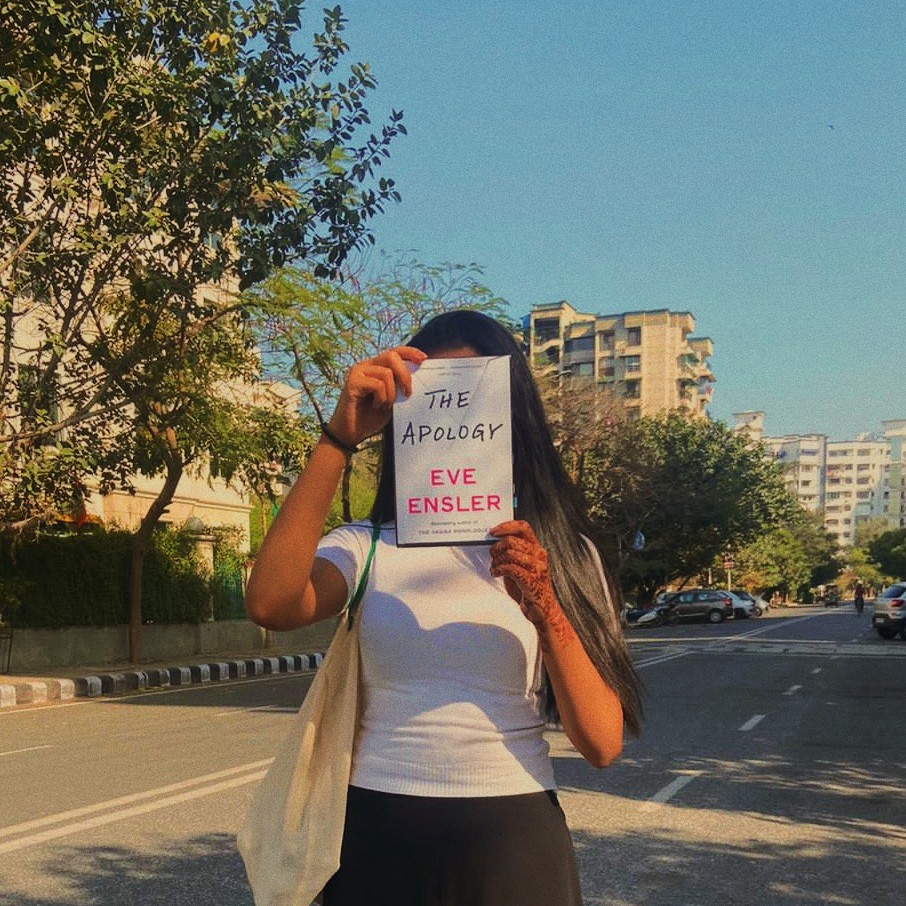
One of these was ‘The Apology’ by Eve Ensler. Back when I first came across it, I remember it was the author’s name that struck me — like many others, I had of course heard about The Vagina Monologues. I stayed my eyes to not skip over the synopsis and I knew then and there that it would take me as much courage to read it, as it had taken Ensler to write it.


Synopsis

If I still haven’t convinced you enough, here is a synopsis from Goodreads:

Like millions of women, Eve Ensler has been waiting much of her lifetime for an apology. Sexually and physically abused by her father, Eve has struggled her whole life from this betrayal, longing for an honest reckoning from a man who is long dead. After years of work as an anti-violence activist, she decided she would wait no longer; an apology could be imagined, by her, for her, to her. The Apology, written by Eve from her father’s point of view in the words she longed to hear, attempts to transform the abuse she suffered with unflinching truthfulness and compassion and an expansive vision for the future.

Remarkable and original, The Apology is an acutely transformational look at how, from the wounds of sexual abuse, we can begin to re-emerge and heal. It is revolutionary, asking everything of each of us: courage, honesty, and forgiveness.

On the Essay, Closure and Ensler’s Writing

I stand by what I have said before: There is something undefinably wholesome and at the same time, real, in the reading of essays.

There is a surety of an end and for a person like me — the existence or the acknowledgement of an end is very important. The closure is very important to me and for the longest time it had felt that essays, even though short and often led me on rambling trains of thought, came with a definite full stop.

As I write this, I am also forced to acknowledge this similarity for my deep-rooted need for the acknowledgement of an end. A closure. This work, after all, is as much a deliberate execution of the same need (by the writer) after all. What is it about this closure that buoys us? 

That leads us forward and yet, the lack of which, does not let us move forward in life. Does a closure really work? And just in case one doesn’t get it, is it possible to move on eventually? After possibly a long time? Or do you waste your whole life pining for it?

Ensler’s writing is… beyond words. Was it because of her clear voice or her scope of imagination that let her write this apology as her father, to her, that made it so profound and striking in its transparency?

On Trust and the Breaking of this Fundamental Bond

Trust is one of the fundamental pillars of any relationship. A break of this trust almost always proves detrimental to the enduring strength of this formation. Sometimes, I think rarely though, repairs are possible. But one may argue based on their experiences (and maybe mine too), is it really possible to go back to how it was?

More often, however, the shattering of trust equals a lifelong and forever shattering of that relationship. What remains is a perverse disjointed bond that does no good to either party.

In Ensler’s case, this break or breach of trust comes from a person who is supposed to be outside of the bounds of such questions. A father or a parent for that matter is one who essentially brings this child into the world. They are both a part of each other, biologically and genetically. What happens when this bond is destroyed? 

In such a case, the child’s entire belief system is upended. Their world tilts unnaturally so much so that it is no longer makes sense. Nothing makes sense. If you cannot trust your parent, who can you trust? If a parent breaks your trust, won’t that mean that the entire world too will break it? What is real and what is an illusion? Nothing is absolute anymore.

The Importance of this Apology

This apology, therefore, is a powerful act of writing.

In the first place, it is Ensler acknowledging what happened to her, and how it changed her. It is an acknowledgement of the structure of her being, or rather the history of her personhood.

Secondly, it is her giving a chance to her abuser to tell his story. Doesn’t that say a lot about the journey Ensler herself had to make, in order to reach space when she feels ready to acknowledge her abuser’s history?

Thirdly, does it also not show how immense Ensler’s own sense of forgiveness is? It is not easy to forgive one’s abuser. It is not easy to give them a chance to tell their story. It is easy to say that that is letting them give a mere excuse.

Lastly, through this powerful reckoning, Ensler herself is getting the chance to get the closure she has needed all her life.

Verdict

I think that reading ‘The Apology’ is not an easy task. Prepare yourself, consider the trigger warning. It is so sad and at the same time, so potent. It is raw and I was full-on sobbing at some points because I could, unfortunately, relate to some emotions and experiences. 

I annotated the heck out of it — the margins are scribbled with black ink, and I have run out of one flap of page stickers. I am wrecked but I am also in a better position regarding my own trauma.

Overall, it is a book I definitely recommend because ‘The Apology’ is so much more than just a daughter asking her father for one. It is so much more than a daughter who was abused by such a central figure in her life. It is so much more than being a victim. 

It is dealing with the aftermath and the trauma. And it is also a lesson of being able to understand, To forgive: both oneself and another. It is about overcoming and moving forward. It is about finding closure.


If you liked this…

If you liked this book, or are looking for more along similar lines, you could also check out My Dark Vanessa by Kate Elizabeth Russell. For personal reasons, I do club them together. However while ‘The Apology’ is mostly a non-fictional piece, My Dark Vanessa is a work of fiction.


Nayanika Saikia graduated summa cum laude with a Bachelor’s degree in English Literature and was also a Dean’s List student. She is currently pursuing her Master’s degree and is also a Booktuber and Bookstagrammer. She can often be found on her Instagram account Pretty Little Bibliophile

You can support her by Buying Her a Coffee or by using her Referral Link while getting a Medium membership!

This Is What People Want to Know About Reading Right Now

The topic of books and reading is my main niche because it’s so juicy.

Not only does it come naturally to me to write about it, since I’m a huge library mouse and I read all the time, but you can do so much with this topic, aside from recommending or reviewing books.

A while ago, I wrote an article answering the all-time top Quora questions on the topic of books and it was very well received.

As a books and reading journalist, and the editor of a publication for book reviews, reading tips and reader stories, I feel confident doing this again.

So this time, I’ll be answering five of the most popular questions on the topic of reading, which have been asked in the past week.


Is your habit of reading related to growing up in a house with books?

My personal experience would indicate that that’s the case indeed. My mum, especially, is a huge bookworm and has always inspired me to read more. I grew up not only surrounded by books but also with bedtime stories every night.

Until I started reading books myself, my mother would always read me something before bed. From fairytales to short children’s books, and even mythological stories, I remember being fascinated by the process of reading in itself.

But, to answer the question in a more objective way, this is a case of the mere-exposure effect, a psychological phenomenon that makes people develop tendencies for certain things if they’re familiar with them.


What book life lesson can you share with the world today?

Ikigai: The Japanese Secret to a Long and Happy Life by Hector Miralles and Francesco Garcia is one of the few books that changed my life almost entirely.

The lesson I’d like to share here is that everything you do in life, even the smallest actions, count towards a purpose. And as long as you have a purpose, you will be fulfilled. You just need to open your eyes to your own purpose.

It doesn’t have to be a hugely meaningful purpose. Taking a break for a day is a purpose. Cooking a healthier dinner tonight is a purpose. Taking a nap is a purpose. Taking a deep breath right now is a purpose.

This change in mindset gave meaning to everything I do and helped me see the more hidden aims of my every action.


If a book is old (decades), then does that mean it’s not relevant anymore?

I personally don’t believe so. And I think many people who specialise in literature would also disagree.

Some old books can become obsolete, yes, and some of them do perpetuate mindsets and practices that would be frowned upon nowadays.

But old books are valuable in how they speak of the past from the point of view of the present, and there is also a lot to learn from the writing styles of the past.


What is your favorite sentence in a book?

A bit self-indulgent, but I had to include this question. 

My personal favourite sentence in a book is from Korean poet Ko Un’s collection Time of Dead Poets: 

Every wave is the tomb of a wave and the womb of another wave. — Ko Un


Do you feel committed to finish every book that you start? Why, or why not?

I don’t know who needs to read this, but it’s time we overcome the determination to finish books even if we don’t want to.

There are so many books out there and the mere thought I’ll never get to read all the ones I’m interested in makes my heart squeeze. I stopped wasting time on finishing books I don’t enjoy a long time ago. It’s not necessary and serves no purpose.

If you don’t enjoy a book, just leave it. Embrace the power of DNF-ing. Find something better.


Are you a passionate reader? How would you answer these questions?


Eliza Lita is a freelance writer based in the UK. She covers books and reading, fitness, lifestyle, and personal development. For more of her stories, please consider signing up for a Medium membership through her referral link.

This Book Made Me Laugh at My Mood Disorder

TW/CW: mentions of mental illness

Bipolar disorder is no walk in the park, and I speak with the expert authority this mood disorder has given me. As if it takes an expert to know that. 

Bipolar disorder brushes nearly everyone that has ever lived because this consuming illness directly affects our relationships. An episode causes a spiral up or down, or seemingly straight into another dimension, and the collateral damage caused to everyone and everything around seems inevitable. 

But it’s not. It doesn’t have to be this way. You don’t have to live like this. 

Rock Steady: Brilliant Advice From My Bipolar Life by cartoonist Ellen Forney was published the year I was diagnosed with bipolar II disorder. This is my most shining example of a godsend, ever. 

In short, Rock Steady kept me functional (I won’t go so far as to say stable) and sane (for the most part), even when I was unmedicated. For me, a little cocktail of psych meds is necessary for stability. Functional was a refreshing change of pace compared to the complete chaos that was my life before I found this book or knew I was bipolar. 

This is the bipolar guidebook to stability, but the information provided in this book is invaluable for any mood disorder.

We don’t achieve stability — arrive at it — and then have no need to work anymore. Stability is hard-won from life-long effort. Once we understand and accept this, we’re ready to receive the help we need.

The only constant is change, [and the] task of maintaining stability is never a done deal.
 — Rock Steady: Brilliant Advice From My Bipolar Life, Ellen Forney

If you read this book:

You will learn the basics of self-care to manage a mood disorder

This wouldn’t be a very good self-help book if it didn’t teach you the tools to help yourself. As this is my absolute favorite book about self-help and bipolar disorder, I guarantee the basics of self-care are abundant.

The entire book is a targeted approach to self-care as a means to manage a mood disorder. Forney created a catchy acronym to describe her mental health philosophy, which is that “self-care entails a wide, interlocking, life-spanning range of essentials.” The system is called SMEDMERTS!

Sleep
Meds
Eat
Doctor
Mindfulness
Exercise
Routine
Tools
Support system
 — Rock Steady: Brilliant Advice From My Bipolar Life, Ellen Forney

The first five chapters provide tons of information about how to live the SMEDMERTS system. After the basic principles of Forney’s mental health philosophy, you’ll find chapters on therapy, coping tools, insomnia, and medication management. 

The SMEDMERTS system is a holistic approach to managing bipolar disorder, although this strategy can be used to manage any mood disorder. Once you have down the basics, it’s time to consider the possibility of an episode.

You will learn how to face down a bipolar episode

An episode is any prolonged state of mind other than stability — depression, mania, and the lesser-known mixed episode when symptoms of depression and mania occur at the same time.

Forney uses intuitive analogies to describe the progression toward an episode. She details several common triggers for an episode and provides coping tools to combat each one. 

This chapter helped me recognize triggers I didn’t even realize were aggravating my disorder. It also validated me that, yes, it actually does make sense that losing sleep causes me to need less sleep, among other strange symptoms common in bipolar disorder.

We need to be able to predict, recognize, and prevent or stop an episode while there’s still time to check all the gauges, make a plan, take those steps, and/or get help.
 — Rock Steady: Brilliant Advice From My Bipolar Life, Ellen Forney

You will find resources

The book in its entirety is an invaluable resource. Forney provides resources for finding support, but she goes beyond compiling a list of impersonal websites. There are lists of books, movies, and music, all curated by Forney herself, to make us feel seen, heard, and valid. 

Forney addresses ways to navigate the coming out process and how to squash stigma. There is an illustrated Mood Disorder Hall of Fame that includes dozens of celebrities. There is a resource for every need in this book, short of the vital things a book cannot give you. For what a book cannot give, Forney teaches you how to get it.

You will laugh…a lot

This graphic self-help guide is authentic. What makes this book so funny is Forney’s candid and transparent perspective of bipolar disorder that is so relatable. 

The comics that serve as personal narrative give you a glimpse into the psychotic hilarity that is bipolar disorder. Forney comedically humbles without degrading herself with such poignancy that I can’t help but feel light-hearted every time I open this book. 


It can be hard to see the bright side of a mood disorder, especially in the midst of a depressive episode. Rock Steady is an all-encompassing guide to living life with a mood disorder to the fullest without losing your sense of humor along the way. 


Connect with me across platforms 🙂

Other articles that may help you manage bipolar disorder:

A Reading Slump Antidote: 7 Fast-Paced Books to Get You Back on Your Feet

We always jump into the new year with a tremendous sense of hubris or resignation. By March, the true colours of our endeavours become undeniably apparent. January is the time for overambition, eagerness, and golden-hearted delusion. 

By the Spring, we see clearly just how serious we were about our resolutions. How’s your sleep schedule? How’s your exercise regime going? Rest assured, I’m mostly lecturing myself here.

My Storygraph account knows better than most the vicious cycle of my overreaching in terms of reading. I idolise the idea of being well-read, knowing a little something about everything, and putting myself in the shoes of hundreds of different walks of life. 

There, I consistently start the new year with the aim to read more. I’ve since come to the realisation that 100 books in a year may be a short-sighted prediction on my part. I’m an intuitive reader, I follow my mood, and my attention span works in bursts rather than a consistent flow. 

However, I do try my before to read more than the year before. That means that I need to dig myself out of the reading slumps that feel like a never-ending onslaught of ennui. Sometimes the thought of reading makes my eyes roll to the back of my head, especially when I’m preoccupied with other things. 

There is a myriad of articles that give tips on how to avoid a reading slump, and one day, I might throw in my two cents on the matter. But for now, I’m sharing seven books that yanked me out of my reading slumps and brought back my mojo. 

1. ‘The Dangers of Smoking in Bed’ by Mariana Enriquez

Short story collections are often a quick fix to a reading slump as they’re fast-paced enough to catch your attention without demanding too much commitment. 

This Argentinian collection of short horror stories may be what you need to get you reading again. There really is nothing like morbid curiosity to launch you into a book.

What happens when an act of cruelty causes a curse on a town? What can become of a woman who develops an all-consuming fetish for heart conditions? 

How do you explain the actions of two superfans who can’t bring themselves to part with the rockstar that they idolise? On an expectedly urban landscape, the supernatural intertwines with the natural, the political, and the human. 

Enriquez makes the horror of ghosts, ghouls, and banshees inextricable from those of the body, eroticism, and human morality. 

2. ‘Babette’s Feast: Anecdotes of Destiny’ by Isak Dinesen (Karen Blixen)

Art and reality overlap with each other in beautiful and unexpected ways in Karen Blixen’s collection of short stories. Babette’s Feast: Anecdotes of Destiny tells the story of a decadent banquet brought about by Babette, the French housekeeper of a devoutly Protestant Norwegian family. 

 It tells the story of an English accountant whose disdain for fiction drives him to recreate an old sailor’s tale. It tells the story of an actress, Malli, who rescues her cast and crew from a shipwreck before her performance of The Tempest, in which she would play Ariel.

Blixen tends to get to her point relatively speedily in comparison to many of the big names of 20th-century literature. Regardless, each story packs a punch in its message and has its own thought-provoking message. 

Sometimes you just want a story about stories, about the creative process and the surprising consequences it can cause. This book made me fall in love with literature in a brand new way by giving me a brand new approach to consuming art. 

Our closeness to art can be frightening or disturbing, but Blixen demonstrates just how essential it is to the human condition. If anything will remind you why you want to read, this is the book for the job. 

3. ‘Lanny’ by Max Porter

Short stories aren’t the be-all-end-all of reading slump antidotes. A fast-paced, gripping read is what plunges people back into the literature they love. Lanny is a folksy but refreshing novel on the dwindling English countryside. 

When the precocious and creative Lanny moves to a twee English village with his parents, to whom the other residents suspect. 

Dead Papa Toothwort is the shapeshifting entity that scours the village and influences everything that lives in it, from the animals to the people. The village belongs to him, the current residents, and the long-passed generations that lived there before. 

This includes Mad Pete, the artist that teaches Lanny art twice a week upon building a friendship with his mum. 

Dead Papa Toothwort has awoken from a long sleep and is listening to all the goings-on in the village, taking special notice of Lanny. Although not as short-lived as the previous short stories, Lanny is a fast-paced, otherworldly saga that pulls you into the weird and wonderful magic of the forest.

4. ‘Giovanni’s Room’ by James Baldwin

Giovanni is dying. David blames himself, but we don’t know why. James Baldwin’s novella, Giovanni’s Room, is narrated by David, an aimless American in Paris, who is awaiting the return of his possible fiancée, Hella. While he awaits her answer as she mulls the question over in Spain, his head is turned to an Italian waiter, Giovanni. 

Giovanni is a young, hotheaded yet disenchanted man who left his hometown with unspoken grief under his belt. He lives in a cheap, tatty room where he and David spend most of their time together. They met each other through the dodgy older men who also have their eyes on Giovanni, Jacques and Guillaume. 

Upon Hella’s loving return, David has to decide which path he’ll pursue, one of social acceptability and family, or one with which he is truly enamoured but demands social alienation? 

Baldwin is a painfully expressive writer who perfectly captures the isolation of life away from home, while yearning for a life that you can never have. Baldwin crafts complex, if at times cruel, characters who reveal the tragic reality of a life forced in the shadows. 

5. ‘My Year of Rest and Relaxation’ by Otessa Moshfegh

As I say, I’m an emotionally intuitive reader. Sometimes I neglect my reading because my mood has no interest in anything at all. The thought of lifting a single finger fills me with indignation at the harshness of this world. 

The only way that I was going to pick up a book was if I could live out that feeling vicariously through a character with more destructive tendencies.

Our unnamed protagonist, a wealthy, beautiful New Yorker, has decided to sleep for a year. Resting on her parents’ inheritance and the rent of some tenants somewhere, she is living on takeaway and a litany of sleeping pills with the aim of resetting her mental health, or her ‘melancholy’. 

To the superficial glamour of 2000s diet culture and news of the world, we are met with complete apathy. 

Our languid leading lady is too pretty to notice the constant bombardment of fad diets and sex tips which are tearing her best friend, Reva, apart. She’s also too rich and lonely to feel attached to the unfolding of world events. 

Reva and her situation with her toxic Wall Street banker are the only people she has in the world. She’s sleeping until Summer 2001, but what kind of world will meet her when she finally decides to participate again?

6. ‘The Vanishing Half’ by Brit Bennett

Two sisters escaped from the small town in the American Deep South which is surrounded by hostility and racism. One has returned to her mother with a child and no husband. 

The other has married into the white suburbs and is passing as a white woman. Nobody knows her secret and she has not spoken to her sister in years. 

When two cousins meet by chance, the family secrets begin to unravel. Every detail is another layer in the complex dynamics of a household that has faced a myriad of traumas that only the small town understands. 

As the new generation tries to reunite the fragments of estranged women, decades of unspoken struggle and resentment come to the surface. 

Bennett’s style is great for those trying to get back into reading as her description is kept to the point without too many detours. You can be sure that every single page is relevant and has some heartwrenching detail lurking inside. 

7. ‘Death by Scrabble’ by Charlie Fish

If you’re really not in the mood for commitment, there’s still something out there for you. Death by Scrabble, although a little self-explanatory is the shortest story that I’ve given 5 stars. 

With only about 4 pages under its belt, Charlie Fish has written a masterclass in tension-building. We know only two things: a man is playing Scrabble with his wife, and he hates her. While not quite naturalistic, we see the very real undercurrents of an unhappy marriage with unpredictability in every paragraph. 

How ‘Mindful Moments for Busy Moms’ Gave Me Back My Sanity

TW/CW: mental illness/mental health disorders

Seriously. I treat this book like some children of God do the Holy Bible; I pour over it at times, and other times, I get busy and let it collect dust. Then I wonder why I feel so lost. Then I remember my book and begin again.

Recently, I’d lost track of it because I still had some things in boxes from my move. Luckily, it emerged one day not long ago, and I’m having a wonderful time revisiting its pages.

The timeless clarity of the message is right in the title: Mindful Moments for Busy Moms: Daily Meditations and Mantras for Greater Calm, Balance, and Joy.

This book really is divided into mindful moments, and each moment grants you a little wisdom. Mindful Moments for Busy Moms by Sarah Rudell Beach has become a valuable resource for me as a mother, and in all honesty, I do my best to use its teachings in all my relationships.

I can use what I’ve learned from this book in all my relationships because the universal message being taught is unconditional love for self and others. This book teaches you how to live your best life just by keeping your cool and staying in the moment. Easier said than done, as you may have guessed, so let’s dive right in.

This book is geared toward mothers with younger children, but I highly recommend it for any mother that is looking for any part of what’s promised in the title.

There’s only one reason this book gave me back my sanity: it doesn’t leave anything out. I’ve never found another book on mindfulness, nor motherhood, that touched on every need I had, and yet the language is so clear and concise.

This book truly is for the mother. You won’t find information about what stage of development your child “should” be in; you’ll find out how to be at peace with yourself and your child as you are right now.

This book truly is for the mother. You won’t find information about what stage of development your child “should” be in; you’ll find out how to be at peace with yourself and your child as you are right now.

There is a brief introduction that defines mindfulness and discusses why mothers need it. Beach states that while it’s not necessary to read the chapters in order, beginners in mindfulness should start with the first chapter before exploring the others.

The chapters are titled as follows:

  1. Begin — Mindful practices
  2. Starting the Day — Morning practices
  3. Nurture — Mindful motherhood
  4. Sustain — Mindfulness throughout your day
  5. Support — Mindfulness for difficult moments
  6. Together Time — Mindfulness with your kids
  7. Savor — Mindful appreciation
  8. Close of Day — Evening practices

You will not feel alone after reading even a fragment of this book. Beach touches on everything I could think of, except the specific challenge of parenting with mental illness. While chapter five discusses mindfulness for difficult moments, someone who lives and parents with mental illnesses might need a more in-depth investigation to really feel seen.

If you are the parent reading this who struggles with mental illness, please know that I’m right here with you — I didn’t even get my bipolar diagnoses until my mid-twenties after my son was born. I still recommend this book for you, along with this article if you need a parenting pick-me-up.

The more we practice pausing, the better we will get at it. The more we practice being fully present with our breath, the better we will become at being fully present with our children.
— Sarah Rudell Beach

Beach also teaches that, “It’s okay to not love every minute of it.”

This is a book that can be utilized by the beginner or the advanced mindfulness practitioner. The introduction and first chapter guide anyone new to mindfulness, and all of the mindful moments that make up the book are so unique and grounding, even the experienced practitioner’s interest will remain piqued until the end.

Every page is beautifully designed, containing two-three engaging and validating bits of information or mantras.

When you allow someone, even a book, to create a safe space for yourself, healing just might begin to take place.

Validation is a huge aspect of Mindful Moments for Busy Moms. The tone in the book is all about meeting you where you are. When you allow someone, even a book, to create a safe space for yourself, healing just might begin to take place.

This book helps me find my own strength and sanity any time I feel they’re lost to me. I’m reminded that it’s okay to have a hard time and not love every moment of motherhood. I’m reminded that even mothers who don’t have mental illnesses feel inadequate and insecure.

I’m reminded I’m not alone, nowhere close. Neither are you. If you have a hard time remembering that, I wholeheartedly recommend Mindful Moments for Busy Moms.

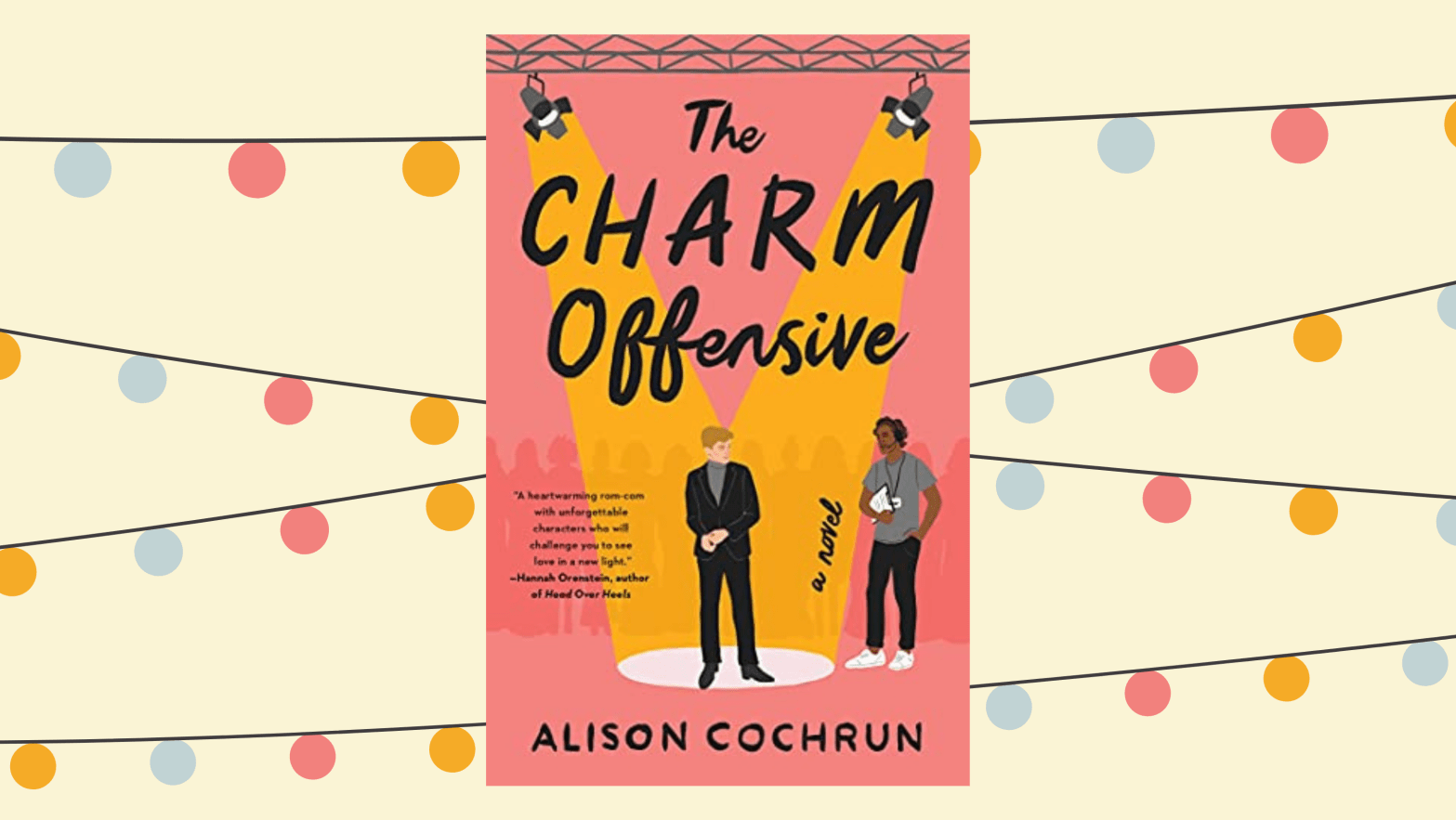
‘The Charm Offensive’ Changed My Life In 10 Hours of Wholesomeness

Listen to this book review via the Coffee Time Reviews podcast:

Basically, this entire book is a big middle finger to a world built to only work for neurotypical people. And that’s why it means so much to me.

I don’t read romance for the romance.

Most of the romance novels I’ve read so far that actually mean something to me have reached that point not because they made me swoon for the main couple, but because of how their love came to be.

Things like Alex and Henry of Red, White and Royal Blue defeating a heteronormative system to pursue happiness together, or Evelyn and Celia of The Seven Husbands of Evelyn Hugo playing with the press to protect their relationship, or Chloe and Red of Get a Life, Chloe Brown coming together from a place of trauma and finally being accepted by someone exactly for who you are.

This is what I read romance for.

Sure, I like a bit of steaminess and I’m here for the absurd sweetness and the way everything works well in the end. But what makes a romance truly matter to me is the way the characters find each other and the way they treat each other.

And this is why Alison Cochrun’s The Charm Offensive became the first book I’ve ever read once to then pick it up again immediately after.


What’s the Story?

Ever After is a reality TV show much like The Bachelor, where one guy dates 20 women for a few weeks and ends up proposing to the last one standing.

Dev is a producer on Ever After and a hopeless romantic. Charlie is this season’s prince. But once filming starts, the crew quickly realises their star isn’t at all like the others.

Charlie is scared of germs, physical touch and sometimes even of social interaction. He has OCD, severe anxiety and struggles with panic attacks. Dev is supposed to look after him and make him more comfortable with being on the show.

So they fall in love. Of course.

But Charlie is supposed to leave the show engaged to one of the women, not hand-in-hand with his producer. So our intrigue starts.


My Thoughts

The representation in this book is outstanding. But even more outstanding is the way it discusses mental health. Dev and Charlie are so good together because they both struggle with mental illness.

Growing up unable to explain his moodiness to his parents, and dropping out of countless therapy sessions, Dev believes his depression makes him a burden when he has an episode and is not ‘fun Dev’ anymore.

“He’s always happy, always smiling, always thinking about other people. He usually thrives on set, fluttering around to everyone, helping and chatting and feeding off the energy of it all. He’s the most charming person Charlie’s ever met. That’s not the description of a depressed person.”
Alison Cochrun, The Charm Offensive

Charlie’s family has never been supportive of him, despite his good looks and incredible intelligence. On top of that, his own best friend, with whom he co-founded a huge tech company, fired him because of his ‘little quirks’ (read panic attacks), so he believes love and understanding aren’t available for him.

This is where the two protagonists connect and start growing together: from a place of understanding and being able to offer the other one the love they’ve convinced themselves they aren’t worthy of.

“I don’t love you despite those things. I love you because of those things.”
Alison Cochrun, The Charm Offensive

Basically, the entire book is a big middle finger to a world built to only work for neurotypical people. And that’s why it means so much to me.


Why I Think It Changed My Life

I am neurodivergent. This is the first time I’ve ever written that down or admitted it anywhere other than in my mind and in my heart.

I have ADHD and I struggle with anxiety. And believe it or not, I had no idea about any of these things until I read books with characters dealing with or suffering from the same things.

Don’t get me wrong, I think my ADHD makes me brilliant in many ways. But I also know, now more than ever, how much I’ve had to work, suffer, struggle and be confused in a world that’s simply not made for people with brains like mine.

I’ve struggled all my life to be less clumsy, to stop running into things because my brain does this little blip and I forget the door or the corner of the bed is there, to stop rushing, to stop burning myself out for a day and then being lazy for a week after that.

All these perceived personality flaws are caused by my ADHD. And that’s fine, now that I know there’s nothing wrong with me for always failing to change them.

But beyond my own struggles, The Charm Offensive showed me how to support other people who are struggling.

Some of the most important people in my life struggle with depression and anxiety. And I’ve always felt powerless around them when it hits. I never know what to say or do to help. Sometimes I get annoyed because I feel useless.

“When it gets like this, how can I help?”
Charlie swallows. “No one has ever asked me that before.”
Alison Cochrun, The Charm Offensive

This moment right here, no matter how simple it sounds, has never happened to me during a bad mental health episode. Nor have I given this to those around me when they struggle.

The simple act of asking how you can help is one of the best things you can do. Because it shows you’re not dismissing the person who’s struggling, and that you’re there for them if they need you. 

So I started asking how I can help and I was actually told afterwards that they felt I was trying to do better and they felt like finally opening up to me. This is a person I’ve been trying to help for years.

“How can I help when it gets like this?”
Dev folds himself tighter against Charlie, all those lovely sharp points digging in. “You can just stay,” he says, at last. “No one ever stays.”
Alison Cochrun, The Charm Offensive

And this moment right here. What an eye-opening scene. This happened during one of Dev’s depression episodes in the book. And that got me thinking how often I feel like leaving people alone when they’re having a difficult time.

Not because I don’t want to be there, but because I feel inadequate and useless. But maybe I don’t need to go out of my way to make them feel better. Maybe I can just be there, just stay, ask how I can help and let it pass.

I’m terrible at cheering people up. But then, of course, depression isn’t about cheering up. I am grateful not to suffer from depression, but when I have an anxiety episode, I don’t need people to try to snap me out of it. I know it will pass and only I can make myself feel better. 

But having someone patiently by my side knowing I’ll bounce right back and at the same time giving me the space to listen to my feelings, would be invaluable.

And this right here is why books are so important and so helpful. It’s not just a silly, sugary romance. Some of them make a real difference.


Stuck for what to read next? Check out our Reading Recs page. And if you’d like to support our work, please consider making a donation via our Donations page. We’re trying to raise money for paid commissions, so any contribution will bring us closer to that goal. Thank you for reading!

A Love Letter to Books

I don’t know who said it, and Google has been little help. I don’t know, maybe I have the quote wrong, but it goes something like this in my memory:

“Reading allows us to be who we are not.” 

How incredibly powerful is that? 

It applies to me in a million different ways. I bet you can think of a few too? Share, please. 

Reason # 1

I’m shy. I have anxiety; I’m a classic introvert. Parties are pure torture, I find family get-togethers tiring, and I think I am a lousy conversationalist, as I spend most of my time thinking about what I will say next. 

I was a bartender in college. I took a girl home once, okay, if I’m honest, she picked me up. We went back to my apartment; she looked around and then left. I flunked seduction 101. 

Books allow me to be witty and sophisticated in a way that I am not in real life. 

I can be the life of the party in a book. 

Reason # 2

Moral certainty is rare, and there are certainly two sides to most things. 

When I read a book, I believe. There are good guys and bad guys, and it’s okay to hate the bad guys.

 I love The Lord of the Rings. It’s entirely okay for the reader to hate Mordor and imagine yourself fighting against the forces of doom. That’s what good people do. 

How about a current event ripped from the headlines? As I write this, Russia is on the verge of invading Ukraine. That’s bad and evil, and we should hate the Russians, or maybe just Putin, as millions of people will die.

But…

Press isn’t free in Russia, and I’ve read several stories now, stating the Russian people don’t clearly understand what’s happening, as the state runs the media. 

So, it’s a little more complicated than we first thought. 

By the way, I’d never be a hero. I like to imagine I would, but I know better. Instead, I’d probably be a fat shopkeeper in Gondor manning the walls, watching the heroes ride out to battle. 

I can be the good guy in a book. 

Reason # 3

I’m older and have lots of health issues. So, chances are I will never make it to Europe, never see the Scottish highlands, or play golf on a true link’s course. I won’t have a croissant and a coffee in a Paris cafe, travel to Rome or ski the Alps. 

But, I can do all of that in books. 

Reason # 4

I’m a husband and a father. My daughter is 13. I worry, I worry a lot about what the world will be like when she is my age. 

I remember when we didn’t have cell phones or computers.

I want to believe the future will be better and that global warming will no longer be an issue someday. 

I smile when I think of the Star Trek universe. Wouldn’t that be cool if it came to be?!? 

When I read, I imagine a better future. 

Reason # 5

A while back, I came across a post on Reddit. It posed a simple question to the men of the world. 

Who do you talk to about your problems and feelings? 

It was sad really because most of the men said they didn’t talk to anyone and added that nobody cared, anyway. 

When I read, I’m not alone. Of late, I’ve been into Marian Keyes, who has a brand new book coming out. 

At the moment, I’m reading Sushi for Beginners. 

I love this book! I really do, but here’s the thing, it doesn’t really have a plot. Instead, it’s about three women living in Dublin and the problems they face in their life. 

Yes, their life looks nothing like mine, but even so, no plot…. 

It’s nice, and it’s refreshing and reassuring to see that other people, even good-looking people with fabulous lifestyles, have the same issues you and I do. 

I read for the connections. 

Reason # 6 

I read for the same reason I buy an occasional lottery ticket. Buying that ticket allows me to dream for a couple of days about what I would do if I won. 

Reading a book allows me to imagine in the same way. 


If you liked this, please follow me. 

I’m a bit of a reject. I joined Medium 6 months ago and am about to be kicked out of the partner program, as I don’t yet have 100 followers. 

I appreciate it and promise to follow you back. 

My next post is going to be about death in the library. 

‘The Silence of the Girls’ Is the Feminist Iliad We Needed All Along

Listen to this book review via the Coffee Time Reviews Podcast.

I’ve never read the Iliad. Nor the Odyssey. Nor the Aeneid.

I know, major confession to make as a huge bookworm who spends more time than she probably has reading books, and thinking, talking, writing and editing content about books.

Don’t get me wrong, I have some meagre knowledge of what happens in these Greek poems but I’ve never actually read them back to back. Mythology has never interested me much unless it’s Egyptian. 

So I spent most of my life in near ignorance of Greek mythology. Until I discovered the modern retellings.

Mythology retellings have been sweeping the bookish world in recent years, and for good reason: to highlight the unsaid points of view and offer a more representative, more complete picture of the famous ancient texts and the events they depicted.

I started my retelling reading spree with The Song of Achilles by Madeline Miller which, I admit not unproudly, destroyed me and tore my heart in a million pieces. 

Following from such a heart-breaking and at the same time heart-warming love story between two of Ancient Greece’s most famous leaders and fighters, I picked up Pat Barker’s The Silence of the Girls. At first, I wanted to read it because I knew it was narrated mostly by Briseis, whose character I absolutely loved in Miller’s retelling.

Not only did this book deliver, in the sense that we see a lot of Briseis’s character, but it over-delivers, in coming to complete the story of the Trojan War from a female perspective.


Male vs Female Perspectives: A Comparison

In The Song of Achilles, we spend lots of time with Patroclus and Achilles, but, crucially, we get a very partial, one-sided view of both. Narrated in Patroclus’s voice, the book follows the two men’s story from the first time they meet as young boys until the gruesome days of the Trojan War and their role in it.

Whoever has some common European knowledge will have heard of Achilles and his insane fighting skills, accentuated by the legend that he was practically untouchable except for his heel.

So to see Achilles since childhood and through the eyes of someone who is first his closest friend, then his lover and closest comrade paints an entirely different picture that barely touches upon this man’s cruelty.

Because of course, to Patroclus, he wasn’t cruel.

Now, in The Song of Achilles, we do get glimpses of his, frankly annoying, thirst for glory and his distant attitude towards the gruesomeness of his actions in the war. But still, because of Patroclus’s voice, you can’t help but root a little for him, for them both.

Enter The Silence of the Girls. And if I was all hopeful and melty inside reading Achilles and Patroclus’s story, boy was I angry and frustrated when I saw it through Briseis’s eyes.

Throughout the book, although we follow mainly Briseis, we get important glimpses into the different directions women’s lives took during the Trojan War, especially as citizens of the losing side of the conflict.

We begin with Achilles’s monstrous conquest of Lyrnessus, where Briseis lived with her husband of royal descent. While all the men in the city are killed with harrowing cruelty by the Greek army and especially by Achilles, the women end up in much worse situations. 

Captured, assaulted, their children murdered in front of them, or brought to a point of ending their own life, we get to see what it meant to be a woman on the losing side of a war in ancient times.

As a daughter and wife of nobility, Briseis ends up enslaved and given to Achilles as his prize for taking the city. 

If you Google Briseis you find out about her key role in history: “Her role as a status symbol is at the heart of the dispute between Achilles and Agamemnon that initiates the plot of Homer’s epic.”

When king Agamemnon is forced to give up his “prize” of war, a young girl he was obsessed with, in order to save his camp from a plague, he claims Achilles’s “prize” — Briseis — which renders Achilles to withdraw his troops and his involvement in the war, leading to one of the most well-known military crises in history.

Yet history makes it sound as if Briseis herself was the root of the dispute, not the pride and spitefulness of two powerful men who couldn’t get over losing their female slaves as if they were mere candies they took from each other.

We get to witness her life alongside countless other women, all in various stages of captivity, and her strength, resilience and pure rage at the horrors brought about simply by men’s pride.

Briseis’s story is, in a way, a smaller version of Helen’s — also blamed for being the cause of the Trojan War, although of course, it had always been about the male anger and ego, and their utter inability to take responsibility for their actions.

The title of the book starts to make sense towards the end of the story when a single Trojan saying summarises women’s fates: silence becomes a woman

“We’re going to survive–our songs, our stories. They’ll never be able to forget us. Decades after the last man who fought at Troy is dead, their sons will remember the songs their Trojan mothers sang to them. We’ll be in their dreams–and in their worst nightmares too.”
Pat Barker, The Silence of the Girls

The story centres on what, if anything, women had to say in the conflict, and the various and ingenious ways in which they used their inability to have a say at all, clutching at straws to save some crumb of life or hope they had left.

And because of that, and because of many more important reasons, this is a book everyone should read.

Why ‘Truly Devious’ Was a Huge Disappointment

When everyone’s raving, I’m usually raving with them but not this time.

God was this book a drag.

Widely acclaimed dark academia mystery Truly Devious by Maureen Johnson just didn’t do it for me. It’s a well-written book with an intriguing premise. And that’s about where the praise stops on my part.

I listened to it on Scribd and I think that’s what ruined some of it for me. I didn’t like the narrator and that’s a key part of enjoying an audiobook, in my opinion. If I can’t connect to the narrator, the story has to be INSANELY good for me to keep listening.

So why didn’t I stop listening?

As an old Romanian saying wisely puts it, because I didn’t want to “die dumb”, meaning I really wanted to see what the rave was all about. Literally, all my favourite creators from the books community had something good to say about Truly Devious.

I can appreciate a well-written story when I see (hear) it. And as far as Maureen Johnson’s writing skills go, yes, the book is good. Objectively good. I don’t want you to believe I’m trashing the author here. It’s the story itself that just…fell flat, in my opinion. 

That’s what you get for having expectations, I guess.


From The Publisher

“Ellingham Academy is a famous private school in Vermont. It was founded by Albert Ellingham, an early twentieth century tycoon, who wanted to make a wonderful place full of riddles, twisting pathways, and gardens. “A place,” he said, “where learning is a game.”

In 1936, shortly after the school opened, Ellingham’s wife and daughter, Iris and Alice, were kidnapped. The only real clue was a mocking riddle listing methods of murder, signed with the frightening pseudonym “Truly, Devious.” It became one of the great crimes of American history. Something like that could never happen again, of course. . . .

Years later, true-crime aficionado Stevie Bell is set to begin her first year at Ellingham Academy, and she has an ambitious plan: She will solve this cold case. That is, she will solve the case when she gets a grip on her demanding new school life and her housemates: the inventor, the novelist, the actor, the artist, and the jokester. But something strange is happening. Truly Devious makes a surprise return, and death revisits Ellingham Academy. The past has crawled out of its grave. Someone has gotten away with murder.

Truly Devious is the first novel in a murder- mystery trilogy by New York Times bestselling author Maureen Johnson.”

 — Publishers Weekly (starred review)


My Thoughts

Let’s make this snappy and sweet:

Good things about this book: great characters with very well defined personalities, great story idea, amazing beginning (which unfortunately made me expect the whole book to be so gripping), loved the alternating timeframes, amazing use of language in places.

That being said, Truly Devious was a huge disappointment because: as it is a murder mystery series, you have to wait until you go through the entire trilogy to get some sort of an answer. Every murder mystery series I’ve read so far either has one mystery per book or gives you some kind of satisfaction as you go along, before the final reveal of the killer.

Truly Devious failed to do that, in my opinion. For most of this book, nothing happens. I can’t stress this enough. Nothing. You have the first chapter, a couple of chapters that explain the Ellingham kidnappings, and one huge plot twist about 80% in. Otherwise, nothing. Just teenagers at school and a couple of minor dodgy occurrences.

The number of times I found myself drifting off as I was listening is truly shocking for a murder mystery. But then again, that might be my fault, for listening on audio.


Do I recommend it?

If you like dark academia and aren’t that fussed about the murder side of it, sure, give it a try. But if you have huge expectations and want the satisfaction of a who-done-it story, maybe look somewhere else.

Had I approached this without any prior knowledge and without expecting a mystery, but maybe dark fiction, I would have probably enjoyed it more.

I gave it 3/5 stars because of the writing.


Stuck for what to read next? Check out our Reading Recs page. And if you’d like to support our work, please consider making a donation via our Donations page. We’re trying to raise money for paid commissions, so any contribution will bring us closer to that goal. Thank you for reading!