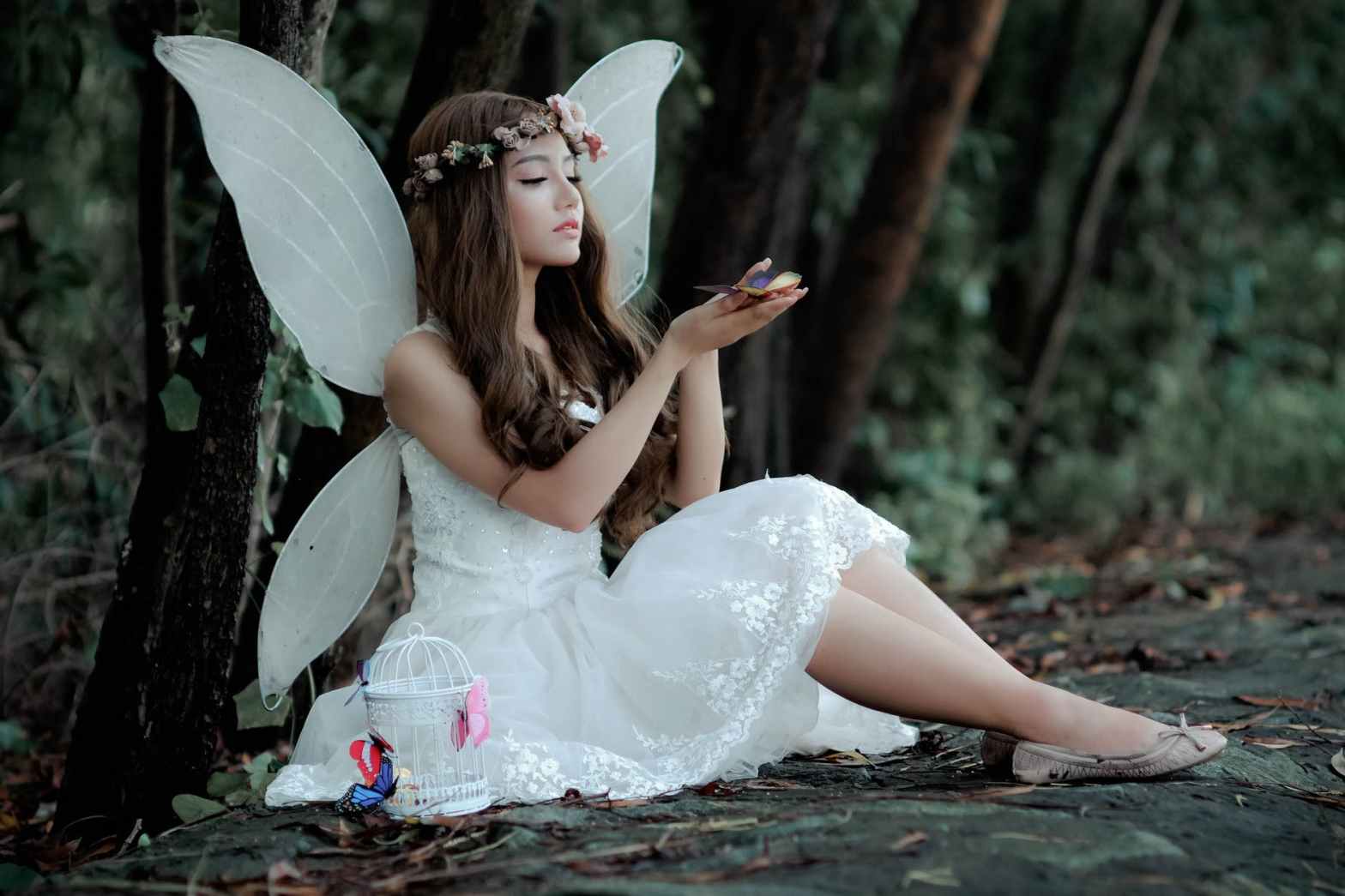
5 YA Faeire Books for Beginners

First and foremost, I have to dedicate this reccommendation to the faerie queen Holly Black. It was hard for me to not reccommend only her books, because she’s talented in the area of introducing faerie to urban/contemporary fantasy. So, I only included two.

Whereas vampires and werewolves were popular in the early 2000s, it appears that faeries/fae have been gaining more popularity in the past few years. I’ve always been fascinated by the fairies and have been since I was a child. Many authors thrive at incorporating Celtic folklore into their works, while others prefer to concentrate on their own. Nonetheless, we all have to start somewhere, and the fantasy genre can be daunting and overwhelming initially.

Here are some books that do a good job of not throwing you in at the deep end of the faerie realm but let you slowly ease in.


1. ‘The Darkest Part of the Forest‘ by Holly Black

Genre: Fantasy, YA, Romance, LGBTQ+, Contemporary Fantasy

The storey follows twins Hazel and Ben, who dwell in Fairfold, a peculiar town where Fae reside directly next door in the forest. The twins have been aware of the fae’s existence from being little, and they adored the boy who has spent generations asleep in a glass coffin in the woods.

Until he awakens one day, and Hazel’s journey starts where she discovers that fairies are far more dangerous than everyone believed. Her entire world alters, and she must keep her wits about her if she is to keep those she loves safe in a world where innocent play of knights in shining armour saving the sleeping prince turns into real life.

Although not Holly Black’s first faerie novel, The Darkest Part of the Forest was the first I read, and it’s what got me hooked on her writing and all things faerie. Black is a gifted and efficient writer, and this book brilliantly demonstrates this. It’s first in the list because it was my first faerie book and I think it did a wonderful job introducing me to the world of fae and urban fantasy.

In this novel, the sibling interaction is depicted wonderfully, with a hint of romance thrown in the mix. Whereas many YA books largely revolve around romance, this one does not, which is refreshing and intoxicating. After just a taste of the faerie realm, we’re left with a want for more of the twisted, sardonic, and intoxicating decadence.

2. ‘A Court of Thorns and Roses‘ by Sarah J Maas

Genre: Fantasy, Romance, YA, NA, Retellings, Fae

The theme of this book is survival. Feyre is dragged to the dangerous yet magical faerie kingdom following slaying a wolf while out hunting in the depths of winter to feed her starving family to survive. Feyre must keep her wits about her to simply stay alive as a plain human girl surrounded by fairies. However, as she learns the truth about her captor, passion blooms between them, and Feyre must once again rely on her survival skills to survive the perilous faerie realm.

A Court of Thorns and Roses is the first installment of the series, with it containing 4 novels and 1 novella. Sarah J Maas has created an incredible Beauty and the Beast retelling that yet manages to astound us with all of the shocking revelations.

My favourite fairytale retelling, and it does a wonderful job of presenting you to the faerie world through Feyre’s perspective. Despite the fact that it is labelled as a Young Adult novel, many individuals believe it is too mature for the younger end of the audience, and that older teens are better suited to reading it.

3. ‘Daughter of Smoke and Bone‘ by Laini Taylor

Genre: Fantasy, YA, Romance, Urban Fantasy

Karou, a seventeen-year-old Prague art student, isn’t your usual teenager. She possesses bright blue hair that grows straight out of her head, hamsa tattoos on her palms, and the ability to grant wishes. Her classmates like the wickedly gorgeous creature she depicts in her artwork, but they have no idea they’re authentic.

Karou isn’t your typical adolescent; she explores the globe in search of teeth for the chimaera who raised her. A hauntingly beautiful angel assists her in discovering the truth about herself, as she has no memory of who she is other than the chimaera. Learning her true identity and unveiling secrets of a violent past ignites an unearthly war. With Karou at the centre.

When I was sixteen, I read Daughter of Smoke and Bone for the first time, and it made me fall in love with reading all over again. Laini Taylor published the book in 2011 and since then has developed and explored her universe with two other series. Taylor’s writing and storytelling are engrossing for adolescent girls, and she writes excellently for YA.

Despite not being in the faerie genre, I included this one because it does a fantastic job of introducing you to non human characters and worlds. Through the viewpoint of Karou, we discover all of the truths alongside her, and it compels us to keep reading to uncover them faster.

4. ‘The Iron King‘ by Juilia Kagawa

Genre: Fantasy, YA, Romance, Faerie, Urban Fantasy, Paranormal

Megan has felt out of place ever since her father disappeared ten years ago. Megan’s home and school lives are both bleak and miserable, leaving her feeling as if no one besides her one friend, Robby, and younger brother, Ethan, are conscious of her existence.

This all changes on her sixteenth birthday, when everything she’s ever known completely changes. From a mysterious stranger watching her from afar, Megan learns of her true heritage and what the cost is.

The Iron King was released a few years after Twilight by Stephanie Meyer was published and just a year after the film debuted and it seemed to fill the paranormal romance hole in many readers hearts. Although it isn’t on my ultimate top ten list, I believe it does a wonderful job of introducing you to the world of the Fair Folk, and with nine books in the series, it also explores it thoroughly. The writing is appropriate for younger readers, so I’d encourage it if you’re not already an avid reader.

5. ‘Tithe‘ by Holly Black

Genre: Fantasy, YA, Urban Fantasy, Paranormal, Faeries, Romance

Sixteen year old Kaye goes from a chaotic, nomad way of life to an insanely dangerous one. Usually, her mother relocates from city to city with Kaye towing along behind. But a trip back to her childhood home leads to her discover a mysterious, white haired young man bleeding to death in the woods. After saving his life, Kaye is plundged into an inhumane world containing two faerie kingdoms, that could ultimatley lead to her death as well as her true identity.

Tithe is book one of three in Modern Fairy Tales and leaves us craving more. A wonderfully written, darkly engrossing work that perfectly immerses us in urban fantasy. Everything is flipped upside down rapidly, and just like Kaye, all we can do is take in everything as it goes on.

The Modern Fairy Tale Series is a phenomenal and remarkable introduction to the world of fairies without unloading too much too fast. Everything is thoroughly explained, allowing readers to better comprehend and appreciate the tale in each book. The best part about this amazing series is that it’s in the same universe as The Folk of the Air, Holly Black’s most successful series to date.


Special Mentions

Throne of Glass by Sarah J Maas

Celeana Sardothien, an eighteen yea old assassin, is taken from the salt mines where she’s been laboring in order to compete in a competition to select a new royal assassin. The first book in the series, Throne of Glass, is the first in a series of seven novels. From the first to the last book in the series, there has been a clear, consistent evolution that takes it from a novice to an advanced read.

Lament: The Faerie Queen’s Deception by Maggie Stiefvater

Deirdre is a painfully timid sixteen-year-old who is nevertheless an exponentially talented musician. She becomes the Faerie Queens’ target for her musical ability after discovering she is a cloverhand, an individual who can see faeries. Maggie Stiefvater manages to develop a dark faerie tale that is rich in Celtic lore, leaving readers fulfilled.


Stuck for what to read next? Check out our Reading Recs page. And if you’d like to support our work, please consider making a donation via our Donations page. We’re trying to raise money for paid commissions, so we can support and work with more writers from underrepresented backgrounds, who cannot afford to write for free. Thank you for reading!

12 Disturbing Books like ‘The Picture of Dorian Gray’

Oscar Wilde’s 1890 novel The Picture of Dorian Gray stood out not for its philosophy of art, but its perceived immorality. Ultimately, it also proved to be Wilde’s downfall. The novel’s suggestion of homoerotic male relationships ties in naturally with its thematic admiration of youth and beauty. 

Wilde’s work also exposes the superficial nature of society, pointing to the negative consequence of influence. By doing so, it emphasises the importance of individualism. So, here are twelve disturbing books like The Picture of Dorian Gray.


1. ‘Faust’ by Johann Wolfgang von Goethe

In Goethe’s novel, a scholar makes a deal with Mephistopheles, a demon often featured in German folklore. It seeks to bestow onto the scholar both knowledge and pleasure so forceful that the human will wish for it to last forever. Consequently, falling straight into the demon’s clutches. It’s a tragedy of pride, self-delusion, yearning, and infernal ruin. It conveys the same desire, both evident and implied, that we see woven into Wilde’s prose.

2. ‘Nausea’ by Jean-Paul Sartre

Categorized as existential fiction, Nausea features a protagonist troubled by his own existence. Antoine works through his feelings about the world and the people around him, but the sensations he experiences cumulate into nausea so visceral that it overwhelms him. The novel reflects the individual’s sense of confinement in a ruptured society, amplifying Dorian’s philosophical struggles with psychological ones.

3. ‘In a Shallow Grave’ by James Purdy

In Purdy’s novel, instead of internal decrepitude, the protagonist suffers from outward disfigurement. Worse still, Garnet’s appearance serves to distance him from the love he seeks so desperately. His body has been defiled by war, burned to a crisp by erupting shells. 

A single look in his direction causes people to retch. And yet, he clings to a romantic connection that might spread roots beneath the surface. Like The Picture of Dorian Gray, it’s a tale of individuality and transformation, as well as an obsession with looks, which inevitably dictate one’s worth.

4. ‘Ready to Catch Him Should He Fall’ by Neil Bartlett

The novel presents the tensions that exist in the gay world, the moody backdrop of which is slashed by a literal, recurring knife. The weapon alludes to the unprovoked violence against gay men, who engage in the ritual worship of youth and beauty in The Bar. 

The pairings within the story possess an eeriness that translates both into literal and figurative violence. What’s more, the passion that acts as the novel’s focal point is later influenced by the appearance of a pseudo-parental figure, whose claim to the protagonist is rather dubious.

5. ‘The Marbled Swarm’ by Dennis Cooper

Cooper’s novel navigates the veiled passageways and secret rooms that accommodate the disturbed mind of the narrator. The mystery is ever-evolving, and its cannibalistic theme is as transgressive today as The Picture of Dorian Gray must have seemed in the 19th century. 

Similarly absorbed by appearances, the story embraces aesthetics with an ardor that eclipses Wilde’s subtle insinuations. We’re ambushed by art and high society, forced into a system of intimidation and surrender. And so, within the novel’s social context, its thoughts outpace those of Wilde.

6. ‘Like People in History’ by Felice Picano

One of the less obvious options on this list, Picano’s novel centers its narrative on the wealthy and beautiful character of a gay man named Alistair Dodge. He manages to get away with unspeakable betrayals, all seemingly thanks to his charisma, youth, and beauty. The blend of these attributes allows him to abandon his morals.  

What’s more, Picano’s work doesn’t shy away from the terror caused by the AIDS epidemic, both in terms of the unsettling lack of action on the part of the society, and the graphic decomposition of the victims.

7. ‘The Monk’ by Matthew Gregory Lewis

Much like The Picture of Dorian Gray, Lewis’s novel is a Gothic portrayal of a shocking subject. Ambrosio, the titular monk, suffers from the rift between the spiritual and corporal aspects of his existence. Repression leads to overindulgence, which seems appalling because of its culmination in murder, rape, and obsession. Its heavy reliance on scandal and titillation forces the novel to operate as a form of social commentary, not unlike Wilde’s work.

8. ‘Frankenstein’ by Mary Wollstonecraft Shelley

Often thought of as a mere thriller, Shelley’s novel actually functions as a transgressive reflection on society’s shallowness. Frankenstein criticises our presumption that, as humans, we have authority over life. In the same way that Lord Henry desires to mold Dorian into the realisation of a type, Frankenstein finds himself trying to quell the unruly nature of the Creature. In this respect, both novels dissect the theme of art and its imitation of life.

9. ‘The Demon’ by Hubert Selby Jr.

Harry White falls victim to an obsession, which feeds his violent need for fulfilment and retribution. The novel presents the slow unfurling of his psyche, illuminating the mechanisms that drive people to extremes. It’s a gritty story about madness, delusions, and the tangles of torment that seduce us. In short, The Demon captures The Picture of Dorian Gray’s anxiety and debauchery and spins it into a shocking tale of horror and woe.

10. ‘Hunger’ by Knut Hamsun

Published the same year as The Picture of Dorian Gray, Hamsun’s autobiographical novel shocks with its focus on the poverty and despair experienced by a writer searching for the ultimate form of individualism. Namely, his artistic self-expression. The novel serves as a psychoanalytic study of obsession, alienation, and masochism. Like Wilde’s work, it leads us to the edge of propriety, and deposits us in the crannies of the human soul.

11. ‘Dancer from the Dance’ by Andrew Holleran

Holleran’s novel takes a look at a particular aspect of the gay community, which is the worship of beauty and youth. The hedonism that trudges through the pages of the book is always weighed down by the men’s need to conform to the surface-level desires that dictate their happiness. These, by nature, are never fulfilling, and leave the men harrowed by the passing of time. As a result, the men’s source of torment aligns with Dorian’s.

12. ‘The Great Gatsby’ by F. Scott Fitzgerald

Telling the story of Jay Gatsby and his obsessive pursuit of the American dream, Fitzgerald’s work manages to capture a time of general hedonism in America. Gatsby’s fixation on gaining wealth and fame is interwoven with his yearning for Daisy, and so the fundamental obsession within the story blurs the lines between desire and self-realisation. In turn, this link reminds us of the complicated face of longing found in The Picture of Dorian Gray.


Stuck for what to read next? Check out our Reading Recs page. And if you’d like to support our work, please consider making a donation via our Donations page. We’re trying to raise money for paid commissions, so we can support and work with more writers from underrepresented backgrounds, who cannot afford to write for free. Thank you for reading!

Why They Shouldn’t Be Called ‘Children’s Books’

When I was young, bedtime stories seldom happened. The image of a peaceful evening was impossible for my family and instead, when the sky darkened, an onset of reprimanding barks to finish our homework and demands for toys to be picked up ensued. 

My mother was often too busy taking care of chores and my father, well, reading just wasn’t his thing. The only time a bedtime story was read to me was when my older sisters’ would feel like it — which wasn’t very often.

It’s hard to believe why they never liked to do it because now, as an adult, I love to read to children. One of my favorite times of the day is when my niece, with her finger settled on her chin in contemplation, walks over to her bookshelf. 

After a few long seconds, she finally picks a book and lugs it over to me, and together we delve into the story we’ve read countless times before. For us, storytime is a space for learning, discussion, and immersion.

It was through these moments I realized, reading children’s books doesn’t have to stop when you are an adult. A common misconception many people have is that they are too old to be reading children’s books. 

They don’t need pictures to visualize. They’ve already learned all the morals of the stories. The plots don’t pertain to them anymore. They’re too easy to read.

However, when you take on this mindset, you are missing out on some of the most vital life lessons that can be found in books. When you come across a great children’s book, with its heartwarming message and fun storytelling, it’s like striking gold. The messages within are universal, simple, and pure. It nourishes your sense of being and will sustain your life.

Children’s books are meant to teach life lessons to children, but why can’t they teach you too? As adults, we think that by learning something once, we don’t have to come back to it again — but that’s completely false. Sometimes, we need to be reminded to be grateful for the small things in life and to be patient with others.

Here are some examples of how children’s books with simple messages can pertain to all phases of life. All stories, from heartwarmingly gentle to adventurously silly, can convey life lessons if you know how to look at them.


Children’s Books

  1. Love You Forever by Robert Munsch (Author) and Sheila McGraw (Illustrator)

Love You Forever is a timeless story about a mother’s indefinite love for her meddlesome baby boy. As time passes and her toddler son grows into a man, her love for him never dies despite the trouble he causes and the distance that naturally occurs with time. 

For children, this book shows how much a mother loves her child no matter what age you are or what trouble you cause. It illustrates how an abstract feeling such as love can (and will) look different as you grow. 

For adults, while it’s a story to remind you of a parent’s love as well, it’s additionally a story about the full circle of life and to be gracious and appreciative towards your parents. The mother’s recurring lullaby may even remind you of the nostalgia of your own childhood.

2. The Giving Tree by Shel Silverstein

The Giving Tree is about a boy’s friendship with a tree. Despite the boy’s never-ending demands, the tree gives, and gives, and gives, all that she can but never wants anything in return. 

For children and adults, it’s a story to show how it’s important to give, be grateful for what you have been given, and not expect anything in return. It shows that perhaps you don’t need the things you wanted after all, and instead, cherishing your loved ones and cultivating relationships are more important.

3. If You Give A Mouse A Cookie by Laura Numeroff (Author) and Felicia Bond (Illustrator)

If You Give A Mouse A Cookie is a fun story about how if you give a mouse a cookie, it’ll snowball into a multitude of aftereffects. For children, it’s a playful story about consequences and actions. 

For adults, it illustrates how a string of events can seem perfectly reasonable — if you have a cookie, of course, you’ll want a glass of milk! — while simultaneously, nonsensical. It’ll remind you of the power of cause and effect and make you second guess doing something in the first place.


As people age, it’s natural to not want to go back to books that aren’t challenging or not intended for your age group. Readers get excited when they begin to read picture books, then to middle-grade books, then to YA books, and eventually, to adult books. 

However, children’s books are not only for children, they’re for everyone. The plots in the books may not completely mirror your life phase, but the messages within them apply to all stages of life. Just as how we’re trying to teach young minds important lessons, children’s books can serve as a reminder to adults as well.


Stuck for what to read next? Check out our Reading Recs page. And if you’d like to support our work, please consider making a donation via our Donations page. We’re trying to raise money for paid commissions, so we can support and work with more writers from underrepresented backgrounds, who cannot afford to write for free. Thank you for reading!

Worried about the Planet? These Titles Will Change Your Outlook

Chances are that you’ve experienced some climate anxiety as record wildfires, droughts and extreme weather events have overtaken the news cycle and continue to warn of a dire future without carbon reductions. 

Without collective action to reduce carbon emissions, however, it can be hard to channel your anxiety into something productive. Continually reading news reports that warn of the impending impacts of climate change can prove exhausting.

Recently, I’ve found that seeking out nature-minded reads that remind me of the beauty of the natural world or address the pervasive impacts of industrialization have quelled my own fears. These recent reads have proved insightful by changing my own perceptions of the problems we face 

Reading these titles can help alleviate that sense of dread by providing insights into the extent of the problems we face and tangible solutions to begin solving them.


Heather Hansman’s rafting journey in ‘Downriver’ warns of what’s at stake as cities expand

Where does your water come from? Chances are slim that you know the exact source your tap water originated from. In increasingly urban areas, water sources are becoming more abstract from the people they supply. 

One of the most prescient case studies of this phenomenon is in the American West. Cities and suburbs around Phoenix, Denver, Seattle and San Diego have boomed in the past 50 years, in large part due to extensive Bureau of Reclamation projects that created vast reservoirs and dams, giving Western cities massive water sources to use.

Water will only continue to be a precious resource as it is exacerbated by the ever-pressing needs of a demanding population. 

In her book, Downriver: Into the Future of Water in the West, Heather Hansman explores the interdimensional complexities of water rights through her rafting journey down the Green River, one of the last Colorado River tributaries that hasn’t been fully allocated. 

Her narrative combines history, politics and economics as she winds from Fontenelle and Flaming Gorge reservoirs to Dinosaur National Monument and Ouray Fish Hatchery, painting striking contrasts between local residents and bureaucracies often lost in discussions of the urban-rural divide. 

If you’re looking to expand your understanding of water rights and usage, Hansman’s personal account provides a comprehensive picture of the historical and political implications at play. 

With increasing water scarcity, demanding cities, and over-allocated rivers that provide the personal tangibility of rafting down the Green, it proves the power of having personal connections with the landscapes we inhabit without actually having to.


Change your fashion habits with ‘The Conscious Closet’, a comprehensive guide for shopping sustainably

Admittedly, I was doubtful if a singular book would be enough to completely change my closet — or my spending habits. But fashion is one of the largest industries that contribute to climate change and is greatly influenced by individual decisions.

Elizabeth Cline’s The Conscious Closet: The Revolutionary Guide to Looking Good While Doing Good provides an in-depth look at the fashion industry and quantifiable actions in each chapter that can be put into practice immediately. 

I found the step-by-step breakdown in each chapter to be very helpful — by determining specific style preferences, cataloguing my own closet and considering the different carbon footprints of fabric types before buying anything, it provided an individual course of action to make my buying habits more sustainable and eco-friendly.

Cline’s guide also offers useful insights into the world of thrift shopping, which can be hit-or-miss for fashion finds. Knowing the differences among stitching styles, fabric content and clothing fit can prove useful when scanning through racks of pre-loved clothing. 


Jenny Odell’s ‘How to Do Nothing’ offers an antidote to social media burnout — by reconnecting with the natural world

With the past year and a half spent in quarantine, technology has become our collective method of connection. 

That’s why Jenny Odell’s critique of capitalism, social media and our disconnection from each other — as well as the natural world — is an excellent read for the modern age. 

How To Do Nothing: Resisting the Attention Economy challenges the dominance of ever-increasing social platforms that monopolize our time and stress us out to keep us engaged, while at the same time providing a compelling argument for mindfully connecting with our surroundings.

Ironically, Odell herself lives in Silicon Valley and provides the reader with firsthand insights from the hub of the “attention economy” itself.

By cultivating mindsets that recognize the pervasiveness of the “attention economy,” we can enhance the quality of our lives by instead focusing on the value of the spaces we inhabit and the people we surround ourselves with.

While it isn’t a “step-by-step” guide to unplugging from social media, Odell’s reflection allows readers to reconsider their relationship to monetized platforms and change their habits. 

Her analysis of the concept of “bioregionalism,” or recognizing the distinct qualities of the environments we inhabit by their specific ecosystems and settings, proves that changing our natural relationships is a crucial step in challenging ecological destruction. 

If we can cultivate balanced and personal relationships with our landscapes, then we can begin to create long-term, tangible solutions to the environmental crises we face — and won’t be distracted by our phones in the process.

What ecologically-centered books have you enjoyed? Let us know in the comments!


Corinne Neustadter enjoys writing about a broad range of issues when she isn’t reading.

How ‘The Book of Taliesin’ Will Change Your Idea of British Literature

The Book of Taliesin, also known by its Welsh name as Llyfr Taliesin, is a remarkable collection of poetry. It was written in Middle Welsh, but many of the older poems show signs of Old Welsh and Cumbric (a very closely related language to Old Welsh).

It is particularly interesting as it does not record one poet’s work, or follow a single narrative. Instead, it is a gentle accumulation of poems that have been attributed to the name of one poet.

These clearly are not all the work of one poet, as they were composed over the span of hundreds of years. They date back from when the end of Roman rule was only a generation or so removed to the times of the last sovereign Welsh princes.  

This new translation by Gwyneth Lewis and Rowan Williams is the first translation of the full work, rather than an collection of poems attributed to Taliesin, for many years. Yet that is not to say that these poems have not cast a long shadow over British literature from works of a similar time like The Gododdin to more recent poets such as Tennyson.


The name Taliesin has then been used as a poetic nom de plume for many years since, and so it is easy to see how the work of one poet, with that name, grew in reputation and so became the seed around which other poets added work of a similar feel, borrowing the name to add gravitas and poetic credibility.

In some ways you could image Taliesin as being a bit like the Greek poet Homer. With both there are many debates about if one person wrote the works that they are famous for. There are also many other works that were once attributed to them, and even now that facts get in the way of such attribution, the name and links sticks.

It is also important to think of the role of poet in that society. It is no coincidence that many langauges use the same word for poet, and seer or prophet. The ability to conjure stories and play with the interface between reality, memory and imagination, always has a hint of the prescient nature of magic.

Unlike many other collections of early British poetry, there is not a single thread that binds them, nor is it easy to pick out the warp of theme and weft of form, that might give a sense of textual cohesion. Because of this any translation is left with the problem of order.

Should the poems be left in the order of the surviving manuscript, which has gaps and is clearly cobbled together from earlier sources, or do you pick out styles and themes to give a sense of grouping.

In this case the poems are grouped by genre, which works well as it means that it is easy to dip in and just read one section at a time without feeling that it is incomplete.


That ability to be dipped into is helped by the very comprehensive introduction. It would be possible, although perhaps unwise, to skip past it and dive straight into the poems. Yet is does provide a brilliant spring board of information to give context to the poems, and so once read, perhaps as if it were a separate primer to Middle Welsh poetry (for it does include a very helpful guide to pronunciation of Welsh).

I must say that it is a very intense introduction, and it helps to read it slowly, and often jumping back to remind yourself of aspects. But once, you have a firm grasp of it, you can dip back and forth between the sections of the poems, with a decent grounding.

It is also interesting to read about how different poetry was. I, having studied Ancient Greek poetry, always knew that poetry was not written in the same way, with marked lineation and punctuation, yet I had not quite realised that even into the early Norman period poetry was written continuously, in much the same way as prose, and the only breaks were dots.

The grounding given by the introduction is helped by the copious footnotes which both explain allusions, but also mention where there might be confusion or details that cannot be satisfactorily translated in only one way.


This translation, for all its erudite, enchanting, and lyrical verse, however, is somewhat lacking when it comes to the poetically minded reader. For whilst the translation treads that fine line of all good translation, balancing the literally meaning, allusions, meter, sonorousness and for a work that can be read with such political force, it skilfully avoids being overly domesticating, without feeling ostentatiously foreignizing, it does feels overly consciously wrought.

That, somewhat distracting sense of craft, is added to by the page layout, with dense text and copious footnotes. It seems that practicalities overtook aesthetics when it came to the book’s design.

Such clear craft can work, but coupled with copious footnotes (which are brilliantly informative and give context to the poems) it distracts from the emotive feel of the poems. Indeed, it is partially because of the almost ineffable incantational nature of the poems, that such scholarly grounding has such an effect.

I feel that this volume is trying to straddle a line that does not fully work, in both working as poetry on its own right (for translated poetry should always be treated as a new interpretative work) and also being comprehensive scholarly edition that address all the manuscriptal issues.


Yet for that flaw, it is still a surprisingly easy read, considering the depth of information wrapped around each poem. The poems manage to blend the very detailed forms of Middle Welsh poetry, with a massive depth of poetic allusions and intricate theology, the translation feels as if it has settled naturally.  

And so, I cannot think of any better way to approach The Book of Taliesin, for this translation provides both engaging poetic fluidity, yet also a lightly worn depth of knowledge that is clearly explained so that no prior knowledge is needed to understand it.


Stuck for what to read next? Check out our Reading Recs page. And if you’d like to support our work, please consider making a donation via our Donations page. We’re trying to raise money for paid commissions, so we can support and work with more writers from underrepresented backgrounds, who cannot afford to write for free. Thank you for reading!

‘Mexican Gothic’: Cool Style and Cold Chills

Could there be a more straightforward title for a Gothic novel set in Mexico? If the title seems too on-the-nose, though, too baldly descriptive, don’t be fooled into thinking the novel might be a paint-by-numbers affair. Moreno-Garcia’s stylish novel is atmospheric, inventive, and a pleasure to read. 

Mexican Gothic as Gothic

The past two years have seen four new Moreno-Garcia novels published and two reissued (her 2017 The Beautiful Ones and her 2016 Certain Dark Things), with Mexican Gothic one of two published in 2020 (along with Untamed Shore). 

That prolific schedule has seen Moreno-Garcia’s flair for the fantastical—the vampires of Certain Dark Things and the magic of Signal to Noise (2015)—recombined with other genres in delightful new ways. Mexican Gothic brings the mystical and fantastical to the Gothic’s ‘traditional’ concerns around inheritance, heredity, and declining family fortunes.

Mexican Gothic follows stylish and thoughtful university student Noemí Taboada on a family mission to check on the welfare of her newly-wed cousin, Catalina. She finds her cousin shut up, apparently unwell, in a dilapidated country house full of unresponsive servants and hostile hosts. 

Catalina’s husband, Virgil Doyle, has brought his new bride to live at his family home in the Mexican countryside, High Place. The other residents include his father, Howard, sister, Florence, and her son, Francis. Unrelated family members, such as Virgil’s first wife and Francis’ father, don’t seem to last long here. 

That alerts Noemí, and us, to the threat that Catalina might be facing, whether merely from the gloom and resentment that pervades High Place or from something more calculated and sinister, we cannot tell.

Moreno-Garcia’s straightforward (and in some ways unromantic) title invites us to bring to her early, scene-setting chapters the range of conventions and tropes that we know populate Gothic and related sensation fiction stories: 

  • the ill-used wife declared insane, or otherwise incapacitated, for nefarious purposes (usually involving inheritances); 
  • the figure of the rigid housekeeper working against the heroine; 
  • or the lengths to which a doomed family on the decline will go to cling to its glorious past.

For predecessors to the domineering and controlling Howard Doyle, we might look to the Svengali of George du Maurier’s Trilby (1894) or W. Somerset Maugham’s Oliver Haddo (The Magician, 1908), and the effects of High Place on Noemí and her cousin could well be attributed to similar forces of personality and influence until the novel is nearly at its end. 

All of these tropes and conventions Moreno-Garcia recombines with her own unique, speculative twist. While much Gothic fiction might tell a story of the supernatural only to resolve it into a matter of more earthly guilt and sin, Moreno-Garcia’s novel holds the two together neatly and compellingly. (No, I won’t give away the ending!)


Mexican Gothic as Mexican

Moreno-Garcia’s heroine, Noemí, presses into High Place’s morass of old Gothic tropes in the same way that her costumes insert a vivid splash of colour into the Doyles’ gloomy decor. 

She is thoroughly modern; a young, beautiful, wealthy woman in 1950s Mexico who alternates between considering her dating choices and possible postgraduate study, and trying to determine what will save her cousin from the oppressive illness that seems to have befallen her. 

With a cigarette in one hand, Noemí wields her inability to put up and shut up before her like a sabre, cutting down eugenicist talk from the Doyles’ patriarch and slicing through the family’s attitude towards all women as breeding stock.

Like her cousin before her, Noemí seeks support in the nearby village, where the local doctor and local healer offer her both material assistance—including medication to combat Catalina’s illness—and moral support, while the Doyles insist on receiving treatment only from their own family doctor, another European immigrant. 

The Doyles conceal the depths of their depravity, which necessitates a cadre of special servants, behind the veneer of commonplace racism and classism; we could easily believe that they refuse to use the local doctor out of pure prejudice, and this helps Moreno-Garcia conceal the supernatural twist of her tale for as long as she does.

The abuses of colonising groups from Europe are a carefully drawn backdrop to the tale, reminding us of how this story is localised, as the title starkly demands we remember. 

Mexico’s long history of silver mining, how the industry was impacted by the War of Independence, and the connected violent histories of colonialism and misogynistic patriarchy, provide a vital framework for the novel, but to follow the emotional thread of the story, you need not know anything beyond its pages. 

Moreno-Garcia’s skill as a novelist, with careful plotting and characterisation, provides all the scaffolding we need to understand the exploitative practices of the Doyles. 

Mexican Gothic thus incorporates Howard’s domination of supernatural power as just one more instance of the ravenous resource-stripping of the colonialist Doyles and their family narcissism, which Noemí and her cousin must try to escape.

Final Thoughts

This is the first of Moreno-Garcia’s books that I’ve read, and I picked it up precisely because I’m interested in the Gothic as a genre. As I went along, it had me thinking not only about its connections to the staples of the genre, including Daphne de Maurier’s Rebecca (1933) and her grandfather’s Trilby, mentioned above. 

But it also reminds of the eco-gothic sub-genre and how it intersects with weird or horror fiction like Jeff VanderMeer’s Southern Reach Trilogy. It is a testament to Moreno-Garcia’s storytelling power that she can blend these allusions and associations so deftly into a short novel that engrosses and, frankly, grosses out the reader.


Stuck for what to read next? Check out our Reading Recs page. And if you’d like to support our work, please consider making a donation via our Donations page. We’re trying to raise money for paid commissions, so we can support and work with more writers from underrepresented backgrounds, who cannot afford to write for free. Thank you for reading!
6 Books that Feed the Ecstasy of the Ugly Cry

Gut-wrenching novels are known for the catharsis they offer. It ruptures the bubble of negative emotions that swells as we read. The list below presents a few stories that are deep enough to convince anyone to take the plunge.

1. ‘Alf’ by Bruno Vogel

Why did you tear yourself away from me without any reason, without any explanation? Why that senseless, inexplicable, brutal, terrible ‘Leave me alone!’?

Vogel, who served as a German soldier during World War I, penned this touching novel in 1929 to immortalise his pacifist thoughts. In doing so, he presented a fearless take on the sexual and political “otherness” of Felix and Alf, the two boys at the heart of the story. 

Their friendship thickens and matures over the years. But as external voices become deafening, self-doubt sets in. When Felix puts a stop to their intimacy, Alf finds himself unable to bear it. With the Great War raging on, the army welcomes Alf with open arms to send him off to the Front, from where he writes about wartime horrors.

Certain revelations take painful turns to reach Felix, but the proud way in which this coming-of-age story is told, in defiance of the ongoing spread of fear, makes it truly unique. The war seems almost marginal up to a point, with the evolution of Felix’s fighting spirit taking center stage. And the way the boys’ hearts are intertwined makes for a deeply scarring separation.

Alf is not only one of the earliest German books to feature homosexuality but is also one of the first to present it as a natural and beautiful aspect of life. Consequently, the book was later banned and burned in Hitler’s Germany. 


2. ‘Just Above My Head’ by James Baldwin

For, without love, pleasure withers quickly, becomes a foul taste on the palate, and pleasure’s inventions are soon exhausted. There must be a soul within the body you are holding, a soul which you are striving to meet, a soul which is striving to meet yours.

Arthur, a renowned gospel singer, dies suddenly in a restaurant in London. What follows is a retrospective account of his life given by his older brother Hall, whose grief forces him to his knees. The longing in the story only intensifies when we meet Jimmy, Arthur’s partner. As we’re guided through their passionate life together, Jimmy’s words stretch and deepen to reflect the pitless agony of his yearning for his lost lover.

When two people have so much to say to each other that there’s almost nothing they can say, and they just stare at each other. But that’s saying something, too.

Sensuality blends with grief, love grapples with violence. Baldwin’s prose bursts at the seams with ardor, allowing lamentation to pervade the memorized cadence of laughter. In Just Above My Head, Baldwin also allows himself to paint an honest and adoring picture of same-sex intimacy, adding the finishing touches to the ode to love he first started in Giovanni’s Room.


3. ‘History is All You Left Me’ by Adam Silvera

I’ll never understand how time can make a moment feel as close as yesterday and as far as years.

Griffin and Theo are lifelong best friends, who find that the winding path of their friendship has led them straight to love. But as college looms on the horizon, and the fear of separation ignites new insecurities, the boys part ways. 

Despite this, Griffin’s belief that the two of them will find their way back to each other one day never falters. Not even when Theo starts seeing Jackson in California, and his own love life further complicates their friendship.

You’re dead, and I’m the worst kind of alive.

When Theo dies suddenly in a drowning accident, the world stops turning for Griffin. He’s crippled by grief, hollowed out by the loss of the one person that meant everything to him. 

History Is All You Left Me explores Griffin’s journey back to himself has to start somewhere, and regaining control over his spiraling OCD seems like the most pressing matter. But as his emotional unraveling wreaks havoc on his relationships, Griffin realises that first, he has to demystify the history he shared with Theo.


4. ‘The Absolutist’ by John Boyne

I think I’m just breathing, that’s all. And there’s a difference between breathing and being alive.

Tristan Sadler and Will Bancroft meet as young soldiers during the Great War. Their friendship sweetens the grueling training camp that heralds their journey to the Front. 

When a fellow soldier declares himself a conscientious objector and refuses to fight, he is labeled a ‘feather man’ and a coward. Appalled, Will acts as his confidant and is forever changed by the young man’s twisted fate. 

Meanwhile, as Tristan and Will’s friendship pierces uncomfortable valves of intimacy, the two men find themselves stuck in a tide of desire and self-loathing. And as the horrors they endure in the trenches magnify over time, Will questions the moral justification for the mass murder they’re a part of. 

And I have tried to forget him, I have tried to convince myself that it was just one of those things, but it’s difficult to do that when my body is standing here, eight feet deep in the earth of northern France, while my heart remains by a stream in a clearing in England where I left it weeks ago.

In The Absolutist, jealousy, passion, and bravery blend together to form this harrowingly intimate tale of two young men coming to terms with the tragedy of World War I. Surprisingly, in the end, it’s an act of betrayal that leaves them debilitated beyond repair.


5. ‘The Prophets’ by Robert Jones, Jr.

Reluctantly, he swept the evidence of their bliss back into a neat pile, nearer to where their misery was already neatly stacked. All of it to be sustenance for beasts anyway.

Isaiah and Samuel are slaves living on a Deep South plantation. Though their days are spent tending to their master’s livestock, emotionally, they belong only to each other. This devotion drives a wedge between them and the rest of the world, which is confined to the edges of their owner’s property.

Many of the other slaves see the open secret of the boys’ passion as not only deviant but selfish. And as their lives are presented in crushing detail, the tension keeps mounting, forcing Isaiah and Samuel to reevaluate first their choices, then their safety.

Our responsibility is to tell you the truth. But since you were never told the truth, you will believe it a lie. Lies are more affectionate than truth and embrace with both arms.

The Prophets is an extraordinary tale. Above all, it tests the elasticity of emotion, from forbidden love to deep maternal alienation. But it’s the book’s celebration of African culture that adds layers of interpretation to the writer’s haunting prose. 

The magic and surrealism only accentuate the many traditions and beliefs that were erased by the appearance of the white man on the continent. And as time and personal individuality merge, a whole chorus of voices is unleashed on the reader, bearing messages from a different plane.


6. ‘Horse Named Sorrow’ by Trebor Healey

I felt my heart crack slowly like a pomegranate, spilling its seeds.

Set in San Francisco at the height of the AIDS epidemic, the story presents Seamus, a young and somewhat lost man, on the day he meets the enigma that is Jimmy. He soon learns that the older man has pedaled across the continent on his bike, and that he came to San Francisco to die. 

As the two men fall in love, Jimmy’s vicious disintegration leaves Seamus in pieces. The air grows thicker when, shortly before dying, Jimmy asks his lover to “take him back the way he came”. And so, barely able to breathe through his grief, the young man sets out on a journey that will leave him altered forever.

Love was actually more like calculus or physics. What was the half-life of love? Did it have cosigns and slopes, or quarks that morphed from wave to particle faster than you could say, please don’t leave?

In Horse Named Sorrow, Healey paints an exquisite panorama of grief, loss, and suffering. The prose feels like a runaway poem, and every emotion trembles until it spills down the page. 

We’re led from the buzzing streets of San Francisco to the barely inhabited world between towns; one that seems to drown in nature’s saturated tones. 

It’s a harrowing read, but one crafted so well, that completing the journey feels like one of life’s essential milestones. You’ll be as starved for release as Seamus.


Stuck for what to read next? Check out our Reading Recs page. And if you’d like to support our work, please consider making a donation via our Donations page. We’re trying to raise money for paid commissions, so we can support and work with more writers from underrepresented backgrounds, who cannot afford to write for free. Thank you for reading!

5 Books With Strong Female Leads that Have Been Adapted for TV

So many books, so little time. My to-read list is overflowing with promising novels, and so I know the feeling of not knowing which story to pick up next. However, for those of you who love both books and television, and stories with a female protagonist, I may be able to save you some deliberation time.

Whether your vision of a “strong female lead” is a troubled journalist trying to make a better life for herself, an assassin with a soft spot for a British Intelligence agent, or a lesbian who fearlessly defied the role of womanhood in 19th century England, this list is bound to have something for you.

Check out these 5 books with female protagonists — both real and fictional — that have also been adapted for TV!


1. ‘Sharp Objects’, by Gillian Flynn

Published in 2006, Sharp Objects is Gillian Flynn’s debut novel. This psychological thriller follows Camille Preaker, a newspaper journalist who returns to her hometown to report on a series of brutal murders. 

Plagued by memories of her disturbed family, history of abuse, and self-harm, Camille struggles to keep it together as life in Wind Gap, Missouri begins to unravel around her.

Transformed into an eight-part television miniseries in 2018, the Sharp Objects adaption stars Amy Adams as Camille, supported by Patricia Clarkson and Eliza Scanlen. If you love mysteries, thrillers, and complex female characters this book and its adaption are undoubtedly for you.


2. ‘The Handmaid’s Tale’, by Margaret Atwood

One of the oldest books on the list, first published in 1985, is Margaret Atwood’s The Handmaid’s Tale. Set in the near-future in the patriarchal, totalitarian state of The Republic of Gilead, The Handmaid’s Tale is a dystopian novel that toys with themes of power, the subjugation of women, and gender roles. A sequel, The Testaments, was published more recently in 2019.

The Handmaid’s Tale was adapted for television in 2017 and currently boasts 4 seasons, each received as well as the last. With a great ensemble cast, and powerful performances from the female leads, the TV series is as horrifying, gripping, and heart-wrenching as Atwood’s novel.


3. ‘The Secret Diaries of Miss Anne Lister’, by Anne Lister, Helena Whitbread (Editor)

Decrypted and curated by Helena Whitbread, The Secret Diaries of Miss Anne Lister details the life, identity, and affairs of Anne Lister, the “first modern lesbian”. 

Over the course of her life, Anne wrote five million words about herself and her sexuality, beginning in 1806, encrypted in a code she devised herself. The diaries have since shaped, and continue to shape, the study of gender and women’s history in the UK.

Anne’s diaries have been transformed into both a biographical historical drama film in 2010 and a television series in 2019. Whether you’d rather begin with the book, the film, or the series, Anne Lister’s diaries are a must-read for every queer, history fan.


4. ‘Orange Is the New Black: My Year in a Women’s Prison’, by Piper Kerman

Orange Is the New Black, the 2010 memoir by Piper Kerman, details the story of Kerman’s drug trafficking and money laundering conviction, and the year she spent in a women’s prison as a result. From her first strip search to her release day, Kerman shares the details of her time spent inside the Connecticut prison, the women she met, and the relationships she formed.

In 2013 Kerman’s memoir was adapted into the well-known Netflix comedy-drama series, Orange Is the New Black. Widely acclaimed throughout its run, the Netflix series transformed a good book into a great original television production and did so with an ensemble cast of hugely talented female leads. This memoir is a must-read for fans of the series.


5. ‘Big Little Lies’, by Liane Moriarty

First published in 2014, Big Little Lies is a contemporary mystery novel about the lies we tell ourselves to survive. On the surface, this story appears to be about parenting, friendships, and a silly schoolyard scandal. However, under the surface, Moriarty tackles weighted themes of deceit, manipulation, and domestic violence.

In 2017 Big Little Lies was transformed into a mini-series of the same name. With an incredibly talented, female-driven cast (Reese Witherspoon, Nicole Kidman, Laura Dern, Shailene Woodley, and Zoë Kravitz star), the series was well-received by critics, much like the novel.


Special Mentions

‘Codename Villanelle’, by Luke Jennings

Codename Villanelle is a thriller novel by Luke Jennings. Highly skilled assassin Villanelle specialises in killing the world’s most rich and powerful, but when she draws the attention of former MI6 operative Eve Polastri the chase is on.

Adapted for television in 2018, Codename Villanelle is the basis for the BBC America series Killing Eve starring Sandra Oh, Jodie Comer, and Fiona Shaw.

‘The Queen’s Gambit’, by Walter Nevis

Published in 1938, Walter Tevis’ The Queen’s Gambit follows orphaned chess prodigy, Beth Harmon, as she struggles with drug and alcohol dependency, all whilst battling her way to the top of the chess world.

The Queen’s Gambit was transformed into a critically acclaimed Netflix miniseries of the same name in 2020 starring Anya Taylor-Joy.

If you’re looking for a book with a tenacious female lead, why not give one of these titles a go? Who knows, you may discover a new favourite television series whilst you’re at it.


Stuck for what to read next? Check out our Reading Recs page. And if you’d like to support our work, please consider making a donation via our Donations page. We’re trying to raise money for paid commissions, so we can support and work with more writers from underrepresented backgrounds, who cannot afford to write for free. Thank you for reading!

Why ‘A House of Salt and Sorrows’ is a Brilliantly Spooky Retelling

I recently finished reading A House of Salt and Sorrows by Erin A Craig. It is easily one of the best books I have read this year. I rated the book four stars. I just had some issues with the plot twist at the end of the book otherwise it would have been five stars.

Warning: This review will have some spoilers. If you do not want to be spoiled do not read past the synopsis.

Synopsis

A House of Salt and Sorrows is a dark and spooky retelling of the 12 Dancing Princesses. Unlike the original fairytale, several sisters are dead at the beginning of the story. 

The Thaumas’s have experienced a death in the family every year for the last 6 years. The youngest sisters only know how to live in mourning. The deaths in the family have led the local people to think that the family is cursed. 

After the latest death in the family, Annaleigh is determined to prove that her sister was murdered and that her family is not cursed. What will Annaleigh discover on her journey? Will she discover who murdered her sister, or will she discover that her family is indeed cursed?


What I Liked

Erin Craig’s writing is amazing. Through her writing, you can feel all of the emotions of the characters. You can tell that whether or not the family is truly cursed, the idea of a curse may tear the once close-knit family apart. 

Her writing style truly lends itself to the dark and spooky atmosphere of the book. The settings are dark and twisted and often rotten. Craig’s writing style makes it so that you can picture these images in your head perfectly.

All of the sisters had their own personalities that came across clearly in the story, even the dead sisters had clear personalities. None of the personalities was lost throughout the story. 

The only time the sisters acted out of character was when a goddess was forcing them to go mad. The sisters also acted as real sisters do. They bickered and fought with each other, but at the end of the day, they loved each other and each other’s backs.

The world in which the story was set. Erin Craig created an amazing world in this story and not just for the set of islands that the Thaumas’s lived on. Each region of the country has a clearly defined culture to it, usually based on one of the gods in the belief system in the book. 

The mythology of the world and the culture of one of the regions play a big role in the plot of the book. One of the regions worships a trickster deity; it is this deity that curses the Thaumas family. The world created by Erin Craig has the potential to have more books set in it that explore mythology. 

The relationship between Cassius and Annaleigh was one of the greatest parts of this book. Despite them not knowing each other for long, they started a relationship based on getting to know each other and open communication. 

This open communication is how Annaleigh figures out what has been happening to her family. Cassius also shows himself to be one of the better characters of the islands by interacting with the Thaumas sisters and not avoiding them because of the curse.

The plot twist at the end was great. Rather than choosing between a curse and a murder, Erin Craig made it both. Several of the sisters did die because of a curse, but Eulalie was actually murdered. 

In the end, it is revealed that Annaleigh and her sisters have all been living in an illusion created by a goddess brought into the scheme by the trickster god. This goddess has been manipulating their lives in ways to make the sisters go mad and kill themselves.


What I Disliked

Morella as the main villain in the book would have been more powerful if her relationship with the sisters had been more focused on than her just being the stepmom intruding on their lives.

I wanted more of Eulalie in the story as well. I feel like the story would have been stronger if we knew more about her character. After all, it was her character that prompted Morella to push her off of a cliff.

Final Thoughts

If you have not read this book yet, you absolutely should. It is a unique and spooky take on the 12 Dancing Princesses fairy tale. I have read many fairy tale retellings and this is one of the most creative of those I have read. 

I enjoyed it so much that I immediately picked up Erin Craig’s most recent book, Small Favors. The spooky and atmospheric setting makes ‘A House of Salt and Sorrows’ a perfect fall read. 


Stuck for what to read next? Check out our Reading Recs page. And if you’d like to support our work, please consider making a donation via our Donations page. We’re trying to raise money for paid commissions, so we can support and work with more writers from underrepresented backgrounds, who cannot afford to write for free. Thank you for reading!
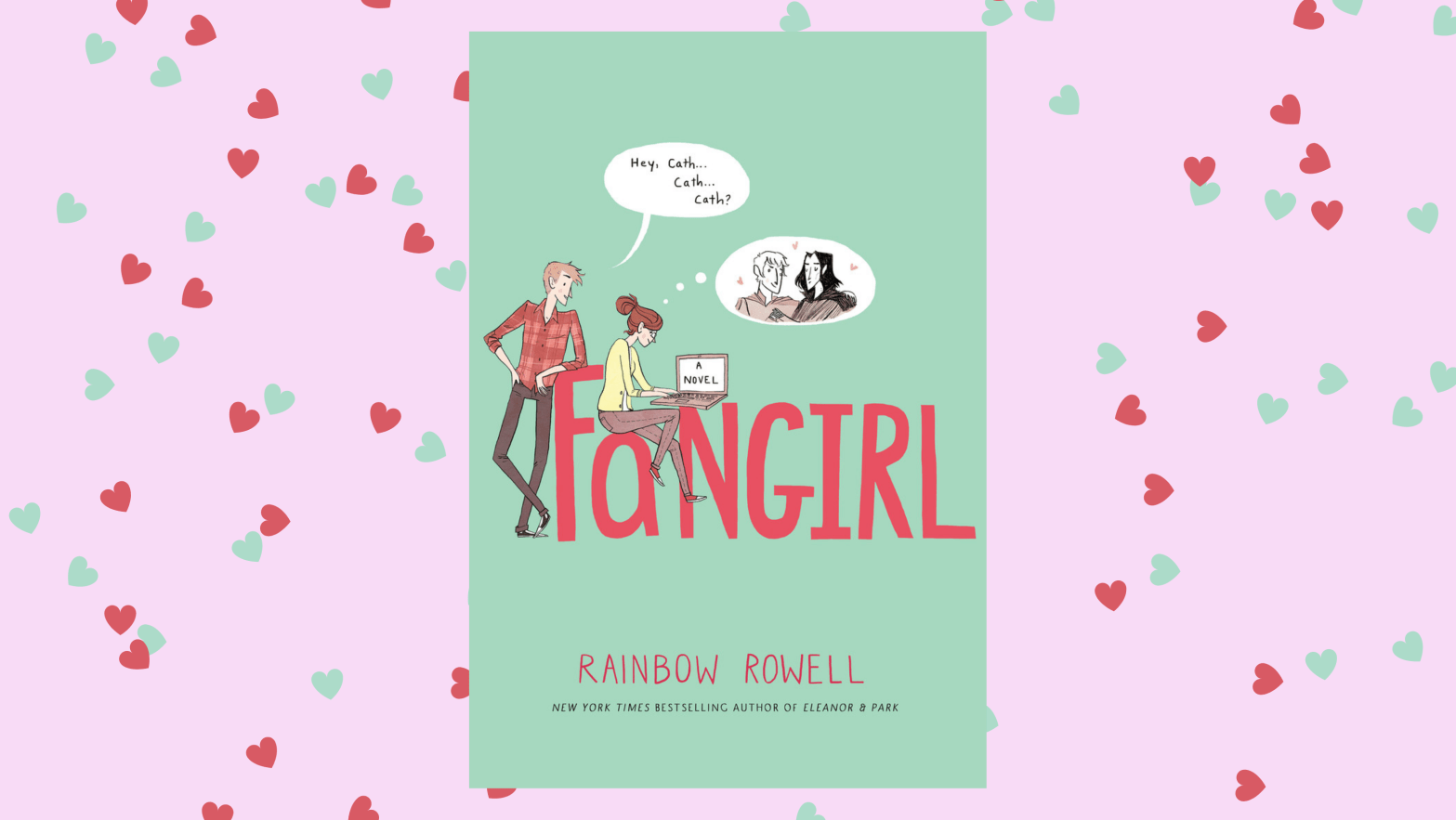
A YA Retrospective of ‘Fangirl’ by Rainbow Rowell

I can’t remember buying this book, but I can remember sitting with it for the first time. The pastel green cover in my hands, drinking a strawberry and cream Frappuccino in the Starbucks opposite Waterstones. I knew it was going to be good.

It was called Fangirl and was about a girl who escapes into fiction rather than facing the world. I could relate to that. I was thirteen years old, and school had just started again. I had just had the most amazing summer, and, I didn’t know it then, but year 9 was about to be a big year for me.

I loved it, instantly. I still do. The glue has worn out and that pastel green cover comes away from the pages, so I now own a limited-edition hardcover too. The original is covered in annotations and underlines and love hearts, so that one is still my favourite.

Despite being older than every main character now, despite having gone through what Cath went through (going to University), I can still read it and fall right back into its comfort. It is what I cling to whenever I get bad news, whenever I am uncertain, whenever I start something new.

Pre-university Beth thought her life would be exactly like Cather Avery’s. University-era Beth found comfort in the clearly universal experience of feeling like everyone in the world is having fun at university other than you. This bit of description hit me hard when I re-read the book as I started university: “It had sounded like the whole campus was up partying. Cath felt under siege in her empty dorm room. Shouting. Laughing. Music. All of it coming from every direction.” Fangirl got me through my first week, and, when my parents came up to visit me in my third, I asked them to bring Carry On, too, a sort-of sequel to Fangirl, hoping to seek more comfort from the two side characters Simon and Baz.

I can break down my love for this book into three main sections.


The Love Story

Who couldn’t fall for Levi?

If you want to read a book with a heart-warming, but realistic, first love, Fangirl is certainly for you. The thought that a boy like Levi would be waiting for me at university got me through my secondary school years and the lack of romance that filled them. Especially with Cath being so much like me.

I suppose now is probably a good time to give you a synopsis of the story.

Fangirl follows Cath, who is starting college without her twin sister, Wren. She is shy and anxious, and, above all, obsessed with fanfiction. She’s a successful fic writer, and the one thing she is looking forward to about college is her creative writing class.

As soon as she moves in, Cath meets Levi. Tall, loose, and constantly smiling, Cath panics. Levi represents everything she was scared to do without her sister: getting to know new, weird, people. She doesn’t want to be friends with Levi, much more content to be the acquaintance of her roommate and Levi’s maybe ex, Reagan. But Levi is constantly around. His eagerness to get to know Cath, to listen to her as she reads aloud her fanfiction, is too endearing to be ignored. The romance sparks.

This book has shaped what I expect from a love story: slow-burn, only small amounts of miscommunication, patience, and realism. This first love is painstakingly real in how it isn’t miraculous and magical. Cath and Levi have problems, but they work through those problems. It certainly is worth the journey.  


The Other Love Story  

Fangirl has something that I have come to love in fiction. Extremely meta additional content. Whether it’s the new Gossip Girl creating social media platforms for its characters (something I believe they stole from the hugely popular Norwegian show Skam and its many variations), or Erin Morgenstern’s The Night Circus’ use of second person sections; if you can go the extra mile to create depth in your story, I will probably fall for it hard.

So, some of my favourite parts of Fangirl are the snippets of fanfiction Cath writes that appear in between chapters. Rainbow somehow manages to get you and keep you invested in fictional fictional characters, which is important, because the driving force of tension develops as Cath rushes to finish her version of the story before the author releases the final book.

Let me break this down for the uninitiated. In the world of Fangirl, there exists an 8-book series about a Mage called Simon Snow and his roommate/enemy Baz Pitch. Cath is an extremely successful fanfiction writer, particularly for the fics she writes where Simon and Baz are in love. Yes, it is basically Harry Potter/Draco Malfoy fanfiction. Yes, it is better.

So much better that many of the fans of the books Rainbow went on to write about Simon and Baz haven’t even read Fangirl (which, to me, is astonishing) (if you’re one of those readers, read Fangirl now, there is so much more content in there for you to discover).

But I’m not here to talk about Carry On, the book Rainbow wrote about Simon and Baz. So, let’s continue.  


Cath and Writing

Cath’s love for writing fanfiction was never something I could relate too. But I could relate to the desire to be a writer, to have it feel like it’s the only thing you can do, to having the words drip from your fingers, rushing like a waterfall when it feels like everything is working. Or, to have high hopes for a creative writing class only to be slightly crushed by it.

And then, in 2019, I went to see Harry Potter and the Cursed Child.

Suddenly, as I was about to start my second year of university, I was more like Cath than I had ever been. Because here I was, presented with two characters who are roommates, who should be enemies, who, I believed, were clearly in love with each other. But the text didn’t allow them to be.

And I, like Cath, had to fix that. I kidnapped Albus Potter and Scorpius Malfoy and raised them as my own.

(In a grand, full circle moment, I wrote almost 40k words of a modern Alternate Universe fic where Albus and Scorpius are actors playing Simon and Baz in the filmed adaptation of the Simon Snow books. It was complicated. I forgot for a chapter that Albus is related to Victoire Weasley and cast her as Simon’s love-interest Agatha. I suspect this is now incomprehensible for a lot of readers. I’ll move on.)

Just take that as me finally understanding why Cath did what she did, because I was doing it too. I felt like I was walking around with this massive secret. Both afraid that my friends would find out I was writing fic and desperately wanting to talk about it. Like Cath, I was taking a creative writing course that year, and I was petrified that we would have to share the most recent thing we’ve written. I am a horrible liar, so I would have had to admit to writing fic. The thought thrilled me, both positively and negatively.

I stopped writing fic after Christmas. I lost the love for Cursed Child, and for JK Rowling in general, but I don’t regret doing it. I wrote more words in those 4 months than I ever had before, and it reminded me why writing is good, and why I wanted to do it. I self-indulgently read my own fanfiction more frequently than I probably should. I love returning to that mindset. It was wonderful to feel so connected to Cath, and to Simon and Baz.


The End

I most recently read Fangirl a month ago now. I had just been told to self-isolate because I had come into contact with someone with Covid, and it meant that I couldn’t go to my graduation. In a desperate need to escape my own thoughts and tears, I took Fangirl off my shelf and dived back in. I read over half the book in one sitting, grateful for how easy, and how comforting, it is to read. Especially now, after having gone through so much with Cath and Levi at my side.

Fangirl was too hard to read in September of 2020, with my university experience ending. In September of 2019 and 2018, it stopped my tears when I hated being away from home as I slept in rooms that didn’t feel like mine yet. Throughout 2014 to 2018, it was a comfort, and a hope of what was to come later in my life. In 2013, it was simply magic.

So, yes, this is a glowing review. To me, tinged with nostalgia, this book doesn’t have any faults. Or, it has one: I wish it never ended.

You can purchase Fangirl at Waterstones and Amazon.


Bethany Sherrott is an English graduate, bookworm, and self-proclaimed nerd, who reviews books on multiple platforms. Find her on Instagram @AWordAboutWords and read more of her work on her book reviews blog.


Stuck for what to read next? Check out our Reading Recs page. And if you’d like to support our work, please consider making a donation via our Donations page. We’re trying to raise money for paid commissions, so we can support and work with more writers from underrepresented backgrounds, who cannot afford to write for free. Thank you for reading!