Women, Power, and Babies: a World Without Men

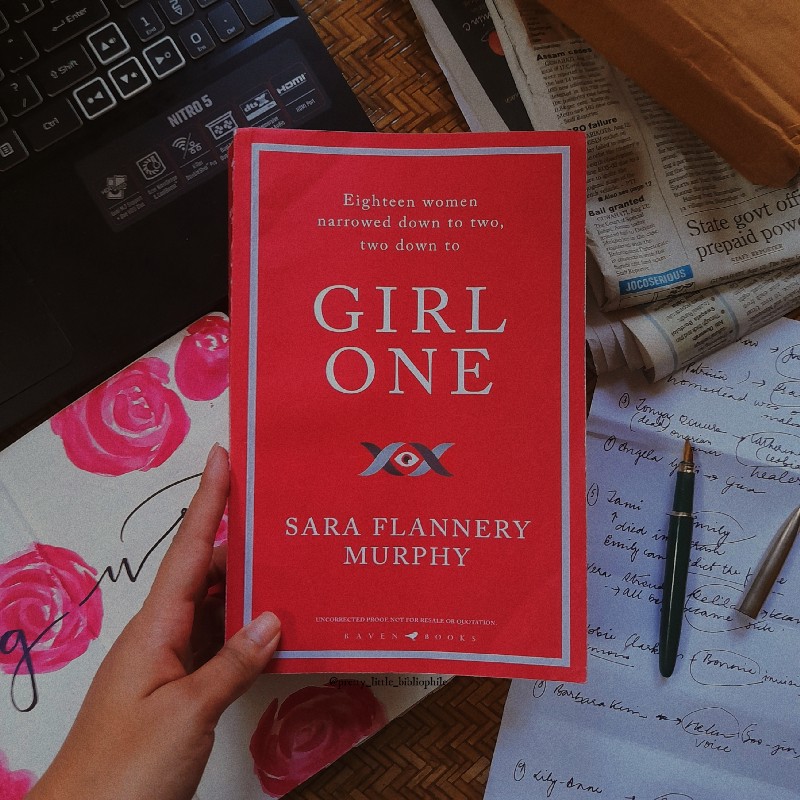
One of my major reads of August was Girl One by Sara Flannery Murphy, and I was just blown away by the epiphanies that I had while reading it. In hindsight, I think this is a really dystopian (or ‘utopian’ if you’d rather) take on a feminist fantasy — that of a possible world without men.

Before delving deeper, I have to say that I received a copy of this book from the publishers, but all the thoughts that I will be sharing today are entirely my own and in no way influenced by others.

For your consideration, here is what Goodreads describes it as:

Orphan Black meets Margaret Atwood in this twisty supernatural thriller about female power and the bonds of sisterhood. Josephine Morrow is Girl One, the first of nine “Miracle Babies” conceived without male DNA, raised on an experimental commune known as the Homestead. When a suspicious fire destroys the commune and claims the lives of two of the Homesteaders, the remaining Girls, and their Mothers scatter across the United States and lose touch.

Years later, Margaret Morrow goes missing, and Josie sets off on a desperate road trip, tracking down her estranged sisters who seem to hold the keys to her mother’s disappearance. Tracing the clues Margaret left behind, Josie joins forces with the other Girls, facing down those who seek to eradicate their very existence while uncovering secrets about their origins and unlocking devastating abilities they never knew they had.

Before we begin — I do not need you to come at me saying “Not all men!”
 — I KNOW.


A Compelling Authorial Voice

Authority and authenticity reigned supreme in this fictional work and perhaps that is why it was so easy to imagine this was true and happening right now in the vast expanse of the United States.

From the very beginning, we are given a trail of crumbs to follow — each revelation pulls the reader deeper and deeper, all the while giving multiple shocks and unexpected twists.

Since this book also dealt with such important themes, even a slight mishandling of the pace could have disrupted the intended effect. And so in that regard, I have to applaud the excellent pacing as well — it was fast and hurtled the reader on a journey across the states in an endeavor to find Josephine’s mother, and at the same time, it provided these pockets of time where the characters were suspended in a world of their own, to form relations of their own.


Male Gaze and Male Ownership (and the Fragile Male Ego)

Girl One also revolved a lot around the male gaze. Even though we see the world from Josephine’s eyes, the first ‘miracle baby’, it is essentially a world created by the male ambition as well as the male influence. 

A man trying to come into the picture to take credit for something he did not do, doesn’t sound very far-fetched, does it?

Especially when it was a woman whose work he wants to take credit for.

In fact, it sounds like something that may have happened to someone you know, or maybe even you! We have all experienced it — be it with classmates, colleagues, or acquaintances.

Girl One really takes on this male need to control and possess the knowledge and take credit (even where it’s not due). As such it is a fabulous piece of feminist discourse within the fictional aspect.

This need to control and overtake and dominate and own, anything ‘weaker’ or ‘lesser’ in their eyes is so vehement, so aggressive. It happens here too, in this book, and we as readers are left reeling by the epiphanies.

What was also funny and at the same time, made me theorize and introspect, was how the men in the world portrayed in Girl One felt threatened by this parthenogenesis (self-reproduction) in women.

Their question was, if women no longer needed men to procreate, what would be their place in the world? What would happen to the family structure without the father/male figure?

What it indirectly showed was how they felt threatened — that their positions would now be useless? That may be, history would be created and written by women? That with this re-writing of history, all the oppression that women had faced at the hands of men (emotional, political, social, sexual, mental, physical, and so on), would come out to light?

Or was it all a cumulative reflection of the fragile male ego?


Sisterhood and Womanhood

Reading this book made me remember the term ‘Womanism’ that I came across some time ago. Sisterhood is such an important theme in this book and I loved seeing the relationships among the women.

Then again, it is not always sunshine and roses (as those of us with sister siblings can testify) and I am glad the author chose to portray all the bad along with the good.

But nonetheless, without negating the importance of this, we need to draw our attention to intersectional feminism to take into account the multiple jeopardies that the world places political bodies in.


The Sci-Fi Element

The scientific temperament that was explored was also, really cool to imagine.

Just think —a world where women are able to conceive on their own, without the need for sperms.

What would a world like that entail?

I recently had also read the short story ‘Sultana’s Dream’ by Rokeya Sahkawat Hossain, so it was quite easy for me to imagine this ‘utopian’ dream of a world with only women. 


Similar Recommendations

If you are still wondering whether you should read this book, let me say that if you have read any of the below-mentioned three books, you SHOULD!

Alternatively, if you have read Girl One and liked it, you can also check out these books!

And that is it for today, my fellow readers. If you have read this book and have an opinion (similar or contrary), do share because I would love to know your perspective. If you haven’t read the book, I hope I have convinced you to pick it up and give it a chance.


Nayanika Saikia graduated summa cum laude with a Bachelor’s degree in English Literature and was also a Dean’s List student. She is currently pursuing her Master’s degree and is also a Booktuber and Bookstagrammer. She can often be found on her Instagram account Pretty Little Bibliophile. You can support her by Buying Her a Coffee. To get regular updates and amazing content, sign up for her newsletter.


Stuck for what to read next? Check out our Reading Recs page. And if you’d like to support our work, please consider making a donation via our Donations page. We’re trying to raise money for paid commissions, so we can support and work with more writers from underrepresented backgrounds, who cannot afford to write for free. Thank you for reading!

‘The Plague’ and Our Dance With Death

The French philosopher, Albert Camus, wrote one of the defining novels of our time. His novel, The Plague, not only captured the shock of succumbing to an epidemic, but it also captured the grief, isolation, theorising, and the subsequent aftermath of an outbreak.

Camus published The Plague in 1947, but it is when reading his novel today that makes his novel seem more relevant and alive than in any other time in history.


Plot Overview

The Plague is a story about an outbreak of bubonic plague in the Algerian city of Oran during the late 1940s. The protagonist of the novel, Dr. Bernard Rieux, first notices something amiss when rats begin to die on the streets of Oran. Over the course of a week the city is overrun with the mysterious deaths of thousands upon thousands of rats.

The horror builds as tensions and  the subsequent speculations rise amongst the public.  After days of inaction the government steps in and begins burning the bodies of the rats and begins putting the city’s inhabitants at ease.

After the rat epidemic has seemingly disappeared, the concierge of Dr. Rieux’s office building falls ill with a strange fever and dies. Throughout Oran, more and more cases begin to appear and rumours and panic begin to rise once again. Both Dr. Rieux and his colleague Dr. Castel believe the recent deaths to be some form of a bubonic plague.

They both send dispatches to the government to take actions to stop the outbreak – but the government at first appears reluctant to take action. It is only when the death toll begins to rise at an alarming rate that the government makes changes. Overnight and with little warning, the authorities finally step into action and quarantine the city by sealing it off from the rest of the world.

It is how the inhabitants of Oran react to the quarantine that is most interesting. Whereas at the start of the novel people do nothing but talk about the plague and what it all means, but as the epidemic wears on, they begin to grow more and more silent. The inhabitants begin to feel isolated and alone and unable to express what it is they are feeling.


Who Are The Characters?

Camus shows the response to the plague through the eyes of the citizens. A Jesuit priest, Father Paneloux, delivers a sermon declaring that the plague was God’s punishment for their own depravity. Another character – this time the foreign journalist, Raymond Rambert – tries to flee from the quarantine zone to rejoin his wife in Paris.

Yet he is thwarted at every attempt by bureaucracy and the unreliability of the smuggler who attempts to aid him. His accomplice, Cottard, a man who is said to have committed a crime in his youth and has been living a life in hiding ever since. It is Cottard who is the one of the only ones among the city’s inhabitants to revel in the plague as it reduces the public to his level of anxiety and loneliness.

Through these characters, Camus allows us to see how we may all share the same crisis – yet our response and feelings towards it can never be universal. Each person carries their own weight and worries and each one of them experiences the plague in a different way.

Camus always believed that we’re living through a metaphoric plague at all times. He explained it is our own mortality that is the plague of life. Only in the time of an epidemic does death become so concentrated that our own mortality is seemingly thrust upon us. Camus believed that this sense of mortality and the awareness of the fragility of our own lives that led us to the absurdity of it all.


What ‘The Plague’ Says About Our Relationship With Life

However, this absurdity is never meant to cause despair.

People often have this feeling of immortality, that they will somehow and against all odds, continue to live forever. Because of this people often fail to make use of the time they have by living unobserved and unfulfilled lives. The Plague was used by Camus to force its readers to consider death and their own mortality. The fragility and temporary nature of life makes it more vital and prompts us to live a more enriched life.

The beauty in the novel is not in the suffering of the inhabitants of Oran. The beauty is in how many of them begin to find purpose and joy in a difficult world. The characters show how we must steal moments of pleasure: perhaps the smell of a flower, a conversation with a friend, or a moonlit swim in the ocean. Camus wrote that, ‘a loveless world is a dead world’ and that if we cannot find joy and decency in the small things then we are all completely lost.

It was Camus who tragically lost his life early, twelve years after writing The Plague in a motorcar accident. His death at the age of forty-four  embodied everything that he wrote about the fragility of life. The Plague is seen as one of Camus’s most seminal novels as it allows us to confront our own mortality head on. Instead of shielding from it we are prompted to instead find joy and appreciation of the moments that we have today.


Stuck for what to read next? Check out our Reading Recs page. And if you’d like to support our work, please consider making a donation via our Donations page. We’re trying to raise money for paid commissions, so we can support and work with more writers from underrepresented backgrounds, who cannot afford to write for free. Thank you for reading!

‘Range’ demonstrates the necessity of trying new things

Contending with the ‘Cult of the Head Start’

Every kid is asked what they want to be when they grow up. Whether they dream of floating in space or walking down the runway, people are primed to think about their careers and what they want to accomplish from the onset of their childhoods.

As an unofficial childhood rite of passage, this question reflects the increasing importance of livelihoods to our very identities — which can have significant impacts in an era of hyper-specialization, where many of today’s occupations require a deep knowledge of individual disciplines. 

This mindset has driven legions of parents and students to adopt “early specialization,” or focusing on one passion early in childhood to develop a head start for college and professional careers. 

Widely influenced by Malcolm Gladwell’s book, Outliers, the notion of concentrating on a singular activity — whether it’s playing an instrument or learning a sport — can help individuals achieve mastery, defined by Gladwell as reaching 10,000 hours of deliberative practice.

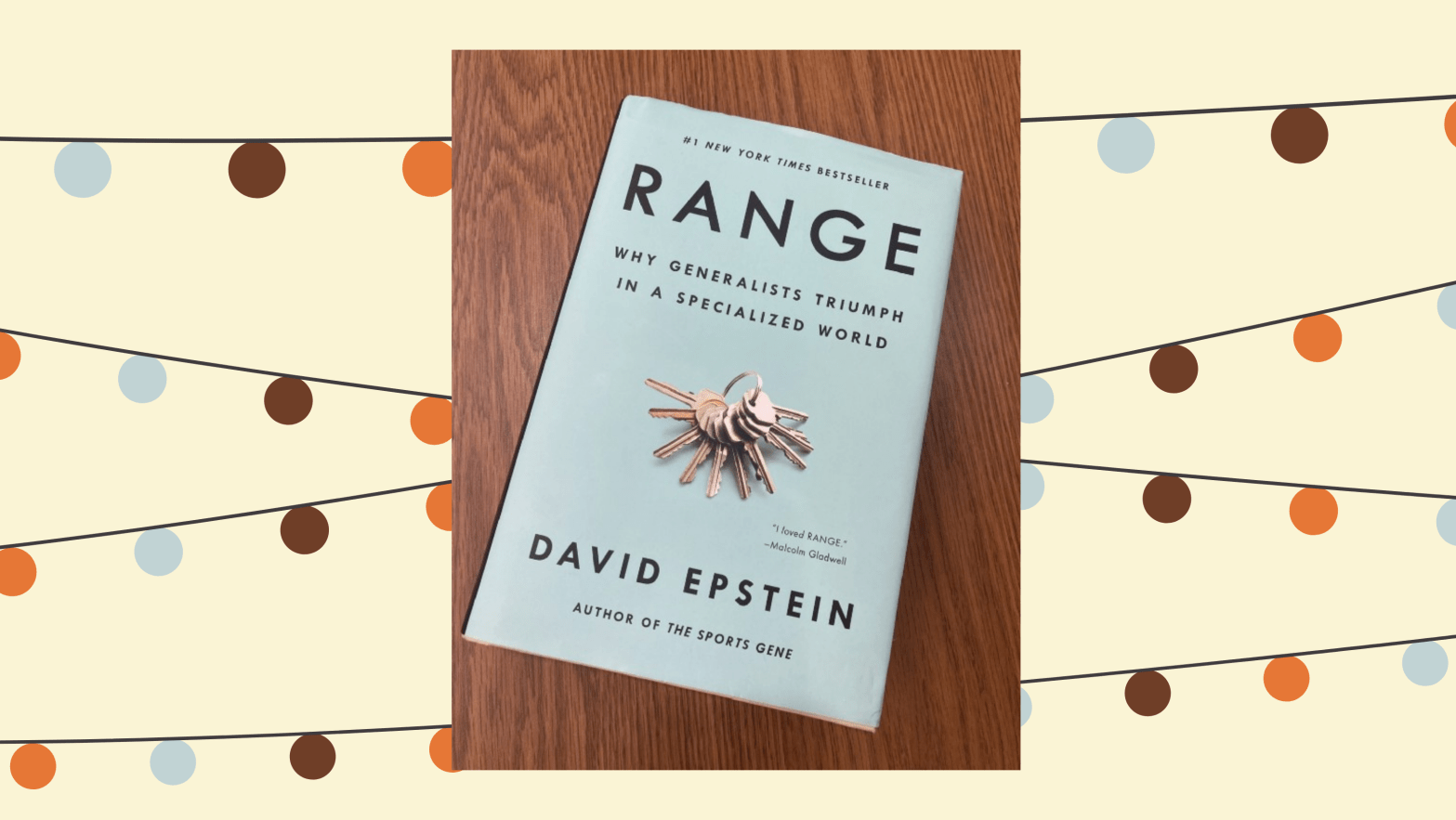
However, David Epstein’s book, Range, dispels the myth of the head start by demonstrating the necessity of experimentation in our personal and professional lives. The brightest minds in the world, he argues, have been shaped by a wealth of hobbies and interests rather than rigidly devoting themselves to a singular discipline.

Federer vs. Woods: case studies in mastery

He compares early specialization and experimentation in the first pages of the book through the case studies of tennis player Roger Federer and golf player Tiger Woods. 

Federer stumbled upon tennis late into his teen years after trying a wide variety of sports, but is considered one of the greatest tennis players of all time; Woods, on the other hand, began playing golf at the age of three and with his parents’ support, became one of the greatest golf players of all time.

Deliberative practice, Epstein notes, can work wonders in predictable disciplines such as athletic fields. Woods effectively parlayed his natural abilities into an iconic golf career, signifying the strength of his passion for the sport.

In Federer’s case, he built a level of mastery later in his childhood and overcame the “head start” of his peers, many of whom spent years more on practicing tennis. Because of his previous athletic pursuits, he had a broader awareness of his skill set and effectively transferred his abilities to tennis.

Woods’ and Federer’s divergent paths to success highlight his broader point: Although early specialization can be advantageous, it doesn’t override the benefits of trying new activities. Exploration is not only integral for our own self-discovery, but also for the benefit of our professions.


‘Kind’ and ‘Wicked’ Environments

Athletic pursuits, though, differ significantly from today’s working world. They take place in predictable and uncontentious realms that are somewhat insulated from the realm of chaos — or what Epstein describes as “kind” environments. 

Many professions today contend with multifaceted and unprecedented challenges that don’t fall neatly into preconceived notions or ways of operating. They require interdisciplinary solutions because of their chaotic nature and are thus classified as “wicked” environments.

In a group experiment that sought to predict the future of international affairs, researchers found that people paired from different disciplines and who had extensively different knowledge bases were eerily successful in combining their backgrounds in a wicked environment. 

They were far more successful than groups paired together with similar areas of expertise, because of a problem-solving strategy Epstein notes:

The best forecasters view their own ideas as hypotheses in need of testing. Their aim is not to convince their teammates of their own expertise, but to encourage their teammates to help them falsify their own notions.” (page 227)

Applying knowledge to chaotic realms, he stresses, requires divergent knowledge and approaching each problem from uncertainty — which is all too often missed.


Overspecializing Knowledge?

Epstein’s comments on the realm of academia are very insightful into how rigid disciplines discount our ability to learn from one another. He criticizes the lack of interdisciplinarity in American educational systems, which cultivates specialization. 

When students feel compelled to take certain classes in high school or college to get a head start in their career trajectories, they miss out on valuable opportunities to investigate their interests. 

Most colleges and universities set students on singular four-year paths that doesn’t encapsulate the student as a whole, instead requiring specific classes dependent on major without much bandwidth. Dabbling across disciplines is a key feature of successful people and allows students to become “generalists” rather than specialists.

His focus on scientific research further reveals the folly of over-specialization in academic disciplines. 

In recent years, the need for further investigation into specific fields has grown while broader knowledge across a range of fields has stagnated. Generalists, however, have the capacity to see past specific disciplines and instead combine their knowledge to reveal new insights. As he writes:

“In a race to the forefront, a lot of useful knowledge is simply left behind to molder. That presents another kind of opportunity for those who want to create and invent but who cannot or simply do not want to work at the cutting edge. They can push forward by looking back; they can excavate old knowledge but wield it in a new way.” (page 189)

There is an entire realm of possibilities that we have yet to explore from combining our knowledge. With a better focus on cross-disciplinary research, we can cultivate an innovative future and strengthen our responses to “wicked” problems.


Final Thoughts

I really appreciated Epstein’s insights into the benefits of “generalization” and the folly in specializing too early. His detailing of how we (collectively) stand to benefit from greater knowledge sharing resonated on both personal and academic levels. 

The “cult of the head start” has become a persistent worry for people of all skill sets and abilities, which can be hard to push back against. Having read Gladwell’s Outliers before Range, I was pleasantly surprised to have my preconceptions of cross-disciplinary experimentation shattered. 

Personally, this book has served as license to experiment with my passions and learn more about disparate subjects. Often we become too wrapped in notions of who we are to see who we can become — simply by reaching beyond our horizons. 

Taking the first step into a subject we’re curious about can be the first step in that self-realization journey, which as Epstein notes, may be a winding path through different careers to finally find ourselves where we need to be. 

Differentiating from your childhood notions of success is not only okay, but it’s to be expected. The more you know yourself, he demonstrates, the more energy you can put towards endeavors that interest you.

To work beyond the collective problems we face today — whether it’s pollution, wealth inequality or discrimination — we also have to be willing to teach and learn from one another, which means rethinking our systems of research and disciplines. Choosing breadth over specialization can help us muddle through the wicked problems we currently face and cultivate a better future — together.


Corinne Neustadter enjoys writing about a broad range of issues when she isn’t reading.


Stuck for what to read next? Check out our Reading Recs page. And if you’d like to support our work, please consider making a donation via our Donations page. We’re trying to raise money for paid commissions, so we can support and work with more writers from underrepresented backgrounds, who cannot afford to write for free. Thank you for reading!

How a Unique Narrator Enhances the Reading Experience in ‘To Kill a Mockingbird’

TW/CW: contains mentions of rape, racism and racial slurs

To Kill a Mockingbird was published in 1960 by American novelist Harper Lee. After winning the Pulitzer Prize for Fiction in 1961, this novel has become a classic must-read.

Set in the fictional city of Maycomb County, Alabama, the novel focuses on a town steeped in racism – like many towns in the Deep South throughout the 20th century. Here, hatred for the black community that lives and works alongside the white community runs prevalent. The entire novel is centred around one key event: the trial of a black man accused of raping a white girl.


What made this book so engaging for me was how Harper Lee chose the voice of a young white girl, Jean Louise ‘Scout’ Finch, to narrate the entire story. Scout lives with her older brother Jeremy, ‘Jem’, and her father, level-headed lawyer Atticus Finch. Her narration of events interlaces and balances the trivial challenges of childhood with a serious court case that sets the entire, well-connected town on edge. Scout and Jem’s father, Atticus is the lawyer appointed to the defendant of this case.

In narrating through the eyes of a child, To Kill a Mockingbird aims to avoid prejudices, and Harper Lee even goes as far as to mock the irrationality of adult attitudes towards race and class.

After learning about Hitler’s advances in Germany during the time in which this novel is set, Scout notes how it isn’t right to persecute anyone – whether they be Jews or black people. Scout’s teacher, Miss Gates, is so blatantly hypocritical that Scout, just 8-years-old, sees through it straightaway. Through this, Harper Lee shows the illogical racism that many white people of Maycomb County inhibit.

“Jem, how can you hate Hitler so bad an’ then turn around and be ugly about folks right at home – ?”


Atticus, in spite of raising his children by himself after their mother died from a sudden heart attack, raises Scout and Jem to treat everyone as equal – regardless of skin colour. Neither Scout nor Jem are explicitly racist, and Scout gets into fights defending Atticus after classmates and other adults call the lawyer a ‘n*gger-lover’.

“You aren’t really a n*gger-lover then, are you?”

“I certainly am. I do my best to love everybody… it’s never an insult to be called what somebody thinks is a bad name. It just shows how poor that person is, it doesn’t hurt you.”

As well as the importance of not being prejudiced towards other races, Atticus further teaches Scout not to fight her ignorant classmates. He asks that she keeps her ‘head high’ and ‘those fists down’, in spite of the ‘ugly talk’ she hears of Atticus.

Somehow, if I fought Cecil I would let Atticus down. Atticus so rarely asked Jem and me to do something for him, I could take being called a coward for him.


Spoilers Beyond This Point: Stop Here If You Haven’t Read the Book

Ultimately, Atticus loses the court case, in spite of Tom Robinson, the accused black man, being innocent. He didn’t rape nor beat Mayella Ewell, or do anything untoward to her ever – he was only ever kind to her, helping her out with chores and odd jobs at no cost.

But the odds were against him from the start; regardless of the crime, he most likely would’ve been prosecuted as he was black. All of the jury pledged ‘Guilty’, though Tom Robinson was innocent.

“The one place where a man ought to get a square deal is in the court room, be he of any colour of the rainbow, but people have a way of carrying their resentments into the jury box.”

The innocence of the young shields them from everyday prejudices presented in Maycomb County, as well as the gossip-ridden, old-fashioned prejudice ways that run throughout the novel and against which Atticus attempts to fight.

“As you grow older, you’ll see white men cheat black men every day of their life… whenever a white man does that to a black man, no matter who he is, or how rich he is, or how fine a family he comes from, that white man is trash.”


Whilst some think that To Kill a Mockingbird revolves around the white saviour complex – usually felt by white people who think they are entitled to act and save oppressed races – Atticus does not end up saving Tom Robinson. He tries, but fails. After Tom is sent to prison, he is shot trying to escape.

As opposed to a white saviour complex, I view this novel as portraying the importance of trying to help others, even though one might not succeed all the time. The way I see it is that fighting against injustices and prejudices is better than not fighting at all.

Atticus had used every tool available to free men to save Tom Robinson, but in the secret courts of men’s hearts Atticus had no case. Tom was a dead man the minute Mayella Ewell opened her mouth and screamed.


Final Thoughts

Despite the challenges of racial inequality that it focuses upon, I genuinely really enjoyed reading To Kill a Mockingbird. I found it to be really well-balanced and I particularly liked reading such difficult issues through the eyes of a child.

I would definitely recommend it to anyone looking for their next read.

And remember…

“Shoot all the bluejays you want, if you can hit ‘em, but remember, it’s a sin to kill a mockingbird.”


Stuck for what to read next? Check out our Reading Recs page. And if you’d like to support our work, please consider making a donation via our Donations page. We’re trying to raise money for paid commissions, so we can support and work with more writers from underrepresented backgrounds, who cannot afford to write for free. Thank you for reading!
5 Sapphic Books You Should Read Because Representation Matters

It’s no secret that I love a good book with a lesbian or bisexual storyline. In fact, back in June, I put together a list of 5 Books to Help You Celebrate This Pride Month. However, we’re now well into August and June is long gone, but there are still so many sapphic stories that deserve recognition.

Perhaps we should be asking ourselves: “should we need an occasion to pick up a queer title?”

LGBTQ+ representation in books is so important (as it also is in cinema, television or any other form of media), and helps to normalise LGBTQ+ identity and relationships for children, teens, and even adults. Queer people exist outside of Pride Month and so representation should too.

Check out these 5 sapphic stories and help spread the word about great LGBTQ+ books all year round!

1. ‘Annie on My Mind’, by Nancy Garden

First published in 1982, Annie on My Mind was one of the first young adult books to portray a romantic relationship between two teenage girls. Seventeen-year-old Liza, the protagonist of the novel, is living in an upscale neighbourhood in New York City when she meets Annie and romance blossoms against all odds.

Despite being received with some controversy upon its publication almost 40 years ago, this queer story from Nancy Garden defined a generation of women-loving-women. With its ever-relevant themes of love, acceptance, and discrimination it isn’t difficult to identify with the protagonists decades later.

2. ‘The Paying Guests’, by Sarah Waters

A sapphic recommendation list wouldn’t be complete without a title from Sarah Waters. In her sixth book Waters masterfully crosses the genres bringing us the queer, romantic, crime novel we never knew we needed.

Set in 1920s London, The Paying Guests follows Frances Wray, a young woman who lives alone with her widowed mother, as she falls in love and her carefully wrought life begins to unravel.

This slow-burning tale of Frances and Lillian — and its unexpected twists — is a must-read for any queer reader looking for a novel that offers a thrilling spin on the classic, queer ‘forbidden love’ story.

3. ‘The Well of Loneliness’, by Radclyffe Hall

The oldest on the list, first published in 1928, The Well of Loneliness is considered the first English language novel with explicitly lesbian themes. Stephen Gordon, the protagonist, is aware of her queerness from an early age and eventually finds love with a woman.

However, in true sapphic story style, their relationship is marred by the social rejection they experience and their happy ending begins to slip out of reach. This story is perhaps one of the most famous sapphic novels to date, and despite its divided critiques, the way in which it tackled themes of gender and sexuality almost a century ago continue to inspire debate today.

4. ‘You Should See Me in a Crown’, by Leah Johnson

Published just last year, Leah Johnson’s debut young adult novel follows teenager Liz Lighty as she vies for a college scholarship by becoming Prom Queen. However, her plan to win the funding begins to unfold when she falls for her fellow competitor, new girl Mack.

You Should See Me in a Crown is the heartwarming sapphic story every young, queer person needed growing up. If you’re looking for an easy, feel-good, yet relatable read, this is the book for you this summer!

Content warnings: death of a parent, anxiety, panic attacks, homophobia

5. ‘The Girls’, by Emma Cline

Despite disclaimers, Emma Cline’s The Girls is a fictionalised version of the Manson murders told from the perspective of 14-year-old Evie Boyd. Whilst this book has critics divided and the topic is a weighted one, I chose to include it because it’s always refreshing to discover a queer novel in which the story isn’t focused solely on the protagonist’s queerness.

Full of vivid imagery and expressive language The Girls tackles themes of love, belonging, and girlhood whilst capably reimagining grisly true events that shocked a nation. A must-read for those interested in both queer and historical fiction!

Content warnings: drug use, murder, sexual depictions, abuse


LGBTQ+ people have existed — whether openly or not — for as long as heterosexual people, yet queer stories aren’t told nearly as often as heterosexual ones.

That isn’t to say that queer literature hasn’t improved in terms of diversity of stories, abundance, and accessibility in recent decades, but we still have a long way to go. So why not pick up a book with a queer protagonist or a novel by an LGBTQ+ author?


Stuck for what to read next? Check out our Reading Recs page. And if you’d like to support our work, please consider making a donation via our Donations page. We’re trying to raise money for paid commissions, so we can support and work with more writers from underrepresented backgrounds, who cannot afford to write for free. Thank you for reading!

Call for Submissions: Bookworm Edition

Coffee Time Reviews is just over three months old and I am so proud of what it’s become. Managing it hasn’t been easy, especially since I’ve started my full-time communications job.

But things have become a little bit too easy lately, albeit the main reason why is my lack of engagement and determination to find writers in the past month or so. That’s changing now, though.

Since late March, when CTR was launched, I’ve been welcoming some incredible writers and worked on some of the best bookish articles I’ve ever read in my life. I’d like that to continue.

So I’m reaching out to you, hoping you might want to jump on the bandwagon and join us as a contributor for Coffee Time Reviews. The rules are simple: if you love reading, you’re in.


What We’re Looking For

If you think your writing might fit Coffee Time Reviews and you’d like to see your byline on our Medium page (if you’re on Medium) and/or on our website, here’s a run-down of what we’re looking to publish.

Quirky, passion-led book reviews

CTR’s tagline and main focus are pour-your-heart-out book reviews, a new and fresh form of review that basically ditches rigid writing formats in favour of passion, drive, and sheer enthusiasm to scream loud and proud why you love a certain book (or more).

A pour-your-heart-out book review can be anything from an enthusiastic ramble on why a book changed your opinion on something, to an enraged (though polite) debate on why a certain book is overrated. There are no rules when it comes to this type of article, but here are some examples of really successful ones we’ve published before.

How ‘Disability Visibility’ Empowered Me to Change My Narrative: Confronting internalized ableism head-on

‘The Manningtree Witches’ Changes The Way We Think About Women

The Story of an Unforgettable Bisexual Icon: Why you need to read ‘The Seven Husbands of Evelyn Hugo’

Reading lists with a twist

Now reading recommendations lists are all over the internet and since we’re a books publication, we need some of those too. However, we’d like something more than just a list of books you loved. You need to have a purpose or motivation to include them on the list, which will work well in your favour, as the writer, because people will be much more drawn to them. Here are some examples.

5 Books by European Authors to Celebrate Europe Day: Time to spice up that TBR pile

10 Lesbian and Bisexual Books That Made It to the Big Screen: Discover these LGBTQ+ titles that have also been adapted for film

Author stories

Are you a published author with a quirky story that brought you to authorhood? If so, why not write a personal essay for our Behind the Scenes series, that gets into the nitty-gritty, and some of the more unglamorous sides of the publishing coin.

The Patriarchy in the Poetry Scene Stole My Biggest Passion

Reader stories

If you’re not an author, worry not! Bookworms are equally fascinating in their own right and I’m sure every reader out there will have a moving, heartfelt story about how a book shaped them, helped them, changed their life even. If this is you, and you’d like to share your story, we’d be delighted to commission it.

When Reading Becomes A Job: I was a professional book nerd, and I hated it

The ‘Brown Sisters’ Series by Talia Hibbert Spoke to All My Personal Quirks

Reading tips

Got a unique take on the process of reading? Do you know the secret behind a successful readathon? Or have you uncovered the best reading spots in a small, crammed house, or town? Write about it! Reading tips are always great fun to read about. For me, as a reader, this type of article has always proved very helpful.

You Can Never Really Read The Same Book Twice: Revisiting your favorite books helps you reflect on how you’ve changed


How to Become a Contributor

If you’re interested in joining us as a writer and have your book reviews and bookish content published in Coffee Time Reviews, please let us know at ctreviewspub@gmail.com!

All you have to do is email us a short intro about yourself, a potential pitch idea you think might be right for us, and (optionally) a writing sample/example, preferably books-related. We are keen to encourage young writers willing to get a by-line and some experience, so if you don’t have a writing example to show, don’t worry, we still want to hear from you!

More details can be found on our Write for Us page.

I can’t wait to hear from you!

A Timeless Tale: ‘The Color Purple’ and its Ever-Present Themes

TW/CW: mentions of rape, violence, physical and sexual abuse/harassment, sexism and racism.

One of the many books on my summer reading list was The Color Purple by Alice Walker, as recommended to my English Literature A Level class by our teacher. What immediately struck me about this book was how Alice Walker created Celie’s voice to be so truthful and direct and gritty – no details were held back from the reader. But I think that’s what made the read so immersive.

Celie’s life starts as a tragedy and continues that way for a while into the story. As a young black girl living in the deep American South, a society entrenched in racism, she was born into poverty and segregation. The man she calls ‘father’ rapes her repeatedly – resulting in two of her children being given away – before she is taken away from her sister Nettie and forced into an abusive relationship.

It’s only when Shrug Avery, a glamourous singer, falls ill and takes refuge in Celie and Mister’s house, that things gradually start to change for Celie. Shug has taken control of her own future – something which Celie never thought she was able to.

As well as helping her gain confidence in herself, Shug teaches Celie about seeing God as an ‘It’ rather than a ‘He’ and educates Celie on sexuality and how a woman can find sex pleasurable – a topic which is still taboo even today.

“I think it pisses God off if you walk by the color purple in a field somewhere and don’t notice it… People think pleasing God is all God cares about. But any fool living in the world can see it always trying to please us back.” – Shug Avery


Celie’s strongest relationships in the story are those with other women – like her sister, Shug, and Sofia, her daughter-in-law. Sometimes, in novels, we as readers become so enraptured with the romantic relationships that we forget how important friendships can be too. Whilst elements of Celie and Shug’s relationship borders on romantic, they find strength in one another that the men in their lives can’t – a sort of common understanding.

Nigerian novelist Chimamanda Ngozi Adichie perfectly summed up The Color Purple as “a lush celebration of all that it means to be female, to be a black female, and like the best of celebrations, it is an honest one.” 

The story is told through a series of letters, first from Celie to God. Then, once Celie finds that her husband, ‘Mister’, has been keeping Nettie’s letters from her, the point of view changes again, and continues to alternate between letters from Nettie to Celie and vice versa.

Whilst I initially found this an unusual format to read in, it helped me connect with the plot on a deeper level and I was soon enthralled in the epistolary story telling.

Walker wrote Celie’s voice by drawing on the features of Black English, or African American English. Verbal expression is different in American Black English, which has its own lexicon (vocabulary, terms, codes and word sets), grammar (inflections, syntax and rules) and phonology (speech sounds and pronunciation patterns).

This could lead some readers to be put off continuing to read the story, but whilst reading I embraced it as Celie’s gritty, honest voice and quietened down the writer side of me that wanted to correct all the ‘spelling mistakes’.

As an aspiring writer myself, one of the things that hooked me into the story was how realistic all the characters felt. None of the main characters remained ‘bad’, with Mister changing his ways after Celie leaves him to go to Memphis with Shug. To me, this reflected how non-fictious people can change if they only try hard enough – perhaps a message that Walker was indirectly trying to portray.


Not only does Walker explore racism in Southern America, she also broadens to the fictious Olinka people in Africa, whom Nettie visits and lives with as a Christian missionary. The Olinka tribe live on the west coast of Africa.

They seem to have been created through an amalgamation of characteristics, customs and traditions from a range of African tribes. Here, the importance of female relationships is further presented, as well as allowing Nettie to connect with her African roots.

Through Nettie’s letters to Celie, we come to realise and learn that the status of women in the Olinka tribe is extremely like that of women in the American South.

“The Olinka girls do not believe girls should be educated. When I asked a mother why she thought this, she said: A girl is nothing to herself; only to her husband can she become something.” – Nettie

In societies where women are expected to be dependent on men, both Celie and Nettie are independent and lean more heavily on support from other women as opposed to men – which inevitably led to controversy after the book’s publication.

After publishing The Color Purple in 1982, Alice Walker faced several negative reviews and even split from her partner at the time. Amongst other things, Walker was accused of betraying her race, of damaging black male and female relationships and of being a lesbian.

Personally, I think that Alice Walker was incredibly brave to write and to publish such a controversial book. And this bravery was rewarded as The Color Purple won the Pulitzer Prize for Fiction in 1983 – only a year after its publication – making Alice Walker the first black woman to win the prize.


Final Thoughts

To anyone interested in feminism, issues of racism, and the power of female friendships – you need to read this book. I was deeply moved by it and know that it’ll be a while before I forget about The Color Purple and all the important messages it carries with it.

If I had to, I’d rate this book 10/10 without a doubt. Some people could find the format of the story being written in letters, or Celie’s idiolectal way of spelling to be irritating and off-putting – however I’d insist that they stuck with it. Too many stories are turned away after the first page. But The Color Purple does not, by any account deserve to be cast aside.


Stuck on what to read next? You might enjoy browsing through our Reading Recs page. And if you want to support independent journalism, please consider doing so through our Donations page. Thank you for reading!

Books By Memory: ‘A Time of Gifts’ by Patrick Leigh Fermor

The way books work in memory can be unexpected. I could make some overblow link to Proust’s madeleines, but that would be rather reductive, as books do not simply work by linking into just one memory. Books, when viewed in retrospect, are more like spiders in that they spin a web linking multiple facets of memory into one continuous understanding.

In trying to peel these facets of understanding back and get a glimpse of the book’s direct effect, I have found that a series of interconnected memories is more useful than something that is focused only on the positive. So here is a rather different form of review which is broadly narrative and focuses on memory, but does not try to flatten the multivalence of reality.


I’d always been aware of Patrick Leigh Fermor’s travel writing, and had seen his books on a shelf as I dug for some other pertinent volume. I also had vague memories of a copy of A Time of Gifts being given to my brother, some years ago, before he went off on holiday to Central Europe. Yet for all that awareness, I’d never actually read any of his work, even when I saw it referenced in other works that I did read.

In many ways, it was only by chance that I finally had the impulse to pick up a copy of the book.

I was in the British Museum and as I was leaving, I happened to see a small temporary exhibition just to the side of the main exit. That exhibition was called Charmed Lives in Greece and linked a few artists and Patrick Leigh Fermor. I was drawn in by the art, but my lingering memories as I endured the Tube home, were of Patrick Leigh Fermor and the snippets of his books that the exhibition used.

Perhaps those lingering memories alone would have faded, yet by chance I was given an extra push by fate, for when I went to find a copy of a book which I needed for that essay on Etruscan pots, I was distracted by a rather elegantly spined biography of Patrick Leigh Fermor, and from there cast my eye sideways to see a copy of A Time of Gifts.

As is my habit, I always end up reading far more when I have a deadline, so decided that the sensible thing to do was to pick up the book. Of course, at the time I was just thinking I’d read a few pages to see if it was any good, and then put it down for later, after my work was done. But me being me, I devised some sort of procrastinator’s excuse and started reading it in its entirety.

Although I started reading the book casually, stood next to the bookcase that I had just been perusing with purpose, I ended up giving up all pretence and soon was sitting at my table before dinner with a glass of wine in one hand and the book in the other, alone and free of any academic pretensions.


So, there I was, sat in a slightly dull basement kitchen, with an over thumbed copy of A Time of Gifts. Yet there was a certain synchronicity in reading it with a glass of crisp Riesling as the rain echoed down the lightwell.

I was only drinking my wine from a dull, rather water-stained glass (London water is basically just fluid limescale). But I felt, for a moment, as if I were enjoying the same combination of fruit, minerality and sweetness, as Leigh Fermor did as he sipped Riesling from coloured roemer glasses (a specific type of German wine glass, with a thick green stem), perhaps by the river in student-flocked Heidelberg under the knowing view of the castle.

In many ways the wine I was drinking does not matter, and frankly (pardon the pun) it might as well have been my association of fine wine from Mitteleuropa that linked that memory rather than any specific glass of wine. It is more that each time I drink a flavoursome German wine, be it a Riesling, Gewürztraminer, or Weissburgunder, I link it to A Time of Gifts. That is not because of any fluid description of those wines, but the clear enjoyment Leigh Fermor links to them.

I am now just as familiar with those wines as Leigh Fermor must have become, but I also remember the first time I drank them, and as I drank those at a similar time to Leigh Fermor, I can link my memories to his. It does not matter that Leigh Fermor was a master at twisting reality to suit literary needs, and wrote his best works in retrospect.

That is the genius of A Time of Gifts, for it makes memories as real as the present moment, and uses the fluidity of memory to create a fluid story so that the high points of his journey are perfectly situated in the narrative. Perhaps this is another sign of Leigh Fermor’s luck, after all he was hosted by a litany of German nobles. Or maybe it is a sign of his literary skill to tweak memories to fit the desired narrative structure without breaking the reader’s suspension of disbelief.

Of course, I do not know enough Grafen or Gräfin (the German equivalent of Count and Countess, and so a generic term that covers most of the nobility Leigh Fermor stayed with) to be entertained throughout Germany, so I cannot bend the reality of such a travel. Instead, I can merely tweak details of my memory as I sat and watched the rain all night, and couldn’t sleep as all the drops fell, so instead read on, imagining my glass of trocken (A German term for Dry used to describe German wine) Riesling to be suddenly exotic and transformative.  


Yet as those drops fell, and as Leigh Fermor told me of the beauty, I could not but think of the ugliness of reality that he elided. As for all its beauty, both described and inherent to its prose, it avoids so much of the political reality. This is easily enough ignored as you read it, taken up in that narrative fuelled by fragrant wine. But in the aftermath, you cannot avoid the understanding of Leigh Fermor’s privilege and so his ability to skirt over the worsening political situation.

I suppose that is what makes people return to such writing. It is easy to imagine A Time of Gifts just through selected memories of happiness, which neatly correspond to Leigh Fermor’s easy assimilation to a life of luxury, in which wine is always good, and sleeping rough can be an adventure, rather than a necessity.

That is really Leigh Fermor’s skill, for even now it is all too easy to dream of such adventure. I know that it would just result in disappointment and spending far too much money getting home once I have given up, yet for the time I was reading I could imagine it to be a possibility, and even now with even more knowledge of hindsight I still dream of that impossibility.

Good travel writing is like that. It captures the essence of what could be, and convinces you that you could also enjoy it. You may not have letters of introduction to half of Europe’s nobility, yet you still can dream of walking out confident only in yourself and the possibility of what is to come.


Stuck on what to read next? You might enjoy browsing through our Reading Recs page. And if you want to support independent journalism, please consider doing so through our Donations page. Thank you for reading!

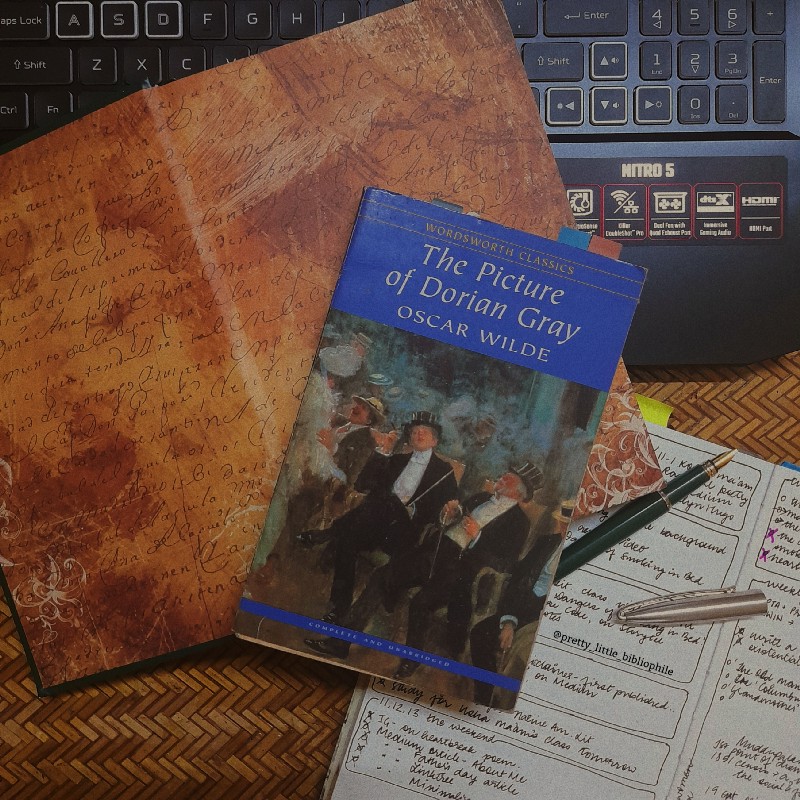
The Picture of Dorian Gray: A Rolling Review With Dark Academia Vibes

The Picture of Dorian Gray is one of my favourite classics of all time. Long before I knew what Dark Academia even was, I had picked it up, read it from end to end, and despite the conflicted nature of it, I was enamoured.

I was repelled by the evil and yet like Eve who too succumbed to Satan, my love for this book, this sensational masterpiece, won me over. So today, I will share my rolling review of this book, from back when I first read it.

I am adopting the rolling review method created by Eliza Lita in this review of The Song of Achilles because I think it will best encapsulate the wonder that struck my young and innocent 19-year-old mind.

Note: All quotes mentioned in the article are from The Picture of Dorian Gray, by Oscar Wilde, unless specifically mentioned.


But before we begin, here is how Goodreads describes the book as:

Written in his distinctively dazzling manner, Oscar Wilde’s story of a fashionable young man who sells his soul for eternal youth and beauty is the author’s most popular work. 

The tale of Dorian Gray’s moral disintegration caused a scandal when it first appeared in 1890, but though Wilde was attacked for the novel’s corrupting influence, he responded that there is, in fact, “a terrible moral in Dorian Gray.” Just a few years later, the book and the aesthetic/moral dilemma it presented became issues in the trials occasioned by Wilde’s homosexual liaisons, which resulted in his imprisonment. 

Of Dorian Gray’s relationship to autobiography, Wilde noted in a letter, “Basil Hallward is what I think I am: Lord Henry what the world thinks me: Dorian what I would like to be — in other ages, perhaps.


10 April 2018

So I just started reading The Picture of Dorian Gray yesterday, and so far I’m loving it. The writer has introduced Basil Hallward- the guy who paints the infamous picture, later on; the man in question, that is Mr Dorian Gray himself, and their mutual friend Lord Henry Wotton.

I could realise that Lord Henry has a really magnetic personality and if we can use a term from today that would best describe him, it is that of the “influencer”. 

In the very beginning itself, we see Basil, hesitant to introduce him to Dorian because he was afraid that the young Lord would be a bad influence on his friend. And it is just as well, I think, because boy, does he have a way with words!

I have been mesmerized by the way Lord Henry speaks; there is this paradoxical quality about him that I really like, and he is just a very good orator. Most of the lines that I have underlined in the book so far are his speeches. I’ll put in a few examples here:

Your rank and wealth, Harry; my brains, such as they are, — my fame, whatever it may be worth; Dorian Gray’s good looks, — we will all suffer for what the gods have given us, suffer terribly.

This does bring in the element of Dark Academia, I believe — suffering as inevitable in human life. But also, note his pretentiousness!

I make a great difference between people. I choose my friends for their good looks, my acquaintances for their characters, and my enemies for their brains. A man can’t be too careful in the choice of his enemies. I have not got one who is a fool. They are all men of some intellectual power, and consequently they all appreciate me. Is that very vain of me? I think it is rather vain.

Oh very vain indeed, Lord Wotton!

I can sympathize with everything, except suffering. I cannot sympathize with that. It is too ugly, too horrible, too distressing. There is something terribly morbid in the modern sympathy with pain. One should sympathize with the color, the beauty, the joy of life. The less said about life’s sores the better.

And then he goes on to say this too. What a paradoxical man!

Days in summer, Basil, are apt to linger.

Henry is also a real chauvinist and you can see it right here.

To have ruined oneself over poetry is an honour.

But, let me ask you. Isn’t that the ultimate truth?

You will always like me, Dorian… I represent to you all the sins you have never had the courage to commit.

And here we come to the crux of the matter.


12 April 2018

I think Basil Hallward also has some amazing lines which I ought to share. This book is pure poetry and as Henry said, I am ruining myself over it.

I had a strange feeling that Fate had in store for me exquisite joys and exquisite sorrows.

Oh, how tragic!

You might see nothing in him. I see everything in him.

Basil is so in love with Dorian.

I have given away my whole soul to some one who treats it as if it were a flower to put in his coat, a bit of decoration to charm his vanity, an ornament for a summer’s day.

Oh, but for the tragedies of unrequited love! 


13 April 2018

Was it just me or did Dorian Gray not feel like the central character of the novel at all? Am I prejudiced towards Lord Henry Wotton? 

Dorian Gray does have a few lines, short and profound, but nothing compared to what I think Harry has.

I know, now, that when one loses one’s good looks, whatever they may be, one loses everything. Your picture has taught me that. Lord Henry is perfectly right. Youth is the only thing worth having. When I find that I am growing old, I will kill myself.

Henry’s effect is so obvious here. How vain Dorian has become, how shallow.

I am in love with it, Basil. It is part of myself, I feel that.

To love one’s portrait to that extent? Classic narcissist behaviour.

She is all the great heroines of the world in one. She is more than an individual. You laugh, but I tell you she has genius. I love her, and I must make her love me. You, who know all the secrets of life, tell me how to charm Sibyl Vane to love me! 

I want to make Romeo jealous. I want the dead lovers of the world to hear our laughter, and grow sad. I want a breath of our passion to stir their dust into consciousness, to wake their ashes into pain. My God, Harry, how I worship her!

What passion, what joy! I felt my own heart stirring, hearing these words pour out from Dorian’s lips.

You used to stir my imagination. Now you don’t even stir my curiosity. You simply produce no effect. I loved you because you were wonderful, because you had genius and intellect, because you realized the dreams of great poets and gave shape and substance to the shadows of art. 

You have thrown it all away. You are shallow and stupid. My God! how mad I was to love you! What a fool I have been! You are nothing to me now. I will never see you again. I will never think of you. I will never mention your name. You don’t know what you were to me, once. 

Oh, how fickle Dorian’s love is!


14 April 2018

From what I’ve read so far, I can make out that the character of Lord Henry Wotton is quite shallow. He is a rake, very obviously. He seems to say a lot of things- wonderful things; he is a loudmouth. But it all seems like a façade to me. 

He must possibly be a lonely person trying to deny that through all his antics. He is a person in denial of the fact that his life has no meaning so far.

 Nonetheless, I love his character. He has that whimsical quality about him that I like- he makes me think.


15 April 2018

One line Sibyl Vane has said that has left me unsettled was- 

To be in love is to surpass oneself… he has preached me as a dogma; tonight he will announce me as a revelation. I feel it. And it is all his, his only, Prince Charming, my wonderful over, my god of graces.

Another poignant line of hers is:

You came, — oh, my beautiful love! — and you freed my soul from prison. You taught me what reality really is. To-night, for the first time in my life, I saw through the hollowness, the sham, the silliness, of the empty pageant in which I had always played…

You had brought me something higher, something of which all art is but a reflection. You have made me understand what love really is. My love! my love! I am sick of shadows. You are more to me than all art can ever be.

The chapter of Sibyl Vane’s death is very significant, I feel. We see Dorian finally morph into someone else- the change in his portrait is proof of that as his innate humanity has lessened, no doubt from Lord Henry Wotton’s influence. 

Then we see his realization regarding this change when he refuses to let Basil remove the screen he had placed in front of the portrait to prevent anyone else from seeing it. We see him growing suspicious of everyone around him, from his servant Victor, to even the frame-maker Mr Hubbard.

I got the word I was searching for Harry. His words are charming and clever- but they are cynical. He sends over The Yellow Book to Dorian which is similar to the poisonous influence he has over the younger man. 

The book is almost like an experiment he performs on Dorian, which turns out exceedingly to his liking. It fascinates Dorian as he sees aspects of his own life in the protagonist in this 

… novel without a plot, and with only one character, being, indeed, simply a psychological study of a certain young Parisian.


16 April 2018

I watched the 2009 version of Dorian Gray, starring Ben Barnes (Oh, how I love him!). The guy who plays Basil in the movie very eloquently said to Dorian about Harry- “You’ll never meet a more eloquent philosopher of pure folly”. And I totally agree.

Things have really turned for the worst when Dorian stoops to murder and blackmail (to hide the fact that he has murdered a man). He has finally become an image of Harry, but much more dangerous and immoral in nature. He almost does not have a heart. 

He is so dedicated to his pursuit of pleasure that he no longer knows what happiness is. The irony of it all is that he also knows what happiness and pleasure are and that there is a huge difference between them.


17 April 2018

I finished this book today. It was possibly one of the best books I’ve read this year. It is a wonderful novel, hence an obvious classic and I am so glad that I have read this masterpiece of the ages. 

Dorian as a character who repents too late towards the end, teaches us that the pursuit of pleasure is no doubt an aphrodisiac to the sense but this pursuit must be done only within the moral limits and not be obsessed over. Likewise, the fact that youth and beauty are transient and will fade away one day is a fact that we all need to accept.

Lord Henry is a cynic of the purest waters. He is charming with his words, delightful in his speeches. He is a bad influence, but I love him more for it. Basil, on the other hand, is a very good friend who ultimately dies due to the madness of the person he was trying to help.

The plot in itself was an awesome journey over the years in the Victorian Era and we see a bleak picture of London of the times, with its unbridgeable gap between the rich and the poor. It was this London of vices that unfortunately trapped the young and impressionable Dorian with Lord Henry’s help.

Oscar Wilde has created a sensational masterpiece in this philosophical novel and makes us explore the interrelationships between art, life, and the consequences of our actions. It beautifully plays with elements of sin, desire, and personal growth in a period when this was an outrage to the Victorian establishment. I rate it a solid 5/5 stars.


Nayanika Saikia graduated summa cum laude with a Bachelor’s degree in English Literature and was also a Dean’s List student. She is currently pursuing her Master’s degree and is also a Booktuber and Bookstagrammer. She can often be found on her Instagram account Pretty Little Bibliophile. You can support her by Buying Her a Coffee. To get regular updates and amazing content, sign up for her newsletter.


Did you enjoy this book review? Read more about what books inspired and moved us on our Book Reviews page. And if you want to support independent journalism, please consider doing so through our Donations page. Thank you for reading!

Has Alex Michaelides Come Back With a Bang?

So I just read The Maidens by Alex Michaelides, whose debut The Silent Patient was an international bestseller. I received a copy of The Maidens from the publishers, but all my thoughts that I will be sharing today are entirely my own and in no way influenced by others.

For your consideration, here is what Goodreads describes it as:

Edward Fosca is a murderer. Of this Mariana is certain. But Fosca is untouchable. A handsome and charismatic Greek Tragedy professor at Cambridge University, Fosca is adored by staff and students alike — particularly by the members of a secret society of female students known as The Maidens.

Mariana Andros is a brilliant but troubled group therapist who becomes fixated on The Maidens when one member, a friend of Mariana’s niece Zoe, is found murdered in Cambridge.

Mariana, who was once herself a student at the university, quickly suspects that behind the idyllic beauty of the spires and turrets, and beneath the ancient traditions, lies something sinister. And she becomes convinced that, despite his alibi, Edward Fosca is guilty of the murder. But why would the professor target one of his students? And why does he keep returning to the rites of Persephone, the maiden, and her journey to the underworld?

When another body is found, Mariana’s obsession with proving Fosca’s guilt spirals out of control, threatening to destroy her credibility as well as her closest relationships. But Mariana is determined to stop this killer, even if it costs her everything — including her own life.


Immediate Response After Reading It

I certainly enjoyed this book. It had a cool whodunit vibe throughout that I was simply thriving in.

I also liked the deeply psychological take on a dark academia novel and it was really refreshing compared to the usual books you get to read in this category.

As for the pacing, it was really readable and I just glided through it. Oftentimes, books of this genre can become repetitive and predictable. But it wasn’t so, in this book.

I really liked it and rated it 4/5 stars. I also filmed a reading vlog about it which you can check out here.

‘The Maidens’ Reading Vlog.

Is ‘The Maidens’ a Dark Academia novel?

Yes. But it is also much more than that.

Firstly, I just have to address that this is not a typical dark academia novel. And let me tell you how.

Unlike other DA novels, this one does not follow a student who is in the middle of the action, or as a dark academic would say, in medias res. Rather, in The Maidens, we follow an outsider. Mariana is a group therapist and she visits Cambridge to support her niece when her classmate and best friend is murdered. So you see, we are not immediately thrust into an academic atmosphere. This is the first place where this novel diverges from the genre.

And this is also the reason why this novel gives the reader much more breathing space than other DA works. We do not yet know the world. We come to know of it through an outsider’s eyes, who, coincidentally, was once an insider. And therefore, getting to re-enter this world comes with multi-layered observations that we as readers only benefit from.

Another fact that adds yet another level of understanding to this novel is that she is a psychology professional. As such, her insight on things, on characters, and on the events, make us also expand our understanding of her.

I did come across some reviews stating how The Maidens was not truly dark academia, but I disagree. It is simply different and has a thriller take on dark academia. I like to this of it as adult dark academia where the scope of the world is much wider than the four walls of the educational institution. 

It is a dark academia novel, yes, but it is also a thriller novel and so we have to think of it on the basis of the amalgamation of these two aspects. Ignoring one to categorize this book in strict boxes, won’t make it an all-encompassing read.


My Grievances with ‘The Maidens’

Despite the fact that I did like the book, I also have a few complaints about it.

Our protagonist is Mariana. And like I mentioned before, she is a group therapist but she is dealing with a loss of her own. What I thought was kind of weird and improbable was how all the male characters were attracted to her. It really signalled the ‘i am not like other girls’ trope which, to be fair, is overrated and unfair. It felt a lot like that, the way these men were all drawn towards her.

My other complaints — well, I will try to wrap them up in one sentence each, in order to avoid giving spoilers. I thought the Greek mythology aspect did not have much relevance to the actual story. The backstories of some of the characters were also too similar, to the point that it seemed like the author took an easy route.


Favourite Quotes From ‘The Maidens’

I am also sharing some of my favourite quotes from the book, which while really enhancing the reader’s understanding of the book, also have such immense depth on their own.

“My argument with so much of psychoanalysis is the preconception that suffering is a mistake, or a sign of weakness, or a sign even of illness. When in fact, possibly the greatest truths we know have come out of people’s suffering. — ARTHUR MILLER”

From a psychological viewpoint, this just made so much sense. Even though now I can say it is an obvious thing, it was so enlightening to come across.

“Mariana no longer saw the world in color. Life was muted and gray and far away, behind a veil — behind a mist of sadness.”

Loss is an important underlying theme throughout this book and I think that this quote really reflects that well — how loss affects us.

“If you’re not aware of the transcendent, if you’re not awake to the glorious mystery of life and death that you’re lucky enough to be part of — if that doesn’t fill you with joy and strike you with awe … you might as well not be alive. That’s the message of the tragedies. Participate in the wonder. For your sake (…) -live it.”

Another quote that I believe really encompasses and shines forth the real ideals of dark academia — living life to the fullest and enjoying it, partaking in all the emotions of life, and participating in it.

“She sometimes felt she had been cursed, as if by some malevolent goddess in a Greek myth, to lose everyone she ever loved.”

Lastly, this, because we cannot really have dark academia without some Greek gods and goddesses brought into the picture!


And that is it, my fellow readers. If you have read this book and have an opinion (similar or contrary), do share because I would love to know your perspective. If you haven’t read the book, I hope I have convinced you to pick it up and give it a chance.


Nayanika Saikia graduated summa cum laude with a Bachelor’s degree in English Literature and was also a Dean’s List student. She is currently pursuing her Master’s degree and is also a Booktuber and Bookstagrammer. She can often be found on her Instagram account Pretty Little Bibliophile. You can support her by Buying Her a Coffee. To get regular updates and amazing content, sign up for her newsletter!


Did you enjoy this book review? Read more about what books inspired and moved us on our Book Reviews page. And if you want to support independent journalism, please consider doing so through our Donations page. Thank you for reading!