‘I Ride Tsunami’ Is a Condemnation of The Digital Age

Disclaimer: Please note I was approached by the author who sent me a PDF version of this book in exchange for my honest review.

Arthur P. Johnson’s upcoming poetry collection, I Ride Tsunami was a good companion to my enormous cappuccino this morning. The irony made it that before diving into the book, I conveniently started my morning by checking work emails, Twitter, and doing analytics for the Coffee Time Reviews website. And boy, did this poetry book put me to shame.

The collection starts with an introductory note from the author, explaining the metaphor of the tsunami and why it is the central motive of the book. 

“If you choose to adopt my metaphor of tsunami-as-emotionaldisturbance then you will probably agree that our lives are replete with these waves. The question is then, what to do with them.” Arthur P. Johnson, “I Ride Tsunami”

Arthur uses the image of the tsunami as a metaphor for our tumultuous existence in the digital age, particularly in the West. Now, seeing the current rhythm of life as an enormous, destructive wave trying to wipe out everything in its way is not a never-before-seen image in poetry. 

What makes it good, and Arthur’s poetry worth reading, is the element of surfing on the tsunami. So although we deal with chaos, he creates the hope that it is worth it and possible to navigate it. 

The collection spans over seven sections, each of them depicting a phase of dealing with the tsunami. From section 1, Dreams Die Here, to section 7, Vapour, the poems follow the lyrical voice, who deals with the “emotional turbulence” of the tsunami, from the point of chaos and confusion to the point of blissfully working in tune with the wave.


Best Parts About It

I thoroughly enjoyed some poems in particular and thought they were little highlights of the collection. Hollow Man tells the story of a person consumed by work. The simplicity and universality of the poem made it easy to relate to, as the character in the poem reaches a point of utter oblivion because of all the ways they changed and worked themselves, to the point of losing the substance of their being.

There now exists/Only a thin layer of flesh /Between me and utter/Nothingness.

But then,/As Byung-Chul put it,/I optimised myself /To death. — Arthur P. Johnson, “Hollow Man”

The closing lines, “I optimised myself to death” really hit hard. As someone who has dealt with workaholism, and the pressures of social media, and who is also making a living purely out of digital work, this poem made me re-think my life and aspirations outside technology. I’m sure it will do the same for many others.

Unsurprisingly, I Ride Tsunami is also a little gem of the collection. The main idea of the poem is coming to terms with the challenges of life and diving head-first into them instead of trying to avoid them. 

What I do know/ Is that the blood that is/ Flowing/ Through my being/ Is the blood that is supposed to flow/ It is blood with origins/ In my moment of/ Formation/ It is the blood of my destiny/

Therefore/ Today/ I ride tsunami — Arthur P. Johnson, “I Ride Tsunami”

Again, it is the realisation of purpose at the end of the poem, that really leaves you gasping for your own purpose and makes you think beyond the poem itself.


Further Thoughts

There are some poems that I wanted more from in I Ride Tsunami, especially where images like “your sweet soul” appear. Some of these I found unnecessary to the message and even diluting, but I can also see a wider readership for poems of this nature, so it is more a case of personal preference.

In the context of wanting to bring readers closer to poetry, Arthur did a great job. His poems are easy to follow and understand, have clear meanings and messages, and I could actually see them easily do well on social media, ironically enough.

At various points in the book, I could picture specific verses on a pretty background, going viral on Instagram, much like Rupi Kaur’s poetry. Now, many poetry snobs will find this a negative thing. But I think readers — particularly those who steer away from poetry — need more collections like this.

I am also a poet and it might be my own poetic bias, but I generally prefer much more abstract metaphors and meanings than those in I Ride Tsunami. However, this review is not about me alone, but about what this collection could bring to other readers, and in that respect, I highly recommend it.

I’ve been told many times that my poetry is horribly difficult to understand, and many readers usually stay away from poetry for that exact reason — because they get confused by it. So Arthur P. Johnson, either on purpose or because this is his writing style, really addressed this by writing a poetry collection that, in my opinion, is accessible and universally relatable.

I Ride Tsunami will be published on October 4th, 2021, by Independent Publishing Network.


Did you enjoy this book review? Read more about what books inspired and moved us on our Book Reviews page. And if you want to support independent journalism, please consider doing so through our Donations page. Thank you for reading!

‘Maybe You Should Talk to Someone’: The Scoop on Therapy, From a Therapist

(TW: This post and the book itself mention suicide, illness, trauma, and depression.)

“But life sucks and no one else has this problem and I’m gonna die alone so why even bother trying?” *plops onto couch in exasperation*

I’m sure we’ve said this to ourselves at some point. Well, a variant of it, at the very least. It feels true in the moment, right? That we’re so utterly alone and incapable of being “fixed” or “healed” or however we define feeling like a functional human again. Or, in many cases, for the first time. 

Not quite. Lori Gottlieb, in her New York Times bestselling memoir, Maybe You Should Talk to Someone, debunks this myth. In the book, she shares anecdotes from working with patients in her LA-based psychotherapy practice. 

In this witty, heart-wrenching, and brutally honest memoir, Lori gets to the root of what it means to be human.

Her caseload includes a terminally ill cancer patient, a narcissistic Hollywood screenwriter, a severely depressed sixty-something, and of course, a rambunctious millennial. Though they each present with different issues, Lori finds that at the root of it, they have the same problems. Repressed emotions. Grief. Dysfunctional attachment styles due to issues with childhood caregivers. And the list goes on. 

Interestingly, Lori also takes us through her own journey. She starts out in Hollywood, then finds her way to Stanford Medical School, and finally decides she wants to work as a therapist. Her life has its fair share of trials, too. In her late thirties, single and aware of her diminishing fertility, she decides to have a child on her own. 

Furthermore, her mid-40s serve her with a double whammy. She gets unexpectedly dumped by a serious boyfriend, and also hops from specialist to specialist trying to diagnose a mysterious medical condition.

Despite believing much of what happens to us is due to extraneous causes, we hold the key to our liberation.

Lori seeks therapy herself, falling into the shoes of a psychotherapy patient for the first time. And this not only helps her work through her personal dilemmas, but helps her better understand where her own patients are coming from. Her anecdotes are raw and vivid. But she doesn’t hold back from sprinkling them with a comical tone. 

In this witty, heart-wrenching, and brutally honest memoir, Lori gets to the root of what it means to be human. She brings us into the therapy room with her. We see the times of sheer discomfort as well as the “A-ha!” moments. And through this, she shows us that growth, healing, and coming to terms with our lives can be messy. They can bring us through tears, anger, denial, self-destruction, and sometimes, the question of whether or not we want to continue living.

But once we tap into that pain and suffering that keeps us “caged in,” as Lori calls it, we begin to see what else is possible. That, despite believing much of what happens to us is due to extraneous causes, we hold the key to our liberation. We can stop putting ourselves in the position of victim. And we can rewrite the faulty stories we deem to be the absolute truth. 

Lori drops a lot of hard-hitting wisdom. One of my favorite takeaways from the book was this:

“You can have compassion without forgiving. There are many ways to move on, and pretending to feel a certain way isn’t one of them.”

We spend a lot of time convincing ourselves we must reach a certain feeling. Whether that’s forgiveness, happiness, or productivity, we contort ourselves into positions that don’t feel natural. Lori’s book made the point that that’s okay. 

By accepting ourselves as we are, and without judgment, we make space for growth, genuinely and in a way that’s best for our overall wellbeing. This can improve our relationships with friends, family, lovers, and — ultimately — ourselves. 

Once we tap into that pain and suffering that keeps us “caged in,” as Lori calls it, we begin to see what else is possible.

Mental health books always leave me feeling a deep sense of clarity. And this one was no exception. Lori shows us that sometimes it’s the helpers who need the most help themselves. 

While reading Lori’s memoir, I thought a lot about my own experience in therapy. Lori talks a lot about how therapy can make us aware of defense mechanisms or truths about ourselves that we don’t want to face. 

And for this reason, it can be challenging at first. But in the long run, as we detach from these ways of thinking, being, and interacting, we begin to see that they perpetuate the very cycles we’re trying to break. 

I could deeply resonate with this, as it was only after the objective guidance of a trained professional that I could step outside of these deeply ingrained habits.

Also, therapy can leave you feeling heavy and forces you to face your deepest wounds. I think, like many of Lori’s patients, that’s why I would succumb to unhealthy habits — people-pleasing, overworking — because of a fear. A fear of what might be possible if I no longer turned to these mechanisms to bury what I didn’t want to address within myself. 

Though we often turn against one another, we can see that, at the core of it all, we have much more in common than we think.

By seeing ourselves more objectively, we can reach this compassion that Lori speaks of. We begin to see that a lot of other people’s negative traits — anger, narcissism, passive aggressive tendencies— are rooted in their own defense mechanisms. Which, at the end of the day, stem from unprocessed traumas and wounds, often rooted in childhood. 

Though these behaviors should never be acceptable, we can see that they serve a purpose for that individual: protecting them from further pain. 

Finally, Lori shares with us her own shortcomings and the fact that she is, after all, flawed. I think it can be easy to see therapists and mental health professionals as these all-knowing beings who can do no wrong. But they’re still learning along with us. They have their own weak spots, their own pasts, and their own ongoing stressors, which means they aren’t immune to slipping up. 

The therapist-patient relationship is one of the most special connections out there. And by committing to it, we have the potential to be seen and challenged in ways that we wouldn’t be otherwise. 

In the long run, this opens up the full scope of what we’re capable of — and many of us would be surprised. Though we often turn against one another, we can see that, at the core of it all, we have much more in common than we think. 


Want more bookish content? Follow along with me on Bookstagram or subscribe to my newsletter


Did you enjoy this book review? Read more about what books inspired and moved us on our Book Reviews page. And if you want to support independent journalism, please consider doing so through our Donations page. Thank you for reading!

‘The Division Bell Mystery’ Made Me Rethink Working with Politicians

I heard about The Division Bell Mystery fairly soon after arriving at the House of Lords to join the ranks of those who “have to be in the House but not of it”. Although it’s almost 90 years old, the book is widely remembered in that small orbit, and I absorbed the fact of its existence as a piece of trivia to pass on, in due course, to newer, greener officials. 

But it was only as the clock was counting down to my own departure from Parliament, nearly a decade later, that I picked up Ellen Wilkinson MP’s only novel.

The novel’s place in 1930s crime fiction

Republished in 2018 as part of the British Library’s Crime Classics series, The Division Bell Mystery was published during Wilkinson’s time out of Parliament (1931–34). It reflects some of her longing for both the place and the intrigues of politics while she was on the outside, which I identified with as my own time walking the Parliamentary estate freely ended. 

Wilkinson’s novel reflects the hubbub of an inattentive organisation that needs piercing sounds to cut through: division bells, doorkeepers’ shouts, and members chuntering at each other in the chambers.

Wilkinson offers a frank cross-section of political life, from the intimacy of journalists and politicians to the fractious closeness of politicians and civil servants, as well as relations ‘across the floor’, and anxieties about the safety of Parliament and politicians. The novel is perhaps well remembered in Westminster because so little has changed, for better or worse, and reading it certainly makes you feel like an insider.

Compared to other period crime novels featuring politicos, like Anthony Berkeley’s Death in the House (1939) and Robert Gore-Browne’s Death of an MP! (1927; the novel goes now by a variety of reprint titles), Wilkinson’s title hints at a little-recognised fact of time spent in Westminster: that sound governs Westminster and sets it apart from other political spaces. 

Big Ben’s bongs used to summon members from a draughty corridor into my office at 2 pm each day. When they were disabled for the restoration of Elizabeth Tower, it was a shock to the community in surprising ways (the absence of Brexit bongs that agitated some MPs being the least of it). 

Wilkinson’s novel reflects the hubbub of an enormous, inattentive organisation that needs piercing sounds to cut through: division bells, doorkeepers’ shouts during processions, and members chuntering at each other in the chambers. Sometimes those noises are savage, as in Wilkinson’s novel, and sometimes they are merely gross, but they define the place. 

Politicians know best? 

The plot of Bell is a relatively straightforward locked-room mystery. Reclusive Basque-American financier, Georges Oissel, is shot while alone in one of the small dining rooms of the Commons, his host, the Home Secretary, having gone up to vote in a scheduled division. 

Robert West MP finds himself drawn into the investigation because that is simply what happens to a Minister’s bagman: they are drafted in to tackle any little bit of bothering a Minister gets into that can’t be handled by civil servants.

The novel is by no means autobiographical, but it reflects how personal politics are, and fiction proves a more honest medium than a memoir might. Wilkinson draws on her experience as Susan Lawrence’s Parliamentary Private Secretary at the Ministry for Health to build the character of West, her novel’s ostensible hero. 

She puts West on ‘the other side’, as a Tory, but he is no partisan caricature, even though Bell bears some of the same incisive wit as Wilkinson’s earlier Peep at Politicians, a collection of pen-portraits of her fellow politicians published in 1930. Those echoes illustrate an underlying theme of the novel, addressed sometimes with great subtlety and sometimes rather heavy-handedly: what do politics make of the people in it?

Both West and Wilkinson’s narrators express scepticism about the general usefulness of civil servants, echoing the common refrain from the political side that they stand in the way of getting things done. This is embodied in the mysterious Gleeson, the Home Office’s Permanent Secretary. But it comes to a head in an uncharitable portrayal of the Home Secretary’s official Private Secretary, Briggs. 

Briggs tells West that even a revolution would not undermine the Civil Service, which “merely goes on doing the job”, while “you politicians think you can improvise government like jazz on a piano”.

Briggs may have a point then and now. Civil servants work for the least strategically run organisation in the country. Policies can change on a whim of politicians who are “the chief of a fleeting hour”. But civil servants must embrace every hobby horse of a political master as though it were the best policy ever invented. 

It is rather a miracle that anything gets done at all, Briggs suggests. It’s not entirely clear that Wilkinson agrees (her portrayal of Gleeson and some of West’s grumblings suggest otherwise), but she does give the counterargument in a fairly straight way, and the novel as a whole suggests that politicians spend little time doing anything productive.

This is compound by the novel’s interesting failure to comply with some of the conventions of the amateur-detective genre. There are no idiotic police officers here with whom West can compete. And although West thinks of himself as an amateur detective and is involved in part of the investigation, he certainly doesn’t solve the case. 

If anything, the competent Inspector Blackitt is held back, “checkmated”, by the politicians, who withhold information. He quickly puts paid to the politicians’ initial assumption-cum-hope that Oissel committed suicide and pursues further inquiries, which West obstructs just in case the truth is politically inconvenient. 

Hard lives, hard decisions, hard hearts

Politicians’ arrogance, then, is at the heart of Wilkinson’s novel: their belief that they and their circumstances are special, different, beyond the ordinary run of things. West’s misbelief that he can play detective effectively, and the Home Secretary’s desire to avoid the consequences of his own actions, create a web that nearly allows the murderer to go unpunished. 

But Wilkinson also provides an apologia for that arrogance. Not just the commonplace influence of a femme fatale — West is bewitched, or “checkmated” by the victim’s granddaughter, Annette, until the end— but also the seductive nature of power, being close to the action, ‘saving’ a country in trouble. The novel tries to disclaim that seduction. 

We’re told that “all government is an elaborate game of bluff, and to the men who are on the inside of the pretence the bump of reverence is worn to a hollow”. But recognition of that hollowness is no protection.

Wilkinson is also clear-sighted in her portrayal of politicians’ self-indulgence as apparent recompense for what is, unarguably, a hard job, including (for some) living in digs, being barely paid, finding themselves at the mercy of the Whips at all hours, and campaigning all the while. 

Inspector Blackitt sympathises with West about these hardships: “after my experience this week I’d rather be sentenced to penal servitude than to Westminster”. But West knowingly retorts: 

“You must admit we do ourselves pretty comfortably” and “see to it that the restrictions that apply to every other pub don’t apply here”, which “helps to make life bearable”.

Irrespective of their own economic circumstances, however, all the politicians in the novel seem sheltered from the realities of the consequences of politics, just as is the case today. That means Bell wears its historical context lightly. 

The country’s dire need of money is the pretext for Oissel’s presence in the House and his murder becoming of political importance, but aside from West’s encounter with a bread march, the consequences of that national position are absent. 

That solipsistic self-indulgence blossoms into Lady Bell-Clinton’s one-rule-for-us attitude in the novel’s denouement. 

“You can’t take a waiter’s word against [an MP’s]”, she warns the police; to do so would be “monstrous”. 

She is ushered quietly out of the room, rather than rebutted, to avoid the embarrassment that she has said the quiet part out loud in front of political outsiders.

The novel recognises how disappointing these facts may be to the typical person ‘represented’ by their MP, just as they disappointed me and my fellow officials in Westminster all the time. West’s outsider friend, Shaw, attends various scenes seemingly just to provide this sort of perspective. 

He feels “rather hopeless” about the cynicism that has captured West, who possesses “brains and a high sense of duty” but sees politics, and government, as a matter of “bitter helplessness” in which various points of view and plans tussle, fragment, and “fight it out”, without the winner necessarily being the one with most merit.

Shaw chooses to “continue to believe in the House of the Commons” as a register of those divergent views if nothing else. But that spark of faith emerges after Shaw has rather ignored all of West’s other cynical asides that imply that many politicians are largely indifferent to the actual matters on which they make decisions. 

West says casually to him, excusing himself to vote: “There’s another of these financial crises hovering in the wind”. Having not been part of the debate, how does he know which way he ought to vote? Wilkinson doesn’t press the matter, but the answer is simple: he’ll just vote with his political tribe, who must surely be ‘right’ in the matter.

Wilkinson’s novel suggests that politics make its people hard, even (dare I say it?) ‘hardboiled’. Not through a cycle of violence, as in the hardboiled crime fiction of the ‘30s, but through a cycle of sheer noise. The bells demand your answer — ‘aye’ or ‘nay’, ‘content’ or ‘not content’, depending on the House — whether you know what the question is or not. 

Follow the shouted directions of the doorkeepers. Speak, or don’t, depending on the ebb or flow of the rolling noise of your fellow politicians around you. And yet, Wilkinson— and her political fellows, real and imagined — persisted. Whether that is blind arrogance or daring optimism may simply depend on whether we choose to join Shaw in continuing to believe.


Did you enjoy this book review? Read more about what books inspired and moved us on our Book Reviews page. And if you want to support independent journalism, please consider doing so through our Donations page. Thank you for reading!

Why ‘The Tyranny of Lost Things’ Is an Enduring Summer Read

The Tyranny of Lost Things by Rhiannon Lucy Cosslett is, at a glance, the perfect summer book. The book is set in the heat of 2011’s summer, with the London riots playing out in the background. It follows Harmony, who is in her 20s, as she returns to her old family home. But her home turns from a hippy commune into a booze-soaked houseshare, with more than a hint of hopelessness.

It feels odd to be writing a review of a book so perfectly connected with summer, when all I can hear is the rain against the skylight near my desk. Yet The Tyranny of Lost Things is able to cut through my rather drab surroundings. It does so by linking in to nostalgia for summer. It creates a memory of summer that is more a thing of fiction than reality. But it is filled with Bohemian dreams and a suffocating permanence. A hint of pent-up anger bleeds into a need for change at the same time.

This contrast makes it the perfect book for summer, especially if read in London. As a coming-of-age novel, I seriously doubt anyone over the age of 20 could read it without feeling nostalgic for nights out. The book showcases a deep love of London and youthful enjoyment. But despite that, it does not shy away from the city and society’s flaws, both now and in the past.

That past, for all its rose-tinted nostalgia, has left a firm shadow over more than just Harmony.

There is more than a hint of comedy to the novel, yet far from feeling derivative, it adds to the sense of nostalgia. The nostalgia in The Tyranny of Lost Things might link back to the ‘80s, but it also draws on more recent events. It explores the almost constant sense that people used to have more fun than they do currently. Perhaps that is why I love the novel so much. It does not drown in sentimentalism, but uses nostalgia to brilliant effect. Thus, it manages to both frame the other themes, and highlight generational changes and conflict.

That truthfulness is key to the novel’s success. It does not feel like an escape into a perfect world, and so is not merely an engaging distraction or pipe dream. Instead, it blends moments of hilarity with a keen critique of society. Harmony is constantly trying to emulate a sense of the carefree decadence of her parents’ generation, or at least a rose-tinted idea of it. Yet living in a city with impossible rents and a stagnant job market makes it rather hard at time.

Impressively, the social commentary is not simply aimed at the current issues of an unequal economic system.

This can lead into comedy. An example is the scene where Harmony spray-paints the soles of her cheap shoes. In doing so, she tries to mimic the £400 version that was popular at the time, to meet her housemate’s mum for cocktails at Claridge’s. This leads to her shoes being complimented by an oligarch. She then becomes “tempted to compliment the old man on his taste in hardware store spray paint”.

Comedy pervades the novel and carefully balances caricature with very believable anecdotes. But it is not simple comedy, for there is a constant undercurrent of the power imbalances at play. These power imbalances might seem linked to looks. Yet it is clear that even if one can look the part, it is far harder to feel at home and really fit. This sense of being an outsider links into the wider aspect of Harmony feeling separated from other people by her past trauma.

Impressively, the social commentary is not simply aimed at the current issues of an unequal economic system. In fact, it highlights how generational it has become. For instance, it should seem ludicrous that in 20 odd years a house could increase in value so much that it becomes an investment that has paid off.

The mention of house prices gently nudges back at the pervading sense of how things were so much freer and fun in the past. This is not just a way to highlight the broken housing market and generational wealth gap. It is also brought up in a flippant reference to the cost of mental health services. This both shows the attitude of many towards mental health, but also the failing of NHS provisions for it.

This ties into a wider exploration of mental health. It works extremely well in showing the range of ways it affects people. But it also reiterates how hard it is to know what someone is going through, just by their appearance and behaviour. In Harmony’s case, she is deeply affected by trauma from her past, and as the novel progresses more is revealed.

That past, for all its rose-tinted nostalgia, has left a firm shadow over more than just Harmony. As that shadow becomes clearer in aspects it also becomes more complex. This mystery provides the novel with an unputdownable flow that is very hard to resist. This coupled with the wry social commentary and devotional focus on London, creates a book that drags you into a world of summer excitement. Yet it never feels like a paper-thin narrative fit only for a single summer.


Did you enjoy this book review? Read more about what books inspired and moved us on our Book Reviews page. And if you want to support independent journalism, please consider doing so through our Donations page. Thank you for reading!


‘Against The Loveless World’ Gives a Voice to the Voiceless

TW: Both this review and the book mention trauma and violence.

Book hangover. Ever hear that term? I’d come across it again and again, but never grasped the entirety of its meaning.

But then I read Against the Loveless World, and it made sense. The moment I closed the book, I longed for more. More of this world to which I’d become so attached. More of these complex characters and the unwavering hope that propelled them through the story. 

Susan Abulhawa tells the gripping story of Nahr, a Palestinian woman who spends her days in solitary confinement. The story shifts from present to past, as Nahr tells of her early years in Kuwait. She dreams of opening a beauty salon and feels as if her life is on the right track when she marries a respectable bachelor. 

However, they separate soon after and she finds herself on the path of prostitution. It’s the only way to support her poverty-stricken family and to ensure that her brilliant younger brother can go to medical school. Nahr is blindsided yet again when Iraq invades Kuwait, and her family is forced to resettle in Jordan. Her identity remains unstable, as she feels that a sense of home has always hovered beyond her grasp.

Her fate eventually leads her into Palestine, where a sense of belonging unfolds. A new unexpected lover — a man tied to her past, but whom she’d never met — enters her life. And all seems well, despite the threats of the Israeli occupation that loom in the background on a day-to-day basis. 

Nahr feels more joy than she ever has, and she is able to detach from the traumas of her earlier years — from losing her father, to her first husband leaving her, and all of the wounds in between. 

Tensions heighten as Nahr tells the tale from her minuscule jail cell, deemed The Cube, leading us back to the present. Many questions remain unanswered. Did her lover survive? Where is her family? What will life be like once she is freed, if that is ever a possibility? Susan Abulhawa depicts the story so vividly and with a keen focus on detail, that a fine line exists between reality and the words on the page. 


I first came across this book on Bookstagram and was drawn to its subject matter. Although tensions in Palestine have heightened in the last few months, I’ll admit I still felt disconnected from it all. There was a desire to know more, yet some of the information out there seemed faulty or unreliable. 

News outlets and information on social media can be skewed a certain way, and only capture part of what’s going on. Additionally, history and social studies texts spew out facts, names, and dates, but lack the ability to cultivate an emotional connection. 

Though this book was by no means an all-encompassing education on the conflict, it provides an example of what life for many has been like for decades. For one thing, the author uses the lived experiences of actual Palestinians to tell the tale. 

Poverty, resettlement, and violence underlie the lives of so many in this region of the world. So by using Nahr to highlight the harsh realities, the author made it easier to connect with what was going on and gain a deeper understanding of the situation.

The style of writing was also captivating. Abulhawa’s eloquence lends an ease to the reading experience as if floating through the stanzas of a poem. Her spiritual and long-standing connection to her roots is evident, as she includes words in her native Arabic throughout the story (with a translation guide in the front of the book). 

I love when authors do this, as it allows the reader to get a glimpse of the culture — whether it’s food, terms of endearment, or major holidays. 

Additionally, I admired Abulhawa’s talent for characterization. Sometimes a story with a promising plot gets dulled by characters who seem flat or inconsistent. That was not the case with Against the Loveless World. Abulhawa strikes a balance between painting a portrait of each character while leaving enough to the reader’s imagination. 

And through realistic dialogue, unique physical attributes, and complex internal states, we feel invested in each character as if we were with them ourselves.

I think this book offers valuable insight into very real experiences occurring throughout the world. Reading is a beautiful way through which we can step out of the bubble of what we perceive to be true or normal. And we’re allowed to see that there are so many realities out there. 

Some are stagnant and predictable, while others are a roller coaster of unimaginable hardship and strife. It’s a pleasant reminder of the full spectrum of the human experience, with love and joy on one end, hatred, and pain on the other. Abulhawa shows us that in order to fully revel in and appreciate the former, we often have to face the latter. 

We’re left with the truth of a universal need for love and belonging. And how, despite its apparent ease, it’s something many of us spend our lives chasing, often without success. But it’s this love — or a yearning for it — that can keep us going, even in the bleakest circumstances. 

While the book hangover will fade, I know my desire to read more of Abulhawa’s work will not. She’s just one of those authors who seems self-assured and full of wisdom. Her acclaimed Mornings in Jenin is on my list, and I have a feeling it’ll be just as alluring as this book. 

If you’re looking for a novel that feels like peering into a literary kaleidoscope, look no further than this one. But be warned, the book hangover will hit you! 


For more book blurbs and reading recs, follow Brina on Instagram or Goodreads!


Did you enjoy this book review? Read more about what books inspired and moved us on our Book Reviews page. And if you want to support independent journalism, please consider doing so through our Donations page. Thank you for reading!

The Feral, The Brutal, and The Supernatural in ‘Mouthful of Birds’

I picked up Mouthful of Birds as my first read in June and boy, was I in for a ride. Macabre and twisted from the core, these stories lie waiting for you to just start settling down before they jump out, baring venomous teeth, sharp enough to rend fear into your hearts and minds.

According to Goodreads,

A spellbinding, eerily unsettling collection of short stories from the Argentinian sensation Samanta Schweblin, author of Fever Dream. ‘Mouthful of Birds’ is the award-winning collection by Samanta Schweblin, critically acclaimed author of Fever Dream. Unearthly and unexpectedly, these stories burrow their way into your psyche with the feel of a sleepless night, where every shadow and bump in the dark takes on huge implications, leaving your pulse racing and blurring the line between the real and the strange.

With her hallmark style, made popular by Fever Dream — hailed as ‘terrifying and brilliant … dangerously addictive’ by the Guardian — Samanta Schweblin haunts and mesmerizes in this extraordinary, masterful collection.


Why I Picked It Up

The reason why I even picked up this weird, eerie, and dark book was that I came across this synopsis just after I had read Mariana Enriquez’s The Dangers of Smoking in Bed. I was absolutely smashed by the horror element in that collection so much so that like an addict, I needed my next dose of literature along the same vein. No pun intended.

Enter Mouthful of Birds. I came across it on Amazon and at first, it was the cover that attracted me. The luminous, almost phosphorescent wings of the dozens of butterflies on the cover creeped me out and at the same time, caught my attention. 

Why I point this out, is because of the fact that I hate butterflies. I am disgusted by them and they just give me the heebie-jeebies. I even shudder to think of them. But this cover ended up having the very same qualities as the stories inside — they repel and at the same time, they pull you in.

Of course, the fact that it had a sticker on it letting me know that it was longlisted for the Man Booker International Prize in 2019, also helped. There is nothing like reading a critically acclaimed book to make you simmer in your feelings. And so, I ordered it and very soon it graced my doorstep.


Why You Need to Read This Book

Much like The Dangers of Smoking in Bed, the book Mouthful of Birds too consisted of some very tantalisingly original and scalp-prickling stories.

Some are sweet, and some are despondent. Most are weird, almost all unnatural. But they are strangely reflective of one or the other aspect. I feature the animal in us; the cruel, feral, and the venomous creature in us that won’t think twice before laying an unimaginable intoxication, that will, in turn, compel you to keep reading it, page after page after page.

I was reminded of something I thought even as I was reading The Dangers of Smoking in Bed. When I wrote my thoughts on it in a review, I felt as if the dark side in us didn’t take a lot to come to the forefront. I said, “Perhaps, our dark sides are ultimately not that deeply embedded in us, and are just lurking around under the skin?”

“Perhaps, our dark sides are ultimately not that deeply embedded in us, and are just lurking around under the skin?”

But is it really true?

Where the stories from that collection felt malicious often, the stories here are more, docile and mild, although still wild in their own nature. The collection Mouthful of Birds sure did make me face my inner thoughts and beliefs via the thinking of the characters here, the actions they took, the ways in which they let nature decide their life.

I felt the fear of the unknown, and of the secrets of nature when I read On the Steppe. In Preserves, I felt the perversity of life and death, or rather, its delay. In the story, Mouthful of Birds, I felt pure disgust, my own bile rising up at the animalistic hunger in a young girl. In Headlights, the supernatural and the social intertwined, and I was spellbound. But was I weirdly impelled to press on? Yes, of course!

Stories like Toward Happy Civilization, My Brother Walter, Heads Against Concrete, The Size of Things, and The Heavy Suitcase of Benavides, I faced the most conflicted of human nature, of violence and manipulation and perverse power-play. But was I ashamed? Did I feel a strong sense of second-hand embarrassment and horror that maybe I shouldn’t have? Yes and yes. 

So I asked myself. Why was that? Is the unnatural so inherent in us? Be it the subconscious or even the unconscious — is this so normal that it is almost unnatural? What is it about these stories that attract us? A self-reflexive sense of the self? Of what we are innately and can often turn into at just the snap of the fingers? Is it that easy? Who knows? Do I? Do you? 

What is it about these stories that attract us? A self-reflexive sense of the self? Of what we are innately and can often turn into at just the snap of the fingers? Is it that easy? Who knows? Do I? Do you?

And if we did, would we dare to acknowledge it? To chase this piece of intangible knowledge and seek it out deliberately? Are we brave enough to place a mirror in front of our monstrous selves? Do you know?

Final Thoughts 

Because I have been comparing Mouthful of Birds to The Dangers of Smoking in Bed, let me also attempt to close this review by saying that this too is no easy read. It is intense, it is eerie, it is art. Mouthful of Birds is esoteric but elegantly universal, originally surreal and humorously absurd, and it is a masterpiece. If you are looking for something that excels in all these categories and checks all the boxes, pick it up.

If you loved reading Mouthful of Birds, you might also enjoy The Dangers of Smoking in Bed, and vice versa. Read my review of The Dangers of Smoking in Bed.


Did you enjoy this book review? Read more about what books inspired and moved us on our Book Reviews page. And if you want to support independent journalism, please consider doing so through our Donations page. Thank you for reading!

When Reading Becomes a Job

Listen to this story via the Coffee Time Reviews podcast:

The pressure to take everything we love and monetize it is a massive side-effect of the side-gig economy we live in. Because so many of the things we consider hobbies could be careers, many of us think that they should be.

As someone who loves books and reading, who is also a writer, it felt very natural to me that I should start writing for the bookish websites I loved. So, in spite of assuming I’d be rejected, I applied.

To my utter astonishment, when I received the response, it was… yes?

And so, I got what I believed to be my dream gig — writing for a prominent bookish website. The first few story ideas flowed out of me naturally, but soon, imposter syndrome kicked in. Hard. Who was I, to be writing on the internet?

Then, slowly but surely, books began showing up in my inbox and mailbox, review copies for me, and my suddenly widespread potential influence on readers.

I had dreamed of exactly this, of putting my words into the world and of having publishers send me free books. Of getting paid to write about books.

Except that I didn’t account for how it would feel to turn my love of books and reading into a job, with expectations and guidelines to meet. Suddenly, I had to come up with regular, consistent ideas for writing about books and reading.

And all these free books came with the expectation that I would read and review them, or feature them in some sort of listicle, even if some of them were downright bizarre.

Yes, technically I had no obligation to respond to unsolicited books showing up on my doorstep, but as a chronic people pleaser, I struggled to set this boundary inside my head. I felt so guilty any time a book arrived and sat on my shelf unread.

To top it all off, this exciting new opportunity came at a transition period in my life. Within a few months of accepting the gig, I moved to a new city, started grad school, and found myself experiencing grief for the first time.

As the unasked-for books piled up in my grad school apartment, it became apparent that reading had started feeling less like fun and more like a chore. Weighed down by grief and intensified imposter syndrome thanks to being both a sudden internet book person and an MFA student, my brain couldn’t latch on to books or to new ideas for writing about them.

The earnings from this particular contract weren’t enough for me to sustain my living expenses, so I was also working part-time. The hours in which I could read for fun were few, and writing about books began to feel a lot like lying. Could I still call myself a book person when I wasn’t actually reading outside of my coursework?

Never before had books become burdens. I couldn’t resell them, since they were Advanced Reader Copies, and I didn’t know how to get rid of them. They sat in stacks on the floor, judging me.

Eventually, I knew I’d come to a breaking point. I could not maintain this pace, working two jobs and two side gigs while in grad school. Something, my new therapist and I agreed, had to give.

I didn’t want to walk away from the clout of holding this position, but I understood that it was not making me happy. I liked saying I had the gig far more than I enjoyed doing the gig itself at this particular time in my life.

And so, I stepped away from this dream job and, for a long time, felt overwhelming guilt and despair. Sometimes, still, I wonder if it was the right move, wondering how different my life might be if I’d found something else to let go of back then.

Then I remember how miserable I felt, how much I knew in my gut that this was the thing it made sense to release.

Yet, here I am again, writing about books on the internet. Years after making this hard choice and simultaneously shuttering my personal book blog, I found my love of reading and reviewing, and writing about books again.

I finished grad school, started a stable job with steady hours and pay, and processed the difficult emotions that played a bigger part in my sense of overwhelm than I realized at the time.

I am tentatively stepping back into being an internet book person, a semi-professional book nerd if you will. I’m writing about books again because I love sharing the passion of reading with the world. I’ve even started a Bookstagram account, which has been a great source of joy and connection with other bookish types.

I haven’t yet returned to any contractual obligations because I’m afraid of just how much I can allow my passion for books to become a job. Yet a piece of my brain is once again wondering whether I might have the chops to be a professional book nerd after all.

But before I could let myself start writing about books on the internet again, I had to forgive myself for the choice I made back then. Secretly, I’d been holding myself back, telling myself that my ship had sailed. I’d let one opportunity go due to circumstances, so that was it. Over and done.

I’m still not sure to what extent I want my hobbies and my work life to overlap. As my NetGalley account fills up with digital e-arcs, and my email inbox begins to show outreach from publicists once again, I am cautious about taking on too much. I can feel the same old guilt and overwhelm creep in.

Maybe being a semi-professional book nerd with obligations only to herself is the right path forward for me. But maybe, just maybe, there’s a happy medium to be found.


For more content from Amanda Kay Oaks, visit her Medium page and subscribe to her newsletter, Amanda Reads, for weekly reading recommendations and a Tarot card read.

Author Spotlight: Linda Wisniewski on Winning a Loaf of Bread and Other Perks of Writing

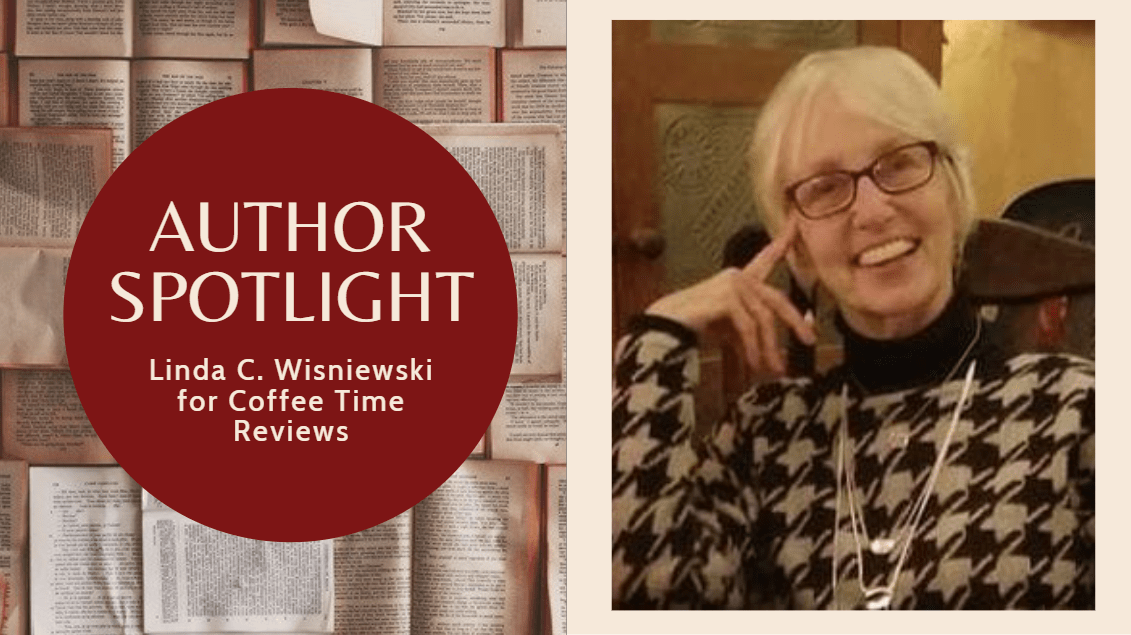
We’re back with another author interview, this time meeting Polish novelist Linda C. Wisniewski and diving into her rise and path towards authorship. Two-time novelist and contributor to several fiction and non-fiction anthologies, Linda is the author of time travel novel, Where the Stork Flies, which I reviewed exclusively for Coffee Time Reviews last month. The book mixes elements of magical realism and the supernatural, with a strikingly relevant and current portrayal of feminism and its progress through history.

But less about the book and more about the author, let’s find out about Linda’s fascinating journey towards becoming a writer, and how it all started with her winning a loaf of bread for her writing.


CTR: Why did you decide to become an author?

Linda: Looking back, it seems to have come upon me gradually, without a conscious decision. I’ve written all my life, starting in primary school where I won a loaf of bread in an essay contest from the bread company! 

I have kept a journal since those early days but didn’t think I’d become an author until I was asked to write some technical articles for library journals while I was working as a librarian. I enjoyed researching and writing them up so much I couldn’t stop. I took workshops and read books and articles about how to write well, and I was on my way. I guess the short answer is, I became an author because I enjoyed writing.


CTR: What is your favourite part of writing?

Linda: Definitely revising. It’s the blank page or screen that is tough for me to face. Once I have words on the page, no matter how messy that first draft, I love to dig in and make it better, filling in details, expanding descriptive scenes, imagining dialogue and fleshing out the characters into people who would do the things I dream up for them. Before I know it, hours have passed and I need to get up and stretch.


CTR: What advice would you give an aspiring author?

Linda: Read as much and as often as you can. Write about the things that haunt you. If it’s not interesting to you, it won’t be for your readers. Write the hard stuff, the things that keep you up at night, the problems you can’t figure out. More than likely, these are the same issues your readers are wrestling with. 

Whether memoirs, personal essays, or fiction, put your heart on the page and your readers will come right along with you. And always remember why you are writing. Not everyone will like everything you write, and rejection can be discouraging, so decide what your purpose and vision are and keep it posted somewhere you can see it every day.


CTR: Was your journey into authorship a smooth one or did you encounter challenges along the way?

Linda: Everything worth doing has challenges, right? I didn’t have a specific goal at the start. I just wanted to get my work out into the world, it was a slow journey, but a fulfilling one. The first time an essay of mine was accepted by a major publication — the Christian Science Monitor — I felt like I could truly call myself an author. I was told that a writer is anyone who writes, but an author is one who is published. It was important to me to be validated in this way, rather than taking the self-publishing route, and it still is. 

I write a blog on my website which is well-received but the published articles and books are, I feel, greater achievements. It took years of rejections by literary magazines, agents, and publishers, but I know lots of generous and supportive authors who shared their stories with me so I expected this would be my fate as well. It took over 100 queries to find my current publisher, and I’m glad I didn’t give up. My writing has definitely improved over the years, but I’m still learning and I like it that way.


CTR: What inspires you the most in your writing?

Linda: My impulse to write comes from many places: the world news and social justice issues, my kids, my marriage, my community, my Polish American heritage, and my spiritual life. My overall vision is to shed light on the ways people connect with each other to solve problems and create their own happiness. In my memoir, Off Kilter, I shared stories of people who helped me find my way through a difficult childhood. 

Writing my novel, Where the Stork Flies, I was inspired by the history of my female ancestors’ country to show how women’s friendships make us stronger, healthier, and happier. So one might say my biggest inspirations are people helping each other for mutual benefit.


CTR: What advice would you give your younger self?

Linda: Follow your dreams and ignore anyone who tries to discourage you. Everyone gets damaged in this life in some way, big or small, so consider the source and make your own path. Because you’re young, people will try to tell you what to do, if you let them. Trust in your own intuition and only ask for advice from people you respect.


CTR: What are 3 books you would recommend to our readers and can you give a short reason why?

Linda: Peace Like a River by Leif Enger. This story of a family traveling through the Badlands of America to find a son who has run from the law is one of my favorite books of all time. The writing is so beautiful I read it slowly to just bathe in it. Little miracles, tragedy, love, and hardship plus believable characters moving through the great expanse of the American West made this one I recommend over and over again.

Stones From the River by Ursula Hegi. This is the book that finally explained the Holocaust to me. Trudi, the main character, has dwarfism and lives with her father in Nazi Germany, where the fanaticism of Hitler and his followers seeps into society slowly until it’s too late to turn back. I read this with my book club, which was great because it led to some good discussions among both Jews and Gentiles.

Americanah by Chimamanda Ngozi Adichie. Told from the point of view of a young Nigerian woman who moves to the U.S., this is for anyone who has ever tried to adjust to a different culture. Her struggles with racism, her longing for love and acceptance that leads her into some risky behavior, and the parallel story of her boyfriend back home who has his own assimilation challenges in England are deftly rendered with a touch of humor mixed with disappointment.


Thank you for reading Author Spotlight, a series of interviews with authors who are happy to share the tools of the trade with our CTR readers. If you’re an author and would like to be featured, get in touch at ctreviewspub@gmail.com. For any author suggestions, leave us a comment and we’ll try to chase them up. And if you’d like to support our independent publication, please consider doing so through our Donations page.

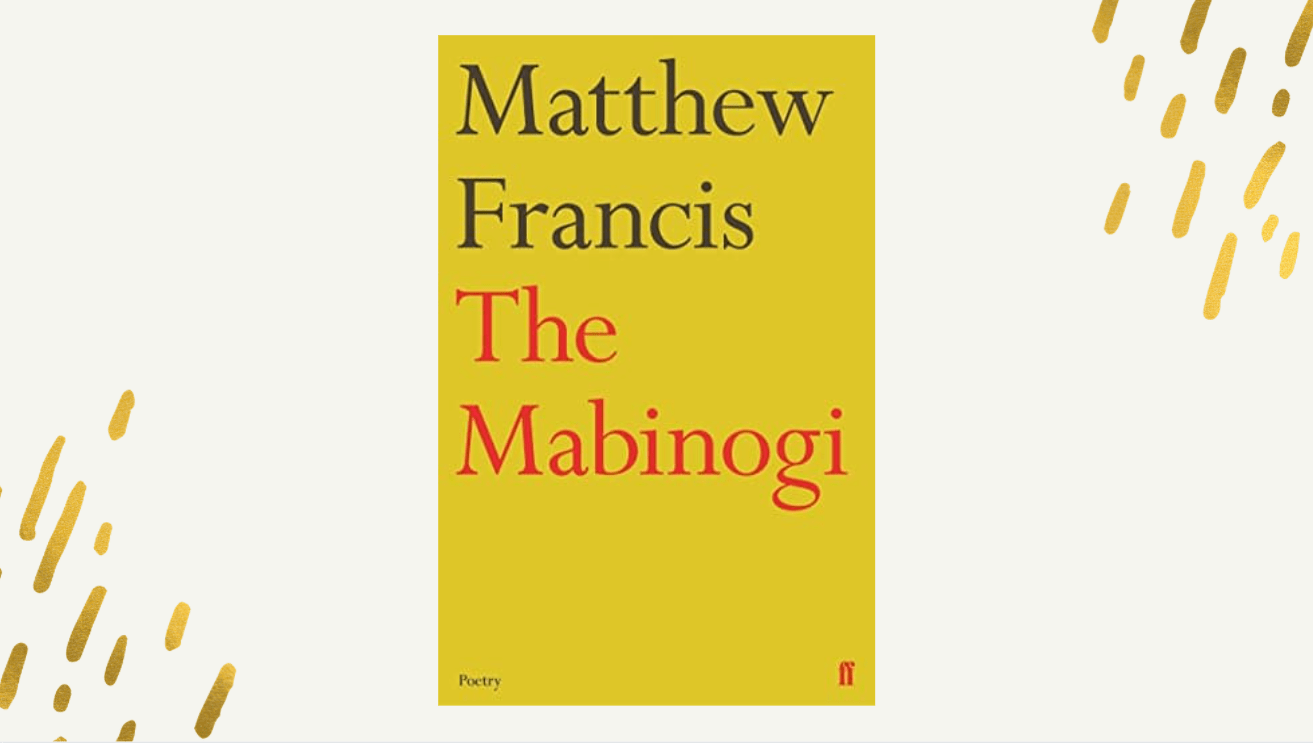
Matthew Francis’s Retelling of ‘The Mabinogi’ Revels in the Magic of Poetry

The Mabinogi, consists of four interlinked stories set in a version of Britain in which the magical is only a few steps away and kings can become cobblers. You might be familiar with these stories as they form the basis of a wider collection of tales called The Mabinogion, or perhaps from the Fleetwood Mac song Rhiannon, as she is a major character of these stories.

By just focusing on the four tales of The Mabinogi, rather than the wider collection of The Mabinogion, Matthew Francis is able to give the work a sense of solid unity, which many versions of The Mabinogion lack. This sense of flow and narrative completion is helped by the naming of each story, with a brief description. For instance, the first story is named: The Tale of the Hunter and The Claw. This gives a sense of the narrative but also shows it’s narrative integrity. These four tales are not just broken up because of convention, or how they were once written in a manuscript, but because each plots a different story, even if they do link into each other so neatly. So perhaps it is best to view The Mabinogi, more as a perfect quintet, complied into a single volume than a single narrative work.


Mr Francis takes the innovative step of rendering the story into verse, rather than sticking to prose like other retellings and translations into English. This to me feels like a better representation of the nature of these tales. Perhaps it is just that prose has become firmly fixed on the page, and only poetry retains the oral sense of music and magic, that all stories would once have had. I must say that I love the cover design, a luminesnt yellow, emblazoned with the title in a bright vermillion. There is certainly something striking and, rather fittingly, perhaps otherworldly about it.

There is also an aspect of altering expectations. By using poetry, it is quite clearly a work of engaging narrative, rather than a dry, scholastic, translation of the original manuscript version. You could pick this up with no knowledge of the stories and it would be an enthralling read, for each word seems perfectly balanced to pull you along the story with a verbal precision and exciting cadence that is impossible to resist.


One feature that helps with the poetic format is the use of marginal notes. These allow the main poem to leave out certain details without causing confusion. As the poem is no longer constrained by the reader’s knowledge it is free to be consist and swift in its narrative. There is no turgid exposition or flabby lines seeking to remind the reader who each character is again and again.

They marginal notes also add a sense of physicality, as if they were added later to a manuscript to help explain it. This, coupled with the judicious use of white space, and dropped capitals at the start of sections, is very reminiscent of medieval manuscripts and so gives a nod to the origins of the tales.

As although these were likely oral tales to start with, we only have them as they were recorded in two manuscripts. These manuscripts are rather brilliantly known as The Red Book Of Hergest and The White Book of Rhydderch. To think that a book is so individual and important it can be known just by the colour and where it was kept. This is also where Tolkien got the idea for The Red Book of Westmarch, which is supposedly the source for the stories in The Hobbit, The Lord of the Rings, and The Silmarillion.


As well as structuring the poem to mirror a manuscript, the lineation adds a natural oral feel to the work. Within each section headed by a dropped capital, there are shorter sections of 14 lines, broken up into shorter stanzas. These sections are described by Mr Francis as being somewhat like sonnets, which is not something I see other than in the number of lines and final couplet. What I find more interesting about these short subsections is that I can imagine the spaces in between them neatly corresponding to longer pauses in the recitation. These are not just the pauses of a speaker taking a breath, but of them taking a leisurely sip of their drink.

This approach focusing on the nature of story telling is also found in the order of the stories. Mr Francis follows the normal order of the four branches (what each story is known as) but in the fourth branch Mr Francis has changed the narrative structure considerably. To start with he frames the story as an after-dinner story told by the protagonist, and hints that the other stories are just the same. There are also changes to the order of events to highlight the continuity between the stories.


The stories may cover a range of events from full scale war to more personal vendettas, yet they are really a tale of magic and difference. For the Unland (another world in which things are similar yet clearly different, such as dogs with bright red ears) is always just in reach, and magic can turn words into armies. “Unland” is a rather good way of translating the Middle Welsh “Annwn”, as it shows how that world is like a mirror of this world, in which the rules of reality are twisted on their heads.

The use of poetry also feels rather fitting to me because of this focus. For poetry relates to prose in much the same way as the Unland relates to this real world: The base is the same yet one is intrinsically magical where things can be something else entirely. And just like how the Unland seeps into this world, poetry is always just a word or two away from prose, and like the mythically Rhiannon can readjust itself to fit amongst prose.


Did you enjoy this book review? Read more about what books inspired and moved us on our Book Reviews page. And if you want to support independent journalism, please consider doing so through our Donations page. Thank you for reading!
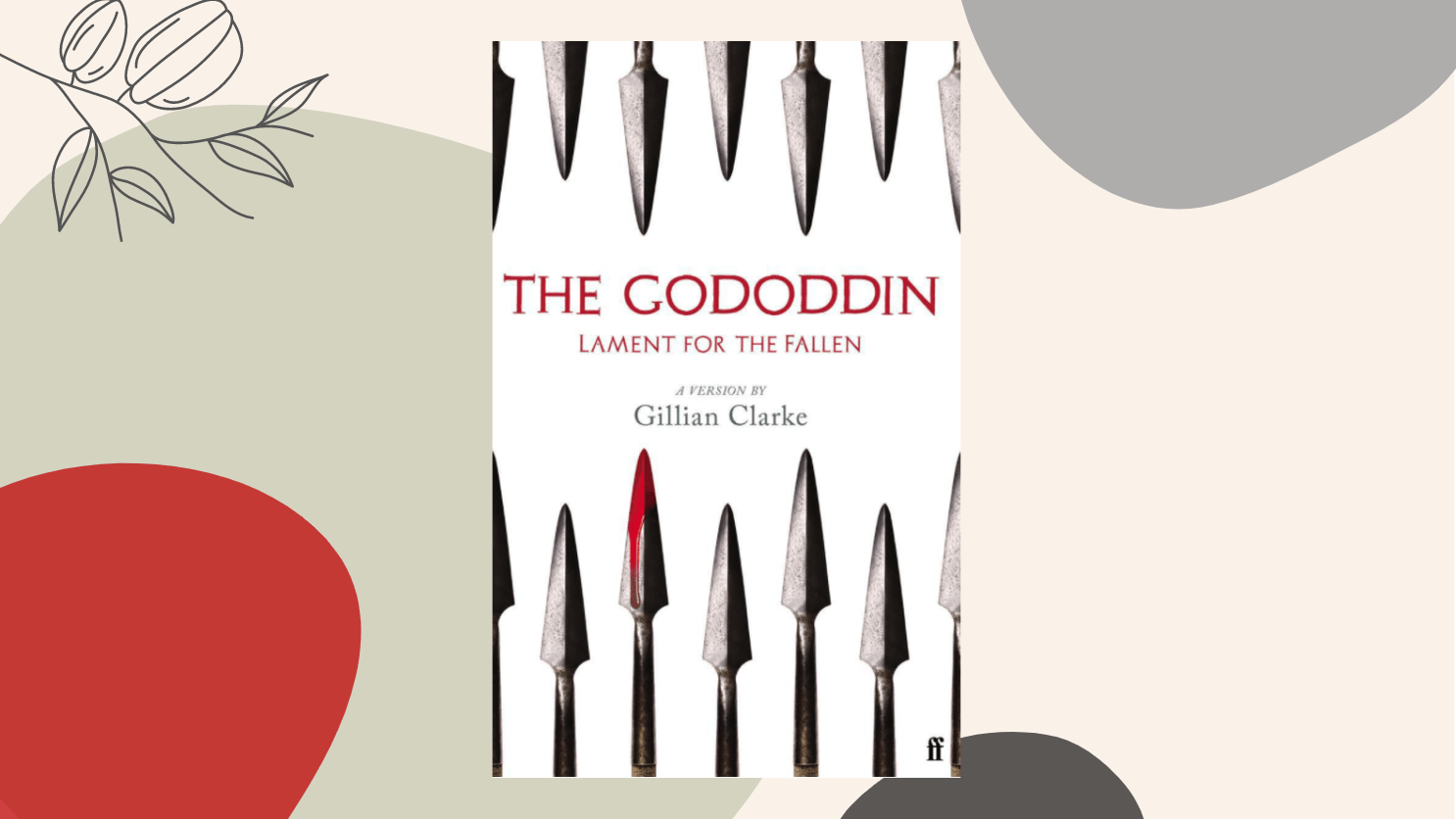
‘The Gododdin: Lament For The Fallen’ Is a Pathos Laden Masterpeice

Before I dive into this review, I feel a bit of a grounding is needed. The Gododdin by Gillian Clarke is a collection of short elegies mourning the aftermath of a disastrous battle. It is also known by its Brittonic name Y Gododdin, but I will use the English as that is what the book uses.

This battle happened in a region known in Brittonic languages as Yr Hen Ogledd (The Old North) which included much of southern Scotland and northern England, and remembered a time before Germanic tribes started to conquer the kingdoms there.

At this time most of England, Wales and southern Scotland spoke interrelated languages (all descended from Common Brittonic) and shared cultural traditions. Steadily Germanic tribes started to settle in the east and conquer more and more land. As the regions speaking Common Brittonic became separated from each other, their languages diverged more and more. Some of these languages died out or were deliberately relegated in favour of English, as such most of the literature and oral tales from that period only survive in Welsh forms, as the Welsh language did not suffer as much as the others.

Interestingly, this poem also contains the earliest direct reference to Arthur, who is used as an example of a heroic warrior, and so must have already been a well-known figure/myth.


The Gododdin is perhaps the oldest work of British literature, having been written between the 7th and 10th centuries. It is attributed to the poet Aneirin, who likely wove together the different versions into one written text. Before this time, it is most likely that it was transmitted as an oral tale. This spoken nature can be felt in the heavy use of alliteration and rhyme, which Ms Clarke cleverly incorporates into her translation, without feeling forced. This is not just for reading them out loud, as the elegies would likely have been sung, rather than simply recited.

The link between poetry and music is very clear in Brittonic languages. Consider the Welsh credd, which means both ‘song’ and ‘poem’, or the Cornish kan, which means the same. This translation manages to be faithful to that idea, and I found myself muttering along as I read. These poems almost demand to be given sonic form, and have a rhythm and melody to them.

A thing to note, is that the written version straddles Old and Middle Welsh, and so shows the evolution of language within the UK, and poses an extra difficulty for translation. Do you try to mirror that complex blend of grammar and vocabulary, or stick to a single language style?


One aspect of the poem that fascinates me is how it straddles many of the constituent parts of the UK. Written in a language that would end up focused in Wales, set in a kingdom that straddles what is now southern Scotland and north-east England.

This helps to show the fluid nature of nations, and that the UK is far more complicated than the idea of four constituent parts might give. Ms Clarke, also makes clear the complexity of identity. The stories of these poems (alongside others) are a key part of the Welsh literary tradition, and yet frequently are kept at a linguistic remove. In translating Ms Clarke has not merely carried the poem over from one language to another, but created a bridge linking the languages and literary traditions.

In this way the layout of the book is vital. By presenting each translated poem opposite the Old Welsh original, the link between them is preserved. This might be a heavily domesticated translation, in that the English does not feel alien, but it does not try to hide its nature as a translation. There is also a certain poignance that this poem, commemorating scores of deaths in a battle between Brittonic and Germanic kingdoms, now sits in two facing forms, one in a Brittonic language, and the other in a Germanic one.


Now, this might all seem rather academic, but these poems feel anything but. They are full of pathos and emotion. You get a sense of the youthful brashness of some of the characters, before they go off to war. And then a strong taste of the sadness left behind, as their family grieves.

To build on the powerful sense of loss, Ms Clark has chosen to include a poem known as Pais Dinogad, which is not a normal part of The Gododdin. It describes a child being told about their dead father. The descriptions of the father as a hunter, link into the martial traditions of The Gododdin, and the language is very similar in terms of praise, yet it is undercut by the pathos of realising that this man has died leaving a small child to mourn him. This sense is heightened by the use of the Welsh ‘tada’ instead of the rather Germanic feeling, and formal, ‘father’ or the rather diminutive and sentimentally loaded ‘dad’.

For this reason, you should find a copy. It might be a fascinating insight into early British literature, and show the complexities, both in terms of culture and language, of parts of the UK, but ultimately it is a hard-hitting poetic memorial to the suffering of war, and the power of grief. For in reading these elegies, which Ms Clarke has titled after those they remember, you are keeping an aspect of those people alive, and linking into a sense of shared mourning.


Did you enjoy this book review? Read more about what books inspired and moved us on our Book Reviews page. And if you want to support independent journalism, please consider doing so through our Donations page. Thank you for reading!