Why ‘The Extasie’ Is Love Poetry at Its Best

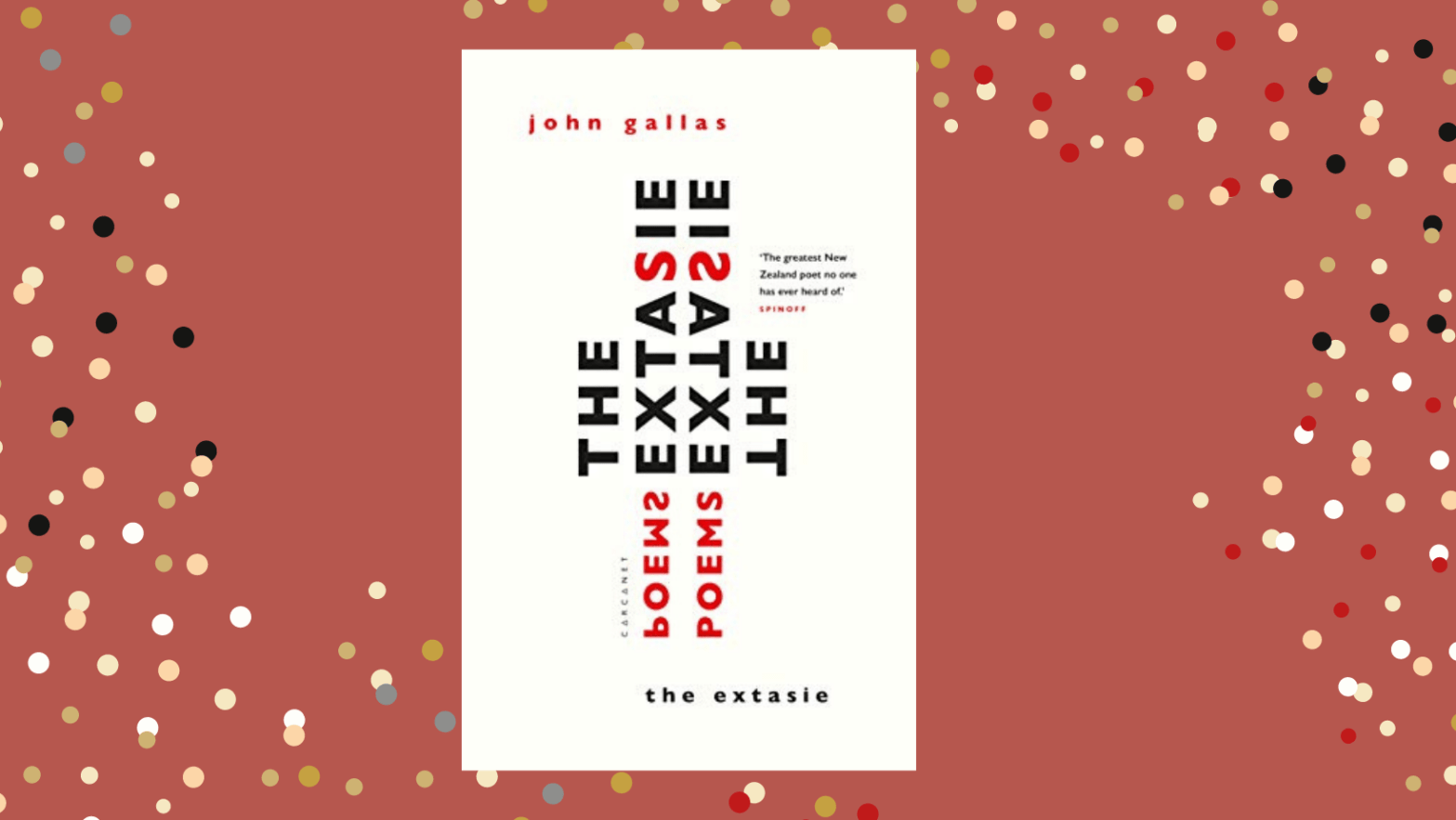
When I picked up a copy of The Extasie, by John Gallas I was slightly trepidatious, as I felt it might be just another hackneyed attempt to link subpar, romantic inclined, poetry to those Elizabethan greats. However, John Gallas is not merely a lyric master, but a master of meaning, for each of these poems has the sincerity of an unread love letter.

It is very rare to read such poetry, for normally such clear love is saved for a most select audience, or is clearly solicited through such clichéd language that you come to believe that the only love is for the next commission.  

It is also vital to remember that a love poem, need not be consumed with its subject, and can instead approach love obliquely through memories of the everyday. Perhaps every day is a poor choice of words on my behalf, as such a view of the world takes a deep connection and astute eye.

This is a world in which humanity is surrounded by and enthral to the natural world. As such the natural world might be ever-present, but it does not distract from the clear sense of love, for it mirrors and records the inner soul, more faithfully than any speech of analytical introspection ever could.

Some of these poems might at a glance be read as if they had little to do with love. Yet as you read on, or go back over the poem, the essence of meaning becomes clear. The stream of emotion that flows, with shifting currents and the occasional eddy, throughout this collection ensures that the craft of understanding is carried steadily to where Gallas wishes.

It is this sense of flow that captivated me. I cannot actually remember where I was when I read the collection, but I do remember the feeling of being drawn onwards as if I would lose something, some intangible uncountable aspect of meaning if I stopped before the designed place. Perhaps I could overstretch the stream metaphor I used before and conceptualise that feeling as the feeling one might have when sailing unforgiving waters, unable to resist the thalweg without capsizing until a safe mooring is found.

Of course, it is not just some ineffable sense of flow that is worth noting (although for something ineffable I really have managed to ramble for a good paragraph). The poems have a chronological link that provides a narrative.  This narrative does not quite fall as a whole, for the collection is broken into two sections, which naturally demark a changing of tone and form.

It is always a very pleasant surprise to find a collection of poems that feels like there is a thread binding the totality together, as normally there are numerous errant poems which for all their inherent worth feel like extraneous sprinkles upon the unified cake that the rest of the collection is.  

However, in this collection, no poem is truly errant. Instead, there are a few that act just as eddies in a stream, that is they are powered by the main flow but are driven to change cause for a moment. Without them, it would be a rather effective but ultimately generic collection. Love might have an inexorable pull to it, but it rarely runs without a few juddering separations, steps back and unexpected highs.

That sense of flow, combined with the complexities of love, is also reflected in the form used. This is not a collection of overly constrained poems, pressing at the seams of rigid form. Yet it is not an amorphous blob of free form poetry, for it uses form to heighten the content, altering the form and style to best suit the ideas contained within. In this way, the collection is closer to the poems of Wyatt and Donne than the formulaic mimicry of Elizabethan poetry that you so often see, which clings to a sense of structure that was never more than a frame around which to weave beauty.

But it is not just the form that is so skilfully deployed, the diction and lineation, create poems that just need to be spoken. Now I find that with poetry it is always best to get a feel for how the words feel on your tongue, and so like to at the least mutter away to myself, if not read the poems right out aloud. This provides a little silver lining to having to wear masks on public transport, for masks neatly hide those moving lips and so avoid the normal reticence of being seen muttering alone on the train.

In this case, I feel it is not just good to read them aloud, but almost imperative, for in speaking you must become party to the action of the words and so, for a moment, ventriloquize the poetic voice, with its emotions and lyric sensibility. As such The Extasie is a collection that I feel I will be coming back to frequently, not just to recapture the enjoyment I had when first reading it, but also to fully bathe in the complex understanding of love in all its forms, rendered so skilfully in poems that reward a second reading with subtle epiphanies.

The Political and the Macabre in ‘Things We Lost in the Fire’

A few months ago, I was introduced to Mariana Enriquez’s writing in The Dangers of Smoking in Bed, a short-story collection; via which I was introduced to the world of nuanced horror. In short, I fell in love with it and I even wrote an article on the book.

I thought my liking this kind of stories pointed towards something else, and in that article, I wrote: What was it about this writing, these stories, and the characters’ unreliability that made this such a mind-blowing read for me? Was it because I was forced to face the basic and the basest of human desires and capabilities? Was it because I was forced to face my own humanity (or its lack thereof)?

What was it about this writing, these stories, and the characters’ unreliability that made this such a mind-blowing read for me? Was it because I was forced to face the basic and the basest of human desires and capabilities? Was it because I was forced to face my own humanity (or its lack thereof)?

And so, I knew even as I was reading these stories, that I would read any other collection that the author has published, and that has been translated. And so, came in Things We Lost in the Fire.

According to Goodreads:

Twelve stories of ghosts, demons, and wild women: of sharp-toothed children and stolen skulls. In this sleep-stealing collection, Enríquez transports the reader to the crime-ridden street of post-dictatorship Buenos Aires, where exhausted fathers conjure up child-killers, and young women, tired of suffering in silence, decide there’s nothing left to do but set themselves on fire.

The Translation

Since I completely forgot to address this aspect of the book in the above-mentioned post, I thought I should start it in this way.

I do believe that sometimes, the essence is lost in translation. Because sometimes there is no existence of particular native words in the English language. And then the onus is upon the translator to weave the English words in such a manner that does justice to the original emotion/thought conveyed.

Both The Dangers of Smoking in Bed and Things We Lost in the Fire, were originally written in Spanish by Enriquez. Megan McDowell is the translator who has played a vital role in making both these works accessible to the English-speaking world.

In my opinion, these translations were exceptional and truly relayed the emotions well — I was often horrified, mostly disgusted, and almost always uncomfortable. Making the reader feel so strongly, be what emotion it may be, is not an easy task. But McDowell has been a superlative translator in this aspect.

I, unfortunately, cannot read Spanish and am therefore handicapped from reading the original works. If you do know how to read Spanish, I would like to request you to read the works in the original and then also in English, and analyze the changes brought in, particularly because of the various political aspects present in Things We Lost in the Fire.

Twelve Stories of Politics, Disquiet and Existential Horror

In a blurb on the very first page, you come across after you tear your eyes from the somehow unsettling cover, it said of the stories, “… Born from the scars of a nation…”

When one researches and understands the political background of the post-dictatorship times in Buenos Aires, the stories are comparatively more accessible. Understanding the nuances of the speech, the things said, the policing expected, social normalities, etc., becomes more believable, and therefore as a reader, one finally comprehends how some of the things narrated do happen. Or rather, once happened.

The people being taken away, the people who disappear, the fear women have of being taken away to dungeons and being raped, all reveal political realities that the people of Buenos Aires once lived through. Even ghosts are political remnants of an erstwhile era.

Death, sacrifice, and obsession reign as the main themes in The Dirty Kid, where one kid’s disappearance marks a downward spiral in a woman, who is trying to redeem her own tragedy by obsessing over a kid apparently sacrificed to the skeleton saint of death.

Maybe I wasn’t the princess in her castle; maybe I was a madwoman locked in her tower.

Drugs, sex, adrenaline, and revenge form the political skeleton of the story that is The Intoxicated Years. In The Inn, ghosts are the remains of a turbulent political past of Buenos Aires, when hidden torture centers were a difficult reality.

She was afraid of the running men, of the car, the headlights. Who were they, where had they gone?

I found true horror in the thing that lived in the house, which eventually became Adela’s House. Serial killers with a history of torturing kids are scary. but what happens when your interest in them turns into obsession? What happens when you slowly, subconsciously turn into that very monster?

An Invocation of the Big-Eared Runt is exactly an exploration of that. It ends before a conclusive resolution but the implication is out in the open. It leaves the reader fearful of what the obsessed man is truly going to do, what with a newborn in his own house.

Politics again enters the narrative in Spiderweb, a story of witch-sisters and disappearing husbands. It is disturbing and yet as a reader, you are compelled to read word after word, line after line, until you are flipping the pages, hungry for more gruesomeness.

They would rape Natalia and me in the dictator’s dungeons, day and night, and they would torture me with electric shocks on my pubic hair… and maybe they could kill Natalia quickly, for being dark, for ebigna witch, for being insolent.

In End of Term, we have contagious ghosts who compel the host to harm themself but protect them from the hurt. A skeleton skull dominates the narrative in No Flesh Over Our Bones, while slowly decaying the woman obsessed with it.

In The Neighbour’s Courtyard, we read of a woman healing from an enormous mistake, while at the same time, obsessing over the need to save a boy. It is a truly disturbing story that merges a child-like innocence with sexuality and therefore sheds light on the complex ways in which children and adults’ mistakes can be intertwined.

In Under the Black Water, an entity waits dreaming; hoping for revenge. it is as if nature is taking revenge for all the political injustices that are done and are disposed of in her waters. So much so, that

The water turned red… People were afraid of it.

I still do not know what to write about Green Red Orange. It is a strange story of the web and people and emotions and using the web as a support, of merging with the web, of becoming the web.

But what is the web? It is a complex tale and with all my analyzing skills, I am still undecided. The meaning is up in the ether, available for anyone who has the ability to access it. So if you know, will you let me know?

In the last story, Things We Lost in the Fire, women reclaim the narrative that was mostly patriarchal and served the patriarchy. I do not wish to reveal much because this tale is as much revealing about human nature as it serves as a mirror to our indecisiveness and often liminal positions.

Final Thoughts

While there were some pieces that I did not particularly enjoy, it was overall an informative read. And I use the word ‘informative’ in a nuanced manner. I learned about Argentina’s tumultuous history and how it affected the collective conscious — which is so very reflective in the stories in this collection. As is the case with this kind of story, I was also informed about my own self.

The real horror in this collection, and in general in Mariana Enriquez’s literature, is how we react to the social realism (which is of course, nuanced) in her work — and therefore, our realization of how inhumane we are or can be.

If you loved reading this post, as well as my thoughts on The Dangers of Smoking in Bed, you might also enjoy reading my post on Mouthful of Birds, by Samanta Schweblin.


Nayanika Saikia graduated summa cum laude with a Bachelor’s degree in English Literature and was also a Dean’s List student. She is currently pursuing her Master’s degree and is also a Booktuber and Bookstagrammer. She can often be found on her Instagram account Pretty Little Bibliophile. You can support me by Buying Me a Coffee.

Read These Books if You Want to Create Excellent Characters

Here’s another piece that teaches you to find value beyond the surface in any book you read.

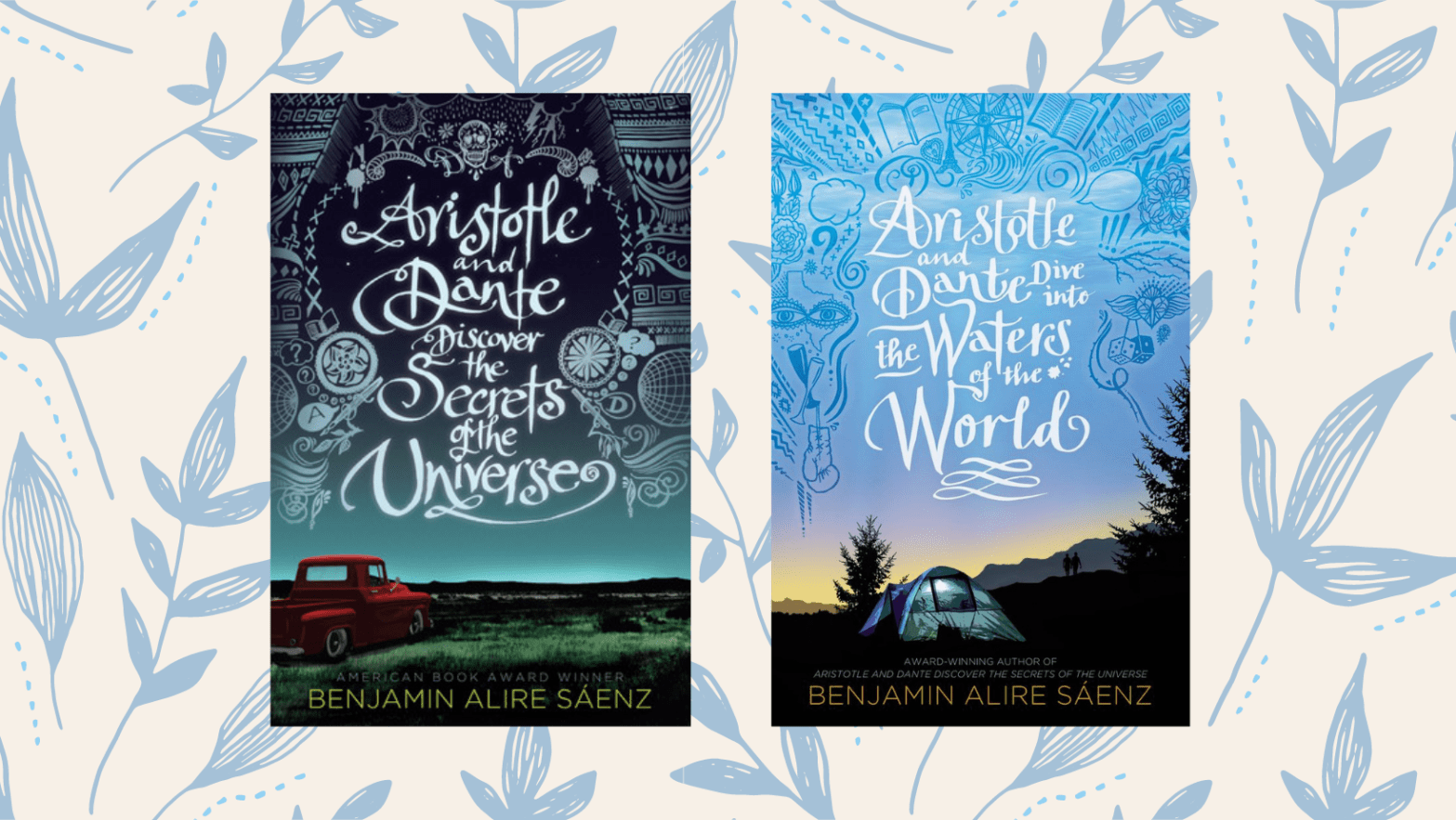
Aristotle and Dante Discover the Secrets of the Universe and Aristotle and Dante Dive Into the Waters of the World made two of four 5-star books I read last month.

The famous YA coming-of-age story by the acclaimed Benjamin Alire Sáenz got a sequel this year and I, like the rest of the world, fell head-over-heels in love with it.

The books go like this: Ari and Dante are two teenage boys of Mexican heritage who meet one day at the swimming pool and ultimately become best friends. The book is set in the 1980s and follows the protagonists’ journey into adulthood, discovering their sexuality, and finding answers to the greatest questions of their lives.

While Dante becomes comfortable with being gay quite early on in the story, Ari takes a long time to process his feelings for his best friend. Their love blooms within the grim context of the AIDS epidemic in the 1980s and in a world where same-sex relationships are still treated harshly.

TW: There are graphic displays of homophobia in both books, so avoid if you think that might trigger you.

Yet the story is so candid and profound at times that it simply takes your breath away. The characters aren’t just representative of their sexuality, age and ethnicity. They are complex, flawed, sometimes fragile, unreliable, determined, and incredibly, incredibly human.

When a book makes you feel like taking part in the conversations between characters, you might want to pause and pay attention. Because the author has then created people, not typologies, and that is invaluable.


What the Experts Say

Masterclass is an online learning platform where aspiring writers can learn from the crème de la crème of literature, among other fields of work like cooking and acting.

Their experts say that eight boxes need to be ticked in order to create a great fictional character:

  1. clear motivations and goals: Ari wants to know what happened to his brother who is in prison for murder, and make his dad, a Vietnam veteran, less closed-off; Dante wants to find his calling in life and embrace his identity — all of these are very human, relatable goals.
  2. identifiable voice: Ari is impulsive, introverted, but charming and popular, he is also very honest; Dante is talkative and a bit quirky, hates shoes (a key trait revealing freedom of spirit and stubbornness to stand against the norm) and is ‘crazy about his parents’ (what teenage boy has ever said that?).
  3. slow reveal: we only get to see how these boys truly are as the story progresses, the author doesn’t just describe them once they’re introduced to the reader, they grow at a pace. Some of their key traits are revealed at the very end.
  4. conflict: Ari can’t come to terms with his sexuality, nor with the loss of his brother; this keeps the action going in a precise direction and creates anticipation. Dante can’t stop being in love with Ari, that’s his biggest conflict.
  5. backstory: very small details throughout the book point to the boys’ circumstances and wider stories. We learn about Ari’s big family, his dad’s war years, his short childhood period alongside his brother. We also learn about Dante’s constant frustration at not being “Mexican enough” and how that reflects on him within his family. Even the stories of how the boys were named play a key role in the story.
  6. use familiar terms to describe characters: readers want to relate to these fictional people, so they need to be believable. Ari is aggressive in the name of justice, Dante talks too much and saves birds, one likes nature, the other likes art, and so on.
  7. don’t neglect physical appearance: for a character to come to life, the reader needs to be able to picture them clearly, so physical details are important, but shouldn’t be too precise or too many.
  8. building good secondary characters: this is Benjamin Alire Sáenz’s best asset in creating stellar characters. The boys’ parents, their friends, Gina, Susie and Cassandra, and even Ari’s dog, Legs, are essential in how the two protagonists develop as the story progresses. The relationships they forge with these secondary characters, the way they talk about them and treat them, the way they interact all help bring the pieces together to create a bigger, more relatable, more complex picture of Ari and Dante.

If you’re a writer creating (or struggling to create) fictional characters, you might find more valuable answers in actual works of fiction, than in books about building characters. It’s show-don’t-tell, and Benjamin Alire Sáenz is one incredible master at it.


Eliza Lita is a freelance writer based in the UK. She covers books and reading, fitness, lifestyle, and personal development. For more of her stories, please consider signing up for a Medium membership through her referral link.

Why ‘How to Kill Your Family’ Is a Top-Tier Hero-Villain Crossover

I never thought I’d sympathise with someone who killed six members of their family quite to this extent. But Bella Mackie’s How to Kill Your Family awoke some gruesome and unimaginable instincts in me.

The book follows prison inmate Grace Bernard, who is writing a confidential confession for lack of something else to do while waiting to be appealed for a crime she was wrongfully convicted of.

Early on in the book, Grace declares unfazed that she has killed six members of her family, yet she is in prison for a murder she didn’t commit. Then, she proceeds to write about all her murders, her motives and goes into exhaustive detail about how she carried them out.

The way the book is written makes it clear from the start that our protagonist may also be the villain. After all, how else would you call a cold-blooded serial murderer who feels no remorse and acts like a hunter finding amusement in the prey’s suffering?

But Grace Bernard isn’t your usual serial killer.

Her motive is, on the surface, revenge, although she has never interacted with her victims prior to killing them.

Why Grace’s Story Is So Powerful

While the book doesn’t exactly intend to endorse killing so many people because your unhappiness is pinned on their mistakes, it certainly speaks for those who have given in to this impulse.

Grace Bernard grew up with a single mother, in almost extreme poverty, having to witness her mum work herself to exhaustion every day to be able to raise her. A former model who came to the UK from France to seek a career, Marie Bernard fell in love with mogul Simon Artemis who left her pregnant and showed a complete disinterest towards their child.

When Marie passed away from cancer, Grace was only 13 and knew almost nothing about her father. After her mum’s death, she discovered the pleading letters from Marie to Simon, asking him to at least get to know his daughter. The only letter in response revealed the cruel reality to Grace: her father blamed Marie for keeping the baby and made it clear he wanted nothing to do with her misfortune.

This is the story of so many other women and the revolting power dynamics within a couple when a baby is involved. Simon Artemis had the money and power to allow him to disappear and not care. Marie Bernard was left deceived and in a position to have to plead in order for her child to get a better upbringing.

Marie’s parents also failed her when disapproving of her career choice, they simply didn’t want to have any involvement in their daughter’s life, especially after Grace’s arrival.

This is why How to Kill Your Family is a story of the multiple layers of failed parenthood, privilege and the horrors of the patriarchy, which can mark a child for life and lead them to commit unimaginable crimes to claim what’s rightfully theirs.

Grace Bernard is not a villain, entirely, she’s a child who was failed by everyone around her, including her mother.

However, to blame her deeds entirely on childhood trauma would also be unfair. Grace is a powerful, smart woman with great potential. She’s brave, analytical, manipulative (I’m declaring this a quality) and ruthless. She’s the epitome of female force unleashed and she knows it.

How to Feel About Grace?

The book is basically a big character study. It takes you through all the emotions and opinions you can have about the protagonist. From empathy to anger, to admiration, to disapproval and even, dare I say, actual horror, Grace’s character and her deeds will make you feel it all.

If you’ve read the book, you know Janine’s murder was a particularly sinister and sadistic one. Andrew’s murder was a little unfair, and Bryony’s murder was pure, evil genius.

But Grace (as the narrator) also makes these people seem like the worst of the worst, like parasites whose deaths make the world a better place. But can you trust Grace in her descriptions of them? Or are you seeing everything through the murderer’s lenses?

Why 4/5 Stars?

I enjoyed the book so much I didn’t even realise when I was minutes away from the end (I listened on audio). It swept me away and threw me head-first within the story. It was very gripping, very engaging, extremely intriguing.

Until the end.

The ending seems to have divided everyone. Some readers liked it, others didn’t. To me, that’s where the last star was lost. I didn’t find the ending satisfying enough.

I liked that it explained how things eventually unfolded, but it left me wondering and needing more. The post-scriptum only made it more confusing. I’m one for more precise endings, where you know you’ve reached a proper conclusion, although the characters’ lives might be continuing beyond the narrative. And this one didn’t provide that.

However, there’s no denying the character study was excellent, the murders were original and very well handled, and for the pile of emotions it made me go through, Bella Mackie deserves all the praise.

Holy Buckets, Batman! My Kid Hates to Read?!

A Father’s Lament

My daughter, now 12, grew up in a home infused with all things literate. I collect books. I have piles of books spread throughout my house, much like an alcoholic who hides bottles of vodka in the freezer’s bottom, behind the freezer-burned vanilla ice cream purchased last year.

I work in a middle-school library, for god’s sake. My daughter just started middle school. My wife is a teacher. How can she not love to read? My goodness.

I have a map of Middle Earth hanging on the living room wall. I collect Lord of the Rings action figures. (Don’t you dare call them dolls.) I had a ‘One Ring to Rule Them All’ key chain. (I lost it — That has to be a joke, but sadly it’s not.)

My point is, I’m a bit of a book nerd, and yet my kid doesn’t like to read. The irony is unbearable, and yet there it is.

So what?

So my kid doesn’t like to read. What’s the big deal? Accept it and move on, Right? Not everyone is cut out for school, and the world certainly needs craft workers, so who cares?

Why you should care:

The more you read, the better your read, and the better you read, the better you do in school and in life.

That’s it. That’s the reason to care, right there. Shout it from the mountain top, brother.

When I taught, I would tell every parent in every conference that one fact. I taught Geography and History and had all of my students do two book reports a year. (Most of the kids hated this and complained, by the way.)

Why fight the good fight?

The more you read, the better you read, and the better you read, the better you do in school and in life.

It’s about keeping your options open.

Some Ideas

Relax

It’s accepted among people who research this sort of thing that when learning to read, it doesn’t seem to matter what you read so much as the fact that you are reading.

Any book that helps a child to form a habit of reading, to make reading one of his needs, is good for him. — Maya Angelou

Can you guess what the most popular books in the library are? Week in and week out — what are the books that kids put on hold? What section of the library do they head for when they walk in the doors?

741.5. What is 741.5? It’s where we put Graphic novels, Anime and Manga. We have some truly outstanding Graphic novels. It’s impossible to keep Raina Telgemeier and Jen Holm on the shelf. I particularly like those two artists, as they help kids be better human beings.

Of course, Anime and Manga are read backwards, and I have to confess I’ve never mastered that art. I can tell you what’s popular: Bleach, Naruto and Dragon Ball Z.

Of course, there is more to reading than just reading to be better at reading. Right?

Books inspire, teach us empathy and help us be better human beings.

It is books that are the key to the wide world; if you can’t do anything else, read all that you can. — Jane Hamilton

The Importance of Plot

I hate YouTube with the undying passion of a thousand suns. The last thing I want is for my daughter to be inspired by some morons who manage to hide in a toilet paper fort in Wal-Mart for 24 hours.

Honestly, right?

So the Kid and I talk about plot. If it has a plot, I’m okay with it. She has Disney Plus and Netflix at home, and we compromise. I get a weekly update from Netflix with all the shows she’s watched. I can see she is making good choices.

Would I rather have her read the Babysitter’s Club books than watch the Babysitter’s Club on Netflix? Yes, of course. However, both are better than watching parents prank their kids on YouTube.

Am I really an excellent role model?

I’m addicted to my online library and read constantly on my tablet. I love how easy it is to browse, how I can put books on hold, and how I never need to pay fines.

However, my kid doesn’t see me reading, she just sees the tablet in my hands.

Not good, right? In order for your child to love reading, they need to see you loving reading.

So, I go to my public library once every weekend and get a few books. Books that I store on the counter in the kitchen, and read when I’m eating or waiting or have a spare moment.

Let’s talk:

Let’s share ideas with each other. Talk to your friends, your neighbors and your fellow countrymen. Ask, what works for them?

For instance, have you tried Non-Fiction with your kids? Some, love it.

Let’s talk about the books we love and share them with one another. If kids hear and see us talking about books, they can’t help but be inspired. (My twelve-year-old, has owned 2 sets of golf clubs in her life. That’s because I love to golf. So she must own a boatload of books, right?)

I don’t know that I have ever read a book, thought she would love it, and went out and bought it for her. My bad.

Conclusion

Books are and have been a constant companion and an ongoing source of inspiration.

Books give options. They open our minds to possibilities.

Surely, we all want that for our kids.

How I Read 12 Books in a Month

October was my best reading month in over a year. By the end of October, I’d finished no less than 12 books on Goodreads. The best part is that I had no idea I had read so much.

I experienced an equally successful reading month in May 2020. I was in lockdown, had developed sleep dread (meaning I stayed up reading, for lack of something better to do, almost all night), and had next to nothing else to do.

Now I work full-time, run this publication, have a somewhat active life and several laborious hobbies (knitting and embroidery), so given the circumstances, reading 3 books/week seems impossible.

And it is, for the most part. But if October proved something to me, that’s how skilled I am at finding time to read no matter the circumstances — if I really want to, that is.

Upon thinking long and hard about how I did it, I came up with a few strategies that helped me, and therefore can help anyone else, read more.


How to Read More

Audiobooks

Half of the books I completed last month were audiobooks. Realistically, without audiobooks, my overall reading stats would drop by about 40% in a year. And I don’t really want to sacrifice that many books.

If you’re put off by audiobooks for the common reasons of: one, Audible is quite expensive or two, you can’t get to grips with them, I may have solutions for you.

In terms of cost, shift from Audible altogether and give your money to Scribd or Libby instead. Yes, they are technically borrowing services, but you only pay the monthly fee and can access any and all audiobooks and e-books available at no extra cost.

Scribd is £9.99/$9.99 and Libby is free, but you need a library membership, which is already more worth it than dumping more money into Amazon.

But if you can’t afford any subscription, YouTube has a decent selection of free audiobooks you can try.

As for not being able to get to grips with them, try listening to easy and accessible titles first. YA, romance and contemporary fiction work best for me, as they are easy to follow and the language is conversational. 

I don’t recommend listening to Classics or poetry, but non-fiction, as long as it’s not too scientific, can also be a good option.

Set aside a reading slot each day

This is ridiculously effective. Try to find a slot of time in your daily routine when you know you normally don’t do anything and set that aside just for reading. 

This can be an hour before bed or half an hour with your morning coffee, or maybe during your lunch break or while the kids are napping. No matter how busy we are, there will always be ‘dead’ times in a day when we just sit around doing nothing.

Use that time for reading and you’ll be surprised how much progress you can make. I read from 10 pm every night, once my partner has gone to bed, usually between 30 minutes and an hour. It’s also a very good habit before going to sleep.

Key tip: make sure this is roughly around the same time every day, so you know that’s your non-negotiable reading time.

Dedicate a weekly routine to reading

Do something every week specifically to get you in the reading mood. This can be an extra-long bubble bath, some time by yourself in the park, or going to a coffee shop for the purpose of reading.

The latter is my choice, to no one’s surprise. I read for an hour and a half every Saturday in the cafe of my local book store. I am more likely to focus within that environment because it is buzzing with people doing the same thing.

It fills me with inspiration, motivation and sheer love for books and for the simple act of sitting down and diving into a story.


Special Mentions

Now those three are the main things that keep my pages turning, but other, less routine tips can come in handy when you go off track. Some of my favourite emergency reading tips are:

  • Setting a page goal: I challenge myself to read a set number of pages in a set number of days and then the games begin. A good example is Regan from peruseproject, who aims to read 500 pages every weekend.
  • Joining a book club: Now this can be in the true sense of the word, or you can read along with the virtual book clubs out there. My favourite is the Late Night Book Club on YouTube. They always get me excited for their live shows and that leads to me picking up what they’re reading.
  • Buddy reading: I did this for the first time with my friend Anangsha Alammyan and it was an incredible experience. I’m planning to do it again with my best friend soon. It holds you accountable, keeps you excited and strengthens the bond you have with that person.

Regardless of how many books you read, it’s really all about the experience and the enjoyment you get out of it. Wanting to read more is admirable, but make sure you don’t fall for the numbers and forget to enjoy the journey.


Eliza Lita is a freelance writer based in the UK. She covers books and reading, fitness, lifestyle, and personal development. For more of her stories, please consider signing up for a Medium membership through her referral link

‘Near the Bone’ Is a Bone-Chilling Monster Tale

Summary

Near the Bone, by Christina Henry is about a married couple, Mattie and William. They live on an isolated snowy mountain that has suddenly been threatened by a mysterious and dangerous creature. But the monster isn’t the only thing on the mountain to be afraid of.  

This book has isolation, a monster, survival, and the scariest thing of all….snow. I’m from Florida, snow is terrifying. Combine all that with the evilest husband to ever evil and you’ve got a cold and creepy book I couldn’t put down. 

TW: Domestic Abuse, Rape, Gore, Death (for further description of trigger warnings, please refer here to Story Graph’s content warnings)

What I liked (no spoilers)

This was an easy read and my brain enjoyed it

By easy read, I don’t mean the subject manner as this story covers a really messed up and abusive relationship. But the writing itself isn’t complicated and the prose is still nicely done. You get the sense of dread and the gut-wrenching gore without it being too over the top. 

Compared to my last read, ‘Nothing But Blackened Teeth’ by Cassandra Khaw, I closed this book satisfied and mostly question-free. No weird or thought-provoking purple prose here. And sometimes, that’s all you want out of a story.

The monster does the story well

I love a good monster story, especially one that gives you glimpses of the creature without giving too much away. Some people don’t care for this but I enjoy filling in the blanks of my own. It puts you in the same position as the characters, who aren’t sure what they are dealing with. Plus, the actions committed by the monster were creepier than if we just got descriptions of its appearance.

A little gore is good gore

There are some horror stories that need lots of guts and gore, it’s part of their charm but this wasn’t it. This book has it but it deals it out sparingly and it matched well with the story. Having rare moments of gruesomeness gave those passages in the book more punch in their delivery. The yuck factor was tasteful and well done.

Neutral Observations (no spoilers)

You get one POV, no more, no less

Usually, I’m not a big fan of having only one POV. No matter how likable a character is, you can eventually get sick of them after a few hundred pages. 

Mattie though is pretty sympathetic and you feel like a jerk if you start disliking her. As the protagonist, she does her job well. You can relate to her, feel really bad for her and cheer her on all while she’s pulling you through knee-high snow.

There’s some odd formatting that might be distracting 

Mattie has got a lot of inner monologues, which are sometimes italicized, sometimes bold and sometimes, not. The whole story is told from her POV though, so you know exactly who’s thinking. There are whole pages completely italicized, which may or may not be annoying, but they are few and far between. It’s occasionally done to represent different time periods, so there is a reasoning behind it, just not sure it was necessary. 

The Pacing has to get through the snow too, at least once

The pacing of this book is medium with one slow section in the middle but for a 300+ page book, it isn’t too bad. I wouldn’t classify it as a slow burn but it’s not a sprinter either. The story follows the standard horror points of highs and lows that pretty much even themselves out in the end. 

Final thoughts (no spoilers)

“Near the Bone’ has been my favorite horror read this month so far and I wish I didn’t plow through it so quickly. The concept is intriguing and chilling and you can’t help but feel for the main character. It’s not overly complicated, has a creepy atmosphere and some horrifying moments that might make your skin crawl. 

I definitely recommend it if you like horror or suspense and if the trigger warnings don’t bother you.

Spoilers Below

What I didn’t like

I only had one glaring problem with this book and for those who have read it, hear me out.

William as the antagonist is only there to be evil and that was boring

This was my biggest problem with the book and even though it didn’t ruin it for me, it could have. William is so over-the-top evil I half expect him to start twirling his mustache (I don’t think he actually had one). Villains need to be interesting just like the protagonist and William was basic and boring. 

I’m not saying the author should have made a spouse abuser sympathetic but more dimensional would have been nice. Mattie even says at one point that after twelve years of living with him, she knew nothing about him, not even his likes or dislikes. Yeah, as the reader you know nothing about him except William=bad.

I never met Hitler but I heard he liked dogs. Does knowing that make him likable or redeemable? No, of course not but he was a real person and real people are faceted. Characters, the good and the bad need to be multidimensional for them to be believable. 

Honestly, I was more inclined to believe in the possibility of the monster existing and not the way William was portrayed. There had to be something more to him. It gave Mattie no internal conflict about him other than fear of getting physically hurt. Unfortunately, abuse situations are more complicated than that and if you’re going to write a book about it, don’t shy away from the grey areas.

I enjoyed this book and found it interesting and entertaining, as far as a horror book goes. It kept me turning the pages and what more could I ask for?


Stuck for what to read next? Check out our Reading Recs page. And if you’d like to support our work, please consider making a donation via our Donations page. We’re trying to raise money for paid commissions, so any contribution will bring us closer to that goal. Thank you for reading!

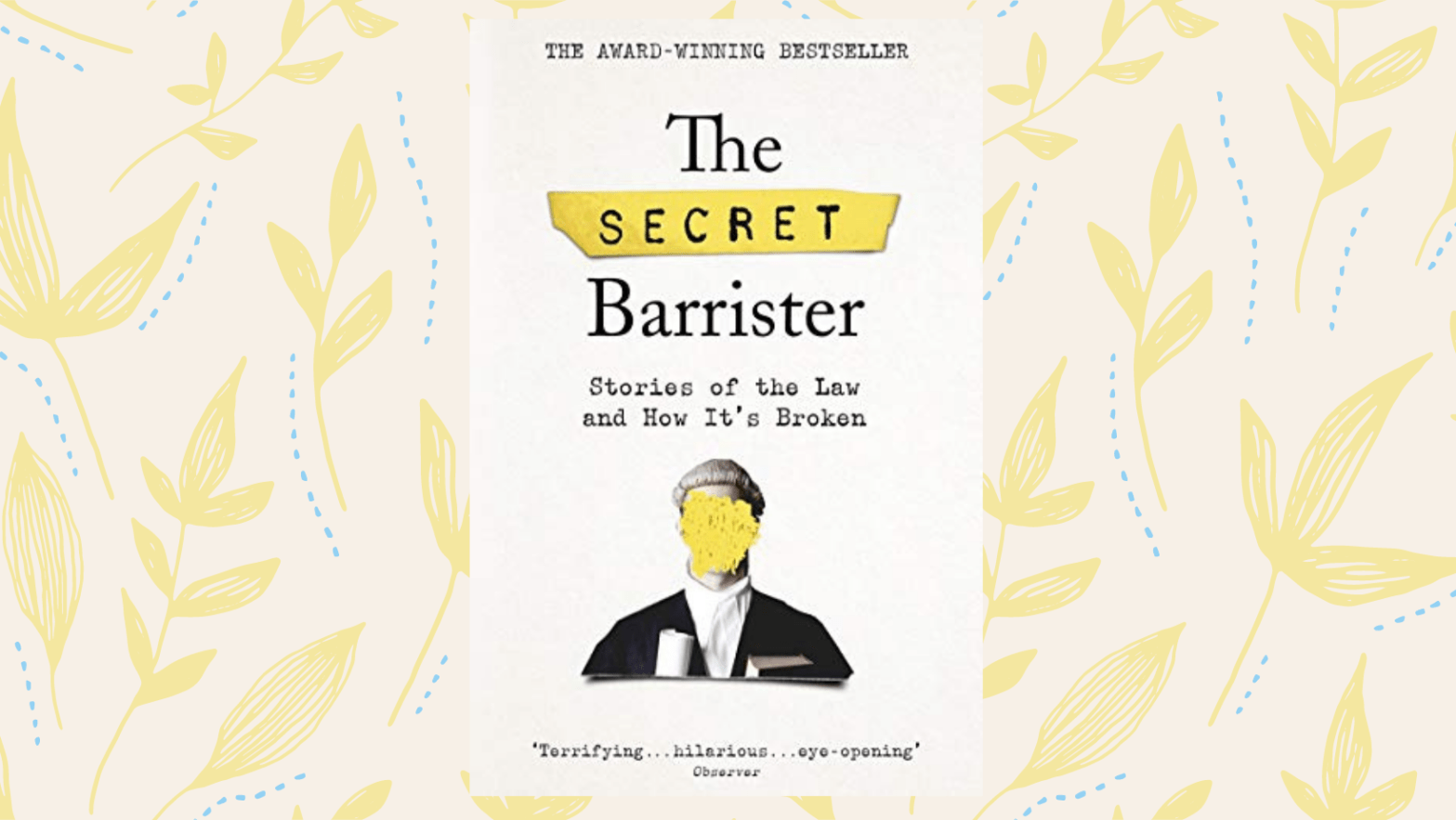
‘The Secret Barrister’ Is The Scariest Book You Can Read this Month

Who needs to know about the law?

I never thought that the British legal system would be the spooky tale I would share around the campfire this Halloween, but here I am. It only took the first few pages of The Secret Barrister to show just how much of a mystery the law is to me (and to the rest of the country. 

If there is one book I would urge British people in particular to read, it would be this examination of the workings of our criminal courts. 

When asked to think about our judicial system, several images would come to mind: fancy wigs, black gowns, a judge smashing the gavel as they yell “ORDER!”. In short, my concept of the legal system was an ill-defined hodgepodge of British and American melodramas. 

I have no grasp on the archaic language of the law nor do I pretend to know any legislation beyond the obvious Dos and Don’ts. There are two reasons that this is a problem. 

Firstly, it means that I wouldn’t have a single clue on how to navigate a system that I have never encountered before, neither as a defendant nor as a complainant. I don’t know the process, why some people are acquitted when most of us would think they were guilty or why I need representation and where to get it. 

Secondly, it means that I do not know the issues that are currently plaguing the legal system and that endanger ordinary people like myself if we should have to face a criminal court case. Namely, the main issue is austerity.

I can see why The Secret Barrister is anonymously written. There are so many concepts to sink your teeth into only for this daring author to reveal the devastating effects of budget cuts on the judicial system. This exposé of British criminal courts could be damning to a barrister moving within such essential circles. 

That being said, the writer’s voice is unmistakably clear, with their own personal spin on the anecdotes they tell and their own indignation at the lack of national outrage at the austerity measures in one of our most important institutions. 

“If the criminal justice system were the NHS, it would never be off the front pages.” – The Secret Barrister

Dire Straits and Magistrates

The book is split evenly between detailed explanations on the cornerstones of the British legal system and how they function and the spirit of their existence. 

There are even some great fun facts to store for your next dinner party such as why only criminal courts still wear the black gowns and powdered wigs. Then, each chapter has its own practical example of how these systems play out in the real world. 

The difference between Crown and Magistrate Courts, for example, is outlined in a historical and theoretical rationale that explains why we have them in the first place. Weaved into this lesson is the story of Kyle, a repeat young offender that has given up on any prospect of turning his life around. 

Three magistrate judges spend hours convincing him to take community service over a young offender’s institution, only for him to end up in prison anyway. This is just the story that eases us into the many problems that we encounter in the legal system. 

The 25% cut of government spending on the legal system between 2010 and 2019 places our liberties in jeopardy. Cutting staff numbers, specifically in the Crown Prosecution Service, the creation of new laws, the push for fewer court adjournments in an attempt to streamline court cases have had terrifying repercussions on the public. 

Compromised disclosure procedures, lack of financial compensation for the innocent (or “the Innocence Tax”), and a lack of empathy in courts for the harsh conditions that force our poorest and most marginalised people to commit crimes for survival are just a few of the deeply rooted problems we are now facing. These are just a few problems that The Secret Barrister shares with us. 

“More times than I can recall I have heard the same monotone chiding of homeless alcoholics[…] the chair’s finger wags at the wretch in the dock, making little effort to hide his incredulity at why this man doesn’t just stop begging, put on a decent shirt and get a job.” — The Secret Barrister 

Laughing Through the Pain

Although I’ve made this book out to be the dourest read you could possibly fathom, there were points where both the author and myself were able to find sincere humour. At times, I could sense the gallows humour I can imagine would be essential for anyone working in criminal courts. 

I definitely appreciated that I was able to laugh at the sheer exasperation of everyone involved in the legal system without any ‘punching down’ at the working class magistrate court cases which seemed to be something of a bear trap in the first few chapters. 

The importance of this book has become all the more apparent during the pandemic, the already existing backlog of court cases only increasing since Covid hit. The £1 billion push towards the digitisation of legal proceedings is at the risk of pushing for ‘progress’ and frugality while compromising a necessary level of empathy in court cases and without a substantial body of academic research to give this move the green light

Verdict

The Secret Barrister has completely derailed my reading journey this year, with my eye currently on their second book, Fake Law. Besides this particular author, I also recognise the importance to learn as much as I can about the inner workings of the British judicial system and the problems it is currently facing, and I would encourage all those in Britain (particularly England and Wales) to do the same. 

Although it may make for a frightening read this month, in hindsight, the only thing that scares me more is that I might not have read it at all and continued in blissful ignorance about the institution that can protect or revoke my freedom.


Stuck for what to read next? Check out our Reading Recs page. And if you’d like to support our work, please consider making a donation via our Donations page. We’re trying to raise money for paid commissions, so any contribution will bring us closer to that goal. Thank you for reading!

Autumn Reads for a Vata Imbalance

As the weather turns colder, dryer and darker here in Minnesota, I can feel it reflected in my reactions. I’m a little more nervous but I don’t know why. Anxious about work but without a cause. For Ayurvedic practitioners, they recognize this as a Vata imbalance:

The light, rough, cold and dry qualities are depleting to the system, lowering our immunity and resistance to illness. This is why the onset of fall and winter can trigger many seasonal imbalances, such as allergies, colds, fatigue and digestive sensitivities.

There are many ways to combat this imbalance that lie outside of Western medicine prescriptions. Feeling your best starts by understanding your dosha type. Kapha, Pitta and Vata are the three main types, and everyone falls into some combination of earth-fire-air with one usually presenting itself as the dominant force in your mind-body connection.

Meditating and yoga, along with developing a consistent routine, are methods that I find useful all the time to calm my Kapha nature. These practices feel especially helpful in the fall as we start to naturally turn inward in a sort of hibernation before winter.

Being mindful of the food that you’re eating, like opting for warm, denser, heavier foods can help as well. And taking notice of what your mind is consuming via your to-read list is important, too.

Combat Fall Freakout Feelings

Taking a lot of “you” time is an Ayurvedic prescription that’s ideal to fill via reading. Here are my top picks to pinpoint particular effects of a Vata imbalance.

Sourdough” by Robin Sloan

Ayurveda prescribes heavy food to fight too much Vata, which in my mind means carbs, which makes me think of good, crusty bread. If you jumped on the home sourdough bandwagon last year, you’re bound to enjoy “Sourdough,” a fictional story in which sourdough is more of a character than bread. Lois is a Silicon Valley engineer whose life revolves around work and her nightly takeout. Until she is gifted the mother of sourdough starters.

How to Do Nothing: Resisting the Attention Economy” by Jenny Odell

This book made a huge splash when it came out in 2019, and feels particularly relevant today. Warm feelings come from within, and if there’s one lesson from this book to take with you into Vata season, it’s that meaningful connections are worth 1 million+ Instagram likes.

Odell has created a composite picture sourced from fellow artists, philosophers, and more to share ideas on how to opt-out from social media, Amazon, and other Internet services by practicing a unique kind of mindfulness.

The Sioux Chef’s Indigenous Kitchen” by Sean Sherman and Beth Dooley

Tuning into your Ayurvedic dosha requires grounding and a sense of place. Comfort food might be different from culture to culture, but there’s something immensely reassuring in these dishes from Sherman which focuses on indigenous cuisine from the upper Midwest.

This 2018 winner of the James Beard award groups recipes by where the ingredients are obtained, i.e. ‘Fields and Gardens,’ for example. It utilizes ethnobotany as a framework, stripping out colonizer staples like white flour, sugar, dairy and more.

Better Than Before: Mastering the Habits of Our Everyday Lives” by Gretchen Rubin

The architecture of everyday life. Habits emerge from our routines and, whether constructive or not, can be hard to implement and harder to break. Learn more about the psychology behind habit-building and a literal framework to try out if you’re looking for a little fall rejuvenation.

Learn how to drink more water, stop yourself from picking up your phone or tablet when you can’t sleep, or reaching for sugar when you want a quick snack. As Rubin says in the book:

“…habits eliminate the need for self control.”

Severance” by Ling Ma

Is it too meta to read about a global pandemic during a global pandemic? This quick, satiric read was published in 2018, long before COVID-19 but the takes on things like live-to-work culture and consumerism feel fresh and nuanced.

Candace manages Bible production in the literature industry, and even as the fictional Shen Fever take over New York City, the USA and the globe, she continues to go in to work until her contract is complete amidst the fairly gentle zombie-like infected.

Self-Care is You-Care

While the pandemic continues to sow uncertainty in its third year, that uncertainty can show up in our lives in different ways. Maybe we internalize it, maybe our decision making becomes a little more chaotic. While we can’t always control what happens around us, we can control our responses.

Learning more about your primary doshas can help you through many of the imbalances in life. Understanding why you feel the way you do is step one. And I would argue that a good book — or a few good books — is an excellent step two.

What reads help bring you clarity or shape perspective?


Stuck for what to read next? Check out our Reading Recs page. And if you’d like to support our work, please consider making a donation via our Donations page. We’re trying to raise money for paid commissions, so any contribution will bring us closer to that goal. Thank you for reading!

5 Short, Spooky Books to Read Before Halloween

With Halloween fast approaching, there are still a few more days to dive into these spooky reads and get into the spirit of things before the cold winter nights kick in. 

If you’ve exhausted all of Stephen King’s works, have already made your way through Shirley Jackson’s classics, or you’re just looking for something a little different, then look no further. I’ve compiled a selection of five spine-chilling, ghoulish and spellbinding tales to see you through the rest of the month.

Whether you’re in the mood for a story that’ll leave you terrified of the dark corners in your room, or you’d rather puzzle your brain over a thrilling murder mystery, there’s something in this list for everyone. 

For the horror lovers, to the not-so-scary readers — curl up by the fire, and dig into your Halloween bounty with these hauntingly good stories.


1. ‘The Ex Hex’ by Erin Sterling

“Never mix vodka and witchcraft.”

Think Hocus Pocus meets Practical Magic meets Gilmore Girls. If you’re looking for something that won’t keep you up at night then this one’s for you. This fantastical romance follows a small-town witch and her cursed ex-boyfriend (hence the name!), who ultimately have to fight off danger, as well as their intense chemistry, in order to save the town. 

Lighthearted, fluffy, and wickedly fun, you’re sure to fly through this fast-paced magical read. A great choice for readers who prefer something a little less scary.

2. ‘The Haunting Season: Ghostly Tales for Long Winter Nights’ by Various Authors

“All he knew was the awful burden of his mistakes, and the impossibility, now, of ever righting them.”

Eight bestselling authors, including Bridget Collins (The Binding) and Kiran Millwood Hargrave (The Mercies), have come together to compile this thrilling collection of original short stories for the ghostly season. Perfect to dip in and out of, or binge-read in one sitting. 

Either way, you’re sure to find yourself swiftly immersed in the spooky atmosphere The Haunting Season creates, transported from the eerie frosty moors of Yorkshire in one tale, to a bustling London Christmas market in the next.

3. ‘The Devil and the Dark Water’ by Stuart Turton

“Some songs weren’t mere songs. They were memories curled tight and set alight.”

I had high expectations for this book going in as I really enjoyed Turton’s debut novel (The Seven Deaths of Evelyn Hardcastle), and it didn’t disappoint. In fact, The Devil and the Dark Water knocked it out the park. This mystery thriller is jam-packed with suspense, intrigue and brilliant characters racing to find out who — or what — is trying to sink the ship, threatening to kill them all. Despite the slightly heavier page count than the other books on this list, it’s an absolute page-turner and you won’t be able to put it down.

4. ‘My Best Friend’s Exorcism’ by Grady Hendrix 

“By the power of Phil Collins, I rebuke you!”

A popular and well known author with books such as The Southern Book Club’s Guide to Slaying Vampires and The Final Girl Support Group, Grady Hendrix is no stranger to lists such as this one. My Best Friend’s Exorcism blends humour, horror and nostalgia brilliantly, and is a great pick if you’re looking for something truly thrilling to read. Set in the 1980s, the book (and soon to be film) follows two teenage girls, their friendship, and… you guessed it, the possession of one of them. Get ready for a creepy, yet exciting story!

5. ‘Coraline’ by Neil Gaiman

“Fairy tales are more than true: not because they tell us that dragons exist, but because they tell us that dragons can be beaten.”

Seeing as we’re days away from Halloween, why not finish off the spooky reads with this absolute classic? Under 200 pages, this is a quick twisted tale to sink your teeth into before the month is through.

Fall into the magnificent yet nightmarish world that Gaiman created, and follow Coraline on her strange and gripping adventure beyond the mysterious door. You’ll speed through this book so fast that you’ll even have time to watch the beloved film before you go trick-or-treating!


Halloween is one of my absolute favourite times of year to read, purely because of the seasonal inspiration it brings. There are so many ways to interpret the holiday, so many layers to dig into, and these five suggestions offer just a glimpse into what wonderful books are out there to read. 

From ghostly tales, and grisly monsters, to the sisterhood of witches, and the wonders of magic. 

With only days left in October, I’m hoping to tick off a few more Halloween-themed reads before winter. Please share any recommendations you have! What books do you have left on your spooky TBR?


Stuck for what to read next? Check out our Reading Recs page. And if you’d like to support our work, please consider making a donation via our Donations page. We’re trying to raise money for paid commissions, so any contribution will bring us closer to that goal. Thank you for reading!