‘Where the Stork Flies’ Is a Powerful Account of Female Strength Through History

Disclaimer: Please note I was approached by the author who sent me a PDF version of this book in exchange for my honest review.

TW/CW: Mentions of physical and sexual abuse.

Linda C. Wisniewski’s novel, Where the Stork Flies was a gripping read, through and through. So much so that I finished it in two days, as I couldn’t help wondering where the story was going. I was a little sceptical about the story, as it involves time travel and a small degree of supernatural occurrences, which aren’t usually my first choice of plot elements. However, this is one of the best perks of running Coffee Time Reviews — I get to discover so many books out of my comfort zone that I end up enjoying if I leave my prejudice aside and go in with an open mind.

Where the Stork Flies tells the story of Kat, a 50-year-old Polish-American librarian whose life has taken an awful turn after her husband and daughter leave her. In order to help her find her strength to understand and draw the people she loves most closer, two unexpected characters come to help. One of them is a Polish peasant who appears out of thin air straight from 1825, and the other one is a young, glamorous translator, with a very intricate story and mission.

Before you dive in, though, be warned there are some disturbing physical and sexual abuse scenes. These scenes do contribute to the unfolding of the story, however, as Kat gets to discover where her new Polish friend, Regina, truly comes from and how life is like for peasant women in the early 19th century.

The book overall was thoroughly enjoyable, setting the two timeframes in parallel realities and painting a historical context to Regina’s character. I loved how family dynamics and the idea of genealogy were handled, in the sense that the bond between Kat and Regina and her family shone through in the most subtle ways. The topic of female strength through history was my favourite aspect of the book, as it realistically shows how women are united through hardship, no matter when or where they have lived, and they have a duty to one another not to stand by, but take action to protect their friends.

As one review on Goodreads accurately puts it: “This novel gave me a new awareness of the limitations of social progress over the centuries, as well as a way to continue the good fight. Reading it, I realized how that progress or lack of it has made me who I am and made my life possible.” And I agree entirely with this viewpoint.

I liked Regina’s character and thought there was a lot to learn from her: from her feminist wisdom, although oppressed by the times she was living in, it still existed and showed how she found ways around the hostility towards women, to her dedication to family life, and her unbreakable faith and patience. However, I must say the protagonist, Kat, was not as likable, and at times I could tell that was the author’s intention. Given Kat’s sad background and lacking upbringing, a lot of her behaviours are justified, but that realisation alone wasn’t enough to make me like her as much.

I also found the Polish snippets of dialogue a little confusing. Some of them are explained or translated straight after, but others aren’t, and especially in the beginning, it can feel exhausting to try to guess what the characters are saying.

That aside, the book is very gripping, easy to follow, and a great account of finding hope, strength, and the will to love again when everything seems lost, so I wholeheartedly recommend it to anyone enjoying family stories with a supernatural twist.


Did you enjoy this book review? Read more about what books inspired and moved us on our Book Reviews page. And if you want to support independent journalism, please consider doing so through our Donations page. Thank you for reading!

10 Lesbian and Bisexual Books That Made It to the Big Screen

July is fast approaching and we are well into Pride month, but there’s still plenty of time to add a few queer books to your reading list. If you’re looking for sapphic story recommendations here’s a list of ten lesbian and bisexual books that have been adapted for television and/or film.

Whether you’re familiar with the screen adaptations or not, these ten novels are a must-read for anyone who can’t get enough of queer, female-led stories!

1. ‘The Hours’, by Michael Cunningham

In this Pulitzer Prize-winning novel, Michael Cunningham details a single day in the life of three generations of questionably queer women (in 1923, 1949, and the end of the 20th century) all affected by the classic novel Mrs Dalloway by Virginia Woolf. Transformed into a film of the same name in 2002, starring Nicole Kidman, Julianne Moore, and Meryl Streep, The Hours is a compelling read that sees the lives of three seemingly unconnected women intertwine.

2. ‘The Miseducation of Cameron Post’, by Emily M. Danforth

The debut novel from Emily M. Danforth, The Miseducation of Cameron Postis a coming-of-age story that addresses themes of sexuality, tradition, and acceptance. The 2018 film adaption of the same name, starring Chloë Grace Moretz, glosses over a few details included within the book yet both are bound to stir your emotions nonetheless.

3. ‘Tipping the Velvet’, by Sarah Waters

The debut novel from Sarah Waters, Tipping the Velvet, was transformed into a television drama by the BBC in 2002. Waters is said to have been surprised that the adaption “faithfully followed the relish and detail of the sexual escapades” depicted in this queer Victorian tale.

4. ‘Fingersmith’, by Sarah Waters

Also by Sarah Waters and set in Victorian-era Britain, Fingersmith is the tale of orphan Sue Trinder and gentlewoman Maud Lilly and their intertwining worlds. Transformed into a two-part BBC mini-series in 2005, this compelling Victorian heist novel will keep you on your toes and guessing until the very end.

5. ‘The Secret Diaries of Miss Anne Lister’, by Anne Lister, Helena Whitbread (Editor)

The Secret Diaries of Miss Anne Lister, decrypted and curated by Helena Whitbread to be published for modern consumption, detail the life of Anne Lister, the “first modern lesbian” who repeatedly defied the role of womanhood. The diaries have been transformed into both a biographical historical drama film in 2010, and a television series in 2019. Whether you begin with the books, film, or series, the diaries of real-life lesbian Anne Lister are a must read for any queer, history fan.

6. ‘Aimée & Jaguar: A Love Story, Berlin 1943’, by Erica Fischer

Set in 1942 Germany, Aimée & Jaguar is the real-life love story of Lilly “Aimée” Wust, wife of a Nazi officer, and Felice “Jaguar” Schragenheim, a Jewish woman living underground in Berlin. Published in 1995 and adapted for screen in 1999, this tragic tale details the persecution of minority groups during World War II and a love that defied the odds.

7. ‘Blue is the Warmest Color (Le bleu est une couleur chaude)’, by Jul Maroh

The 2013 film, Blue is the Warmest Color (La Vie d’Adèle), was a fairly popular watch upon its release eight years ago but has since garnered some controversy. The original French graphic novel from Jul Maroh however, is a compelling (and beautifully illustrated) story of queer love, hardship, and heartbreak that will have you in pieces by the final pages.

8. ‘The Color Purple’, by Alice Walker

This iconic modern classic — winner of the Pulitzer Prize and the National Book Award — details the troubled life of Celie, a young black girl born into segregation in the 1930s. The Color Purple (both the novel and the 1985 film adaption by Steven Spielberg), tackles many important themes such as race, class, sexual assault, domestic abuse, and religion. One theme however, which is not depicted so plainly in the film, is the central same-sex relationship between our protagonist and the glamorous Shug Avery; reason enough to give this unforgettable book a read.

9. ‘I Can’t Think Straight’, by Shamim Sarif

In this 2008 novel author Shamim Sarif tackles themes of sexuality, coming out, and interfaith relationships. I Can’t Think Straight explores the differences between East and West, conventions and individuality, tradition and love, and is bound to move you. Transformed into a film of the same name, and directed by the author herself, the book reads almost like a screenplay of the film.

10. ‘The Price of Salt’, by Patricia Highsmith

First published in 1952, The Price of Salt is also well-known as Carol after its republication as such in 1990 and the 2015 film adaption by Todd Haynes. Brought to life on screen by Cate Blanchett and Rooney Mara, Carol Aird and Therese Belivet — our two entangled protagonists — are bound to capture your heart in this sapphic love story.

So if you’re looking for a novel with a lesbian or bisexual protagonist to lose yourself in this month, why not give one of these titles a go? Who knows, you may discover a new favourite film as well as a book.

Author Spotlight: Reinfred Addo on Writing, Publishing, and Inspiration


Our latest Author Spotlight piece, part of a series exclusive to Coffee Time Reviews, features an interview with Reinfred Addo, writer, speech-language pathologist, and graphic designer, of Ghanaian and American descent. Reinfred is the author of poetry chapbook, The Dedicadas, recently reviewed by our writer Ed Bedford, who wholeheartedly recommends it.

An award-winning poet, Reinfred’s work spans across several avenues, all focused on his passion for writing. He has contributed health humanities creative writing content to official anthologies, but he is largely drawn to poetry, due to its language playfulness and ability to reveal people’s deepest secrets.


CTR: How did you decide to become an author?

Reinfred: Authorship, in my mind, has always been an extension of writing, so I’ve always felt that becoming an author would be a natural step to take. I see writing as an act that does not necessarily require readers outside of the writer, whereas authorship seeks readers outside of the writer; however, I feel the two are companions (writing to feed one’s own internal needs and allowing other people’s eyes on your work). So, once I was comfortable enough with people seeing my work, the most efficient way to get exposure was to do the ‘author’ thing.

CTR: Was your journey into authorship a smooth one or did you encounter challenges along the way?

Reinfred: Even though I’ve been taking creative writing seriously for about six years now, my poetry chapbook The Dedicadas is the first thing I’ve authored. If I had to assign a smooth-challenging scale to the process of authoring and publishing The Dedicadas, I’d say it was 80% smooth and 20% challenging. The biggest factor that went into the smooth portion was planning and having access to helpers: planning in that I have over the years accumulated a checklist of things to do during the publication process; access to helpers in that I know people in the poetry and graphic design world who vetted the manuscript and visual aesthetics/language to make sure I was putting forth sound work. 

The biggest factor for the ‘challenging’ portion was accepting myself as a ‘true’ author: the model I used for publishing was a pay-to-publish one and not the traditional model whereby the publisher incurs the upfront costs, aka the part of the industry that usually sets the standards and gatekeeps regarding what is deemed worthy of publication. Because of this I occasionally felt that I was simply buying the ‘author’ tag and not necessarily earning it. I feel my work was well received by others but I think the time it took me to accept that the quality of my writing earned me the ‘author’ tag was longer than it would have been had I been traditionally published.

CTR: What inspires you the most in your writing?

Reinfred: This one is tough because I have a lot of different things that inspire me. That said I go through what I call ‘Ages’, meaning for a time period a particular aspect of life fuels my content then during another time period a different aspect of life fuels me. Currently, I’m in what I call the Age of Identity, whereby I write a lot of content with attention to topics such as ethnicity, race/racism, and migranthood. Another Age that is very memorable was the Age of Nature when I wrote lots of nature and ecopoetry.

CTR: How does your poetry writing process look like? 

Reinfred: Poems come to me at different parts of the day and in different contexts. I can be in a reflective mood or I can be at a gathering with lots of activity, it doesn’t matter, the poem comes when it decides to come. I’ve just learned to recognize these moments for what they are and write down the ideas before they leave my mind. 

Sometimes I’ll jot down the ideas in my Moleskine notebook first and then later, in the Notepad program on my computer. I’ll edit/refine them and shape them into their final poem form. Other times I’ll type immediately into Notepad and skip the notebook. Other times too I’ll note the ideas in the text message app on my phone, send the text to myself, then do notebook and Notepad or skip notebook and go from text message straight to Notepad. Of course, I’ll also use tools as needed, such as the thesaurus, dictionary, online or print research, and spelling/grammar checker. 

CTR: Is there a writing tip you would recommend during writer’s block?

Reinfred: For me, engaging the mind in a different creative activity is usually effective in breaking the block. I will usually doodle or play music, but I think what matters more is that whatever activity I do allows my mind to be free, open, and uninhibited to receiving thoughts and ideas that I can then transfer to poem form.

CTR: What advice would you give your younger self?

Reinfred: I’d tell my younger self to love the process as much as the product. I used to be less patient and had the notion that every writing session needs to result in a piece of poetry. Whenever I’d come out with nothing I would not be satisfied because, in my mind, I had not been productive. Now I find that the act of just being present and going through the process of writing is just as rewarding, even when the process doesn’t lead to a product immediately. Ironically enough, the vast majority of my favorite poems I’ve written have come after I learned to not worry about having an end product all the time.

CTR: What are 3 books you would recommend to Coffee Time Reviews readers and can you give a brief reason why for each book?

Reinfred: Firstly, The Weary Blues by Langston Hughes. This is my favorite Hughes book and Hughes is my favorite poet so it holds a special place in my heart. The musicality of Hughes’s lines as well as the clarity with which he speaks about topics such as racism makes it a top read.

Secondly, The Undocumented Americans by Karla Cornejo Villavicencio. This one falls somewhere along the spectrum of memoir and essay and is a nuanced look at the lives of those who migrate to the United States. What Cornejo Villavicencio does that I particularly like is she allows the full humanity of the people in the book to come alive instead of writing caricatures of whatever good or bad stereotypes we may associate with migrants. The people aren’t just ‘good’ or ‘bad’, they are fully human with human motivations and desires.

Then, there’s a tie between Me Talk Pretty One Day by David Sedaris, Joanna Penn’s books for author-preneurs, and Selling Your Poetry Book by James P. Wagner. I like Me Talk Pretty One Day for Sedaris’s humor and ability to write about typical life experiences (e.g., childhood music lessons) in a way that makes them special. I like Penn’s books because they provide actionable steps to help writers and authors who want to turn their writing craft into more than a hobby. I like Wagner’s book for the same reason, plus it is specifically about poetry, which has unique challenges that are not typically addressed in broad-scope and general author-preneur books.


Thank you for reading Author Spotlight, a series of interviews with authors who are happy to share the tools of the trade with our CTR readers. If you’re an author and would like to be featured, get in touch at ctreviewspub@gmail.com. For any author suggestions, leave us a comment and we’ll try to chase them up. And if you’d like to support our independent publication, please consider doing so through our Donations page.

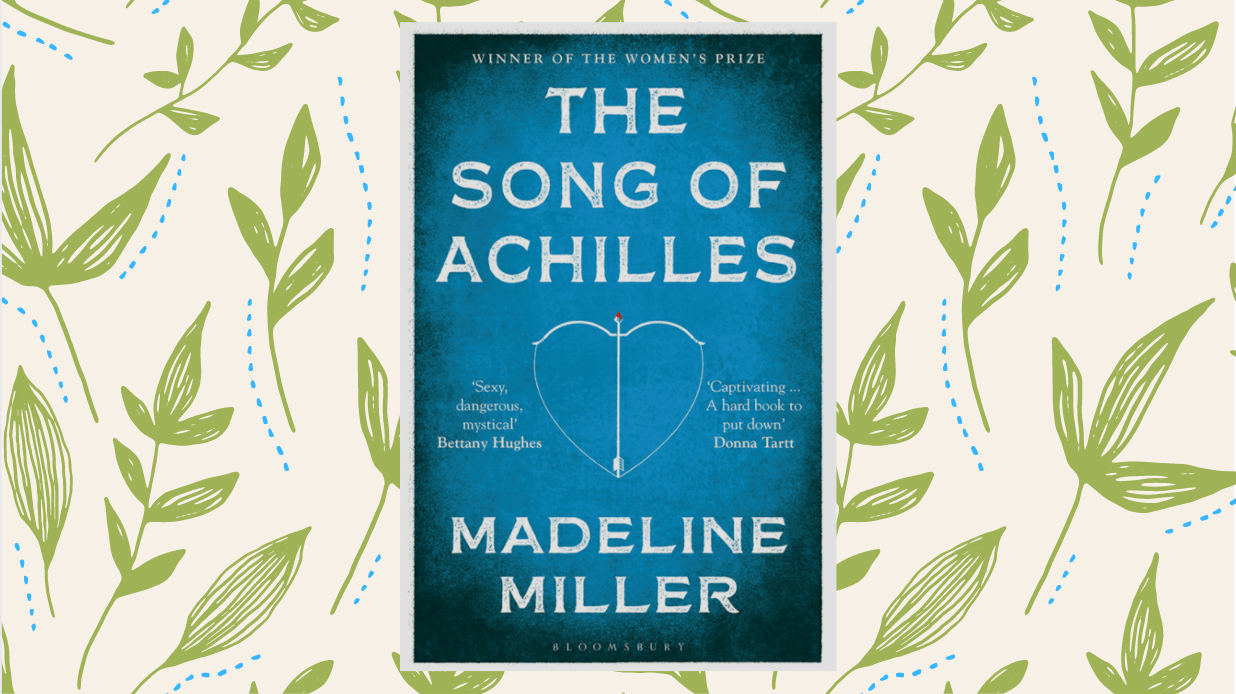
‘The Song of Achilles’: A Rolling Review That Will Keep You on Edge

Before I dive into reviewing Madeline Miller’s The Song of Achilles, I need to explain to you the rules of the game. I decided to adopt an alternative review format for this particular book because I had feelings. Feelings I did not want to forget by the end of it. So I thought I’d do something I like to call a ‘rolling review’. Inspired by rolling news, the rolling review involves giving you updates as I’m progressing through the book, instead of writing an overall piece once I finish it. Rolling news, accordingly, means updating a news story as it unfolds, a common task for news reporters.

So here’s what you should expect from this rolling review. I will be pausing every 50 pages to do a reading check-in, where I share a short snippet of my thoughts thus far. I will not give any spoilers, only my feelings as the story progresses, based on vague information about the plot, and what you should expect at each milestone. Much like a reading vlog, this review will allow you to come along with me on this reading journey and see how I’m experiencing the book.

While you’re here, if The Song of Achilles has been on your list for a while (and honestly, if not, I strongly advise adding it), why not bookmark this article and read it with me? Stopping every 50 or 100 pages to see if we’re on the same…page. That would be a fun experience.

Without further ado, then, as they say, here’s your rolling review, or reading vlog in written format, if you will.


50 Pages In (13/06/2021, 6:23 pm)

I can’t believe the story has pulled me in so soon. This never happens to me, especially with a historical/mythology-focused book. I genuinely thought I won’t enjoy The Song of Achilles simply because I prefer modern-day settings. Boy, was I wrong. I’m fascinated with how people go about their day in Ancient Greece. I think Patroclus has a lot of potential but his father holds him back. King or not, Menoetius is an awful parent even for his time. I’m not a fan of the graphic scene describing how Achilles was conceived and I have all the sympathy for the goddess Thetis, his mother. Achilles seems to be a wonderful boy, but so far there are only glimpses.

At this moment in the book, you should expect to become familiar with the characters and the setting, and with the dynamics between the most powerful people in Ancient Greece.


100 Pages In (14/06/2021, 4:32 pm)

Oh my god. That’s all I can say. There’s a specific scene I cannot stop thinking about. I’m a little anxious, as stopping just as I reached 100 pages means I stopped on a cliffhanger. I’ve come to know Achilles much more closely and, to no one’s surprise, he is just as wonderful as I thought. I like the atmosphere at Peleus’s palace and how Achilles is portrayed as a half-god even through the smallest things. He’s not arrogant, though, which makes him all the more likable. As the friendship between Patroclus and Achilles deepens, I can’t help but be scared for them. There’s definitely more than friendship there, and this is not a spoiler. 

By now, you should expect to have a fully-formed idea of the characters and their relationship. There’s a lot of anxiety and uncertainty at this point in the story, but also many beautiful moments.


150 Pages In (14/06/2021, 5:41 pm)

I know this is a myth retelling and it probably will stay true to how Achilles’s story unfolded, but I don’t like where things are headed and I can’t help but hope for a twist. I definitely recommend avoiding the original myth before diving into the book. I only have vague memories of where it’s going, and don’t want to know more. At this point, you should be feeling a lot of concern, tension, uncertainty, and a little bit of hope.


200 Pages In (14/06/2021, 8:53 pm)

Things are starting to become more action-packed in true, Ancient Greek spirit, but I’m so absorbed by Achilles and Patroclus’s relationship that I almost don’t care about the rest of the story. It’s the sweetest, most circumstance-defying romance I’ve read recently and I love how Miller handles it. It’s not overly romanticised, nor overly oppressed, which makes it more believable and easy to root for. Achilles is destined to be the greatest warrior of his time (not a spoiler), but I find it hard to imagine him in war, as he’s so gentle and thoughtful. The only thing I don’t like about him is his thirst for glory. 

By now, you should start asking yourself: would you choose to be immortalised in history but compromise your values, or would you opt for an ordinary but happy life with the person you love?


250 Pages In (16/06/2021, 2:45 pm)

The war (not a spoiler) is getting intense, and as the ending is closing in, I’m growing more and more anxious. Everything seems to be going too well. My only objection is that, by now, Achilles is becoming a little obsessed with glory and fame. From a purely critical point of view, so far, the character arcs for the protagonists have been handled masterfully. Patroclus is evolving in a wonderful and admirable way, while Achilles is moving further and further from the beautiful and kind half-human boy who didn’t want to become a god.

By now, you’ll have come to appreciate Miller’s writing technique and how well she’s handling the characters, the tension, and the story to build anticipation.


300 Pages In (18/06/2021, 1:45 pm)

Hints are dropping left and right of what will happen by the end, and one of them, in particular, has broken my heart a little bit. If what I’m expecting will happen, the story will take an unforeseen twist, and I’m curious to see how Miller will handle the story from then on. The war continues, but Achilles has taken a disastrous decision. He’s becoming less and less like himself, yet there’s still a lot to love in him. By now, you should be feeling a lot of anxiety and start forming theories about how the story will wrap up.


376 Pages In (18/06/2021, 3:05 pm) — the end

Okay, that wasn’t as horrific as I thought it would be. The ending was unexpected, so I will advise you to never trust your instincts, and especially not trust the characters when giving you hints of where the story is going. It will take you by surprise until the last page. 

Since I’ve finished it, I’ll wrap up my overall thoughts. I gave it 5/5 stars on Goodreads without batting an eye and I’m pretty sure it will make my top 5 books of 2021. The Song of Achilles was a stunning read, through and through. From the setting to the romance, to the character growth, to the writing style, to how it ended, Madeline Miller proved she is a masterful author. Nothing was out of place, nothing was left uncertain, or unresolved, everything wrapped up smoothly, while still keeping the surprise and tension until the very end.

I loved how, despite it being set in Ancient Greece and Troy, the author didn’t go out of her way to oppress the love between Patroclus and Achilles just to stay true to the era. There were many challenges that stood against their relationship, don’t get me wrong, but they overcame them gracefully, and in a plausible way. Everyone silently knew these men were in love and there was a quiet respect for their feelings that I appreciated. The point of the story wasn’t to do everything to keep them apart, but rather to allow them to stay together in spite of everything that stood against them.

I recommend The Song of Achilles with all my heart, it’s been a while since I read such an incredibly well-written book. It left me with that feeling of satisfaction you only ever get after you read the work of a truly talented and skilled author.


Did you enjoy this book review? Read more about what books inspired and moved us on our Book Reviews page. And if you want to support independent journalism, please consider doing so through our Donations page. Thank you for reading!

‘The Dedicadas’ Is a Promising Chapbook with a Powerful Message

Disclaimer: Please note I received a PDF of ‘The Dedicadas’ from the author in exchange for my honest review.

The Dedicadas by Reinfred Addo, does just what a chapbook should. It gives a taste of poetic promise, leaving the reader keen to see what the poet will go on to do. There are a range of poetic styles, and topics. However, Addo’s voice is clear throughout giving the work a sense of cohesivity that often is lacking from similar sized chapbooks.

Due to Addo’s previous experience of design it is a pleasingly laid out chapbook, with nothing to distract from the force of the poems. I read it as a PDF, but am sure that if printed it would have that perfect feeling of being concise enough to whet the appetite, yet with plenty of poetic body to ensure that all the senses get to engage.

I must admit I prefer slightly more form focused poetry, yet I found the poems generally had a strong sense of flow and only occasionally felt loose and unstructured. In many ways, such considerations do not really matter, for although a few poems do feel like they could be tweaked to tighten them up, they all address topics in an insightful way.

Having read the collection, I have been changed. That is what poetry should do, as without address topics they are just empty words. Addo, uses each poem well to explore and develop ideas of identity, family, and language, and I would very surprised if anyone could read this chapbook without re-evaluating how they think of some aspect of those topics.


I particularly enjoyed the sonic creativity of ‘Twas There, On The Lee. The use of invented (for want of a better term) words gives a chance for the poem, and reader, to consider speech for what it fundamentally is: a sequence of sounds that somehow have meaning encoded into them. Poetry is perfectly placed in that intersection, between the purely sonic nature of music and the purely written nature of text, to explore how sound relates to meaning.

With poetry, even the most formal styles intended not to be read aloud, you have metre and sonic effects such as rhyme. Ultimately these are just terms used to describe how the sounds uttered can emphasise meaning, or add a sense of lyrical completion to tie disparate sections of meaning together. Reinfred Addo’s background as a speech-language pathologist, brings a fresh perspective to how sound and poetry are inherently entwined.

This focus on speech is seen through the chapbook. Multiple poems play with language and the reader’s expectation. This does not only extend to swapping between registers, but between sociolects, to give a keen sense of Addo’s personal experiences, and how he fits into his society, and how his sense of identity is, at points, conflicting with the sociolects he is forced to adopt. This dichotomy between the spectrum of identities people hold, and the range of sociolects people code-switch between, is explored most clearly in English C.

It might sound rather earnest but Addo treats his subjects with a restrained touch. There is clearly immense learning behind the treatment of language, but it is worn lightly. In this way it never strays into the preachy or overtly didactic, instead along side very pertinent considerations of language and racism there are humorous twists. In English C, as Addo is highlighting the ridiculousness of assuming someone who comes from Ghana, which happens to have English as its official language, will be bad at it and need remedial classes, there is a touch of levity. Addo remarks how Ghana has embraced “Queen’s English and / the whole 9 yar—pardon me, 8.2 metres…”

This provides a bit of levity, yes, but also clearly demonstrates that the idea of English as a language with a single correct form is truly risible. That idea, that language should not be gatekept and is always going to evolve and be played with in different ways by different people, is clear through the chapbook.

Yet there is a flipside. People who speak in certain ways are often exempted from the worse of prejudice, or seen as being good just for their language, when those who speak in another way are often seen as being badly educated, or even to not quite fit in their own country. Reinfred Addo is considering the American context, but such issues are present across the English-speaking world.


As with any debut chapbook, you get the feeling that this is like the tip of an iceberg. It would be well worth keeping an eye on Reinfred Addo, to see what he writes next. Of course, there is a slightly unfinished sense to the work. At points this heightens the effect, as all the poems are very personal and so that hint of not quite being fully polished adds to the emotional urgency. Yet at other points it feels like diamonds in the rough, waiting for those imperfections and distracting surrounding to be polished away.


Did you enjoy this book review? Read more about what books inspired and moved us on our Book Reviews page. And if you want to support independent journalism, please consider doing so through our Donations page. Thank you for reading!
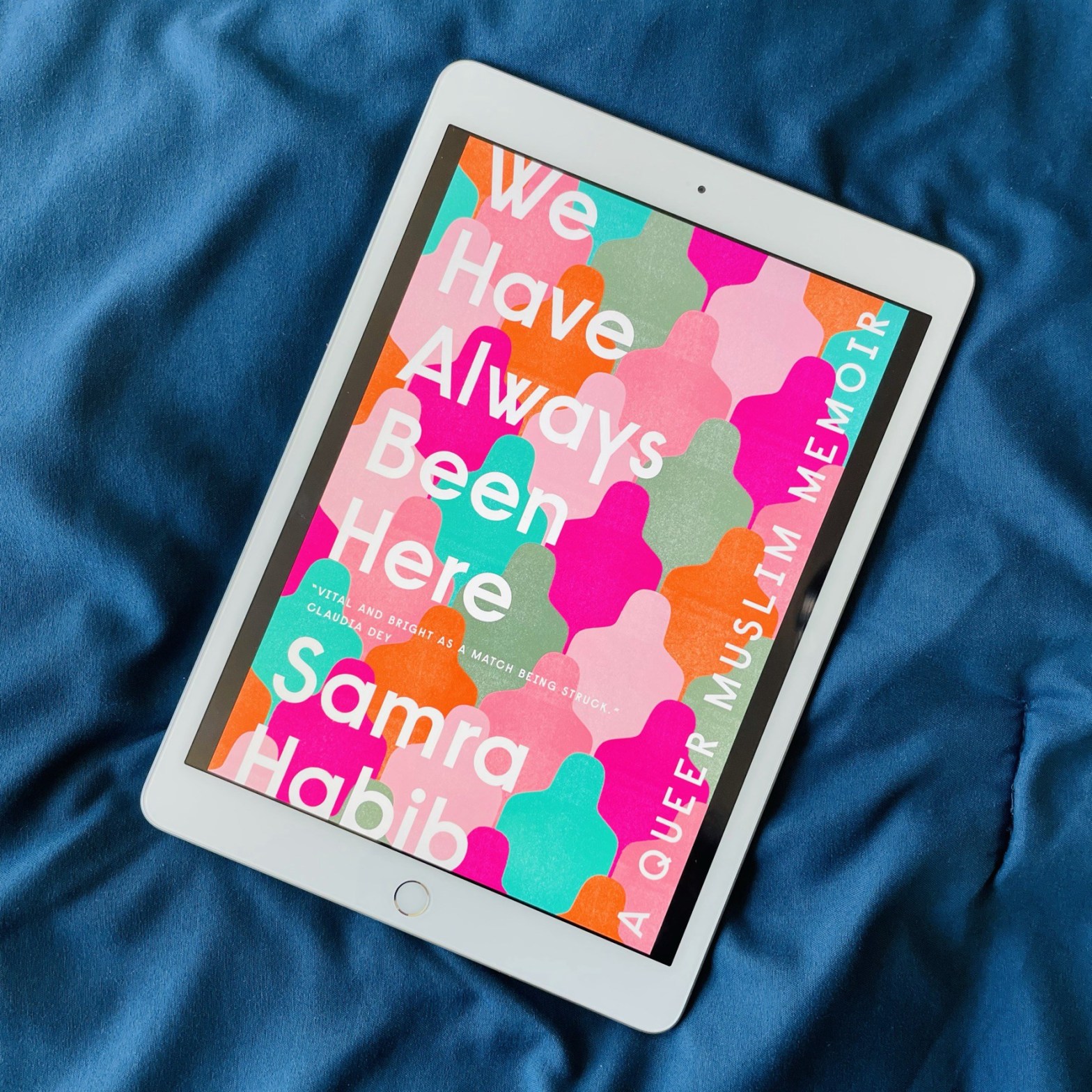
‘We Have Always Been Here:’ A Soul-Stirring Pride Month Read

TW/CW: Mentions of Islamophobia as part of the memoir’s narrative.

Ahh, the memoir.

This genre fills a longing within the deepest facets of my being. And I find myself reaching for it time and time again. Memoirs are pleasant reminders that despite our differences, we are woven together by universal feelings. To experience joy and grief, anger and shock, is human. When we read the stories of others — triumphs and traumas— we feel less alone in an existence that can, at times, feel utterly solitary.

A memoir I recently read was equal parts poignant and hopeful. I’d come across it on a list of recommended pride month reads, and I know it’s a book I’ll be returning to in the future. It’s unique in that explores queerness and Islam, two identities that don’t exactly bring to mind images of harmonious existence.

We Have Always Been Here: A Queer Muslim Memoir is a vivid, humorous, and introspective account of a Pakistani woman’s journey to embracing their truth.

As a child growing up in Pakistan, Samra Habib is led to believe that fear is the norm — fear of being Muslim, fear of being a woman, fear of leaving the only life they know.

Their family are Ahmadi Muslims, a minority sect that the dominant Islamic extremists believe must be wiped out. Acts of violence are common, and Samra worries that their parents will be the next victims. As tensions rise, the possibility of leaving the country altogether materializes.

At age ten, Samra’s family seeks asylum in Canada. Their new country is far from the safe haven they imagine, though, as their old fears give way to new ones. The possibility of becoming impoverished looms on the horizon for Samra’s family. Samra is also bullied by classmates and is forced into an arranged marriage before the age of eighteen. They feel trapped in a life that doesn’t belong to them. More than anything, Samra desires to embrace their feminism and live a life without limits. But the men in their life condemn their behaviors and the women in their life uphold a message of submission.

“I was destined for a life of servitude, just like Nasir’s mother, my mother, and my mother’s mother, who all muted their ambitions and defining traits to be pious sisters, getting lost in a sea of burka-clad wives.”

Through a series of trials, Samra embarks upon an inner and outer quest. Once they enter university, new doors are opened and what once seemed out of reach becomes fathomable. They seek to detach themselves from the imposed roles of their culture and instead discover their own way of moving about the world. Samra makes friends in the queer community, who brings to light a side of them that had been previously repressed. And so they begin to lean into their queer identity.

Throughout their 20s and 30s, Samra travels to many countries, breaking free from the physical and emotional confines that they had been subjected to for so long. They embark upon a photography project, in which they go around the globe photographing queer Muslims. They hope to capture the nuances of these individuals’ experiences, as well as elevate their presence in a world that only hopes to quell their mere existence. Samra amplifies their voices and gives them a space in which they can feel understood, something Samra had wanted their whole life. Ultimately, Samra rediscovers their Islamic faith and develops a forgiveness towards their past.

What I found beautiful about this book was that Islam was redefined for Samra. They found that by being queer, they need not forego their Muslim faith. Islam had played a pivotal role in Samra’s upbringing, and turning away from it had left a void in their life. By finding an inclusive space in which to worship, Samra finds that Islam brings people together, rather than tear them apart.

“Relearning how to pray, focusing on the words and the prayer steps — such as kneeling in front of God in sajdah — taught me that completely surrendering yourself to something you love is a gift. In fact, it’s in the getting lost that you find yourself.”

It was also compelling to read of Samra’s travels, and how they began to explore their sexuality. To go from a place in which their security and sense of self were under constant jeopardy, to being free and flowing in the world, was a major turning point.

I think many can relate to the themes touched upon in this memoir — feminism, identity, forgiveness, and purpose. A quest for redefining oneself in one’s culture, society, or world that embraces defunct norms can feel like an uphill battle. But through the support and validation of a community, it becomes less daunting to embrace unknowns and tread new paths. And it is only when we share our stories do we begin to heal and enter a place of greater openness to a life we could have never imagined. By sharing their deepest wounds with us, Samra brings us into their world and allows us to feel an understanding of their struggles.

In an interview, Samra said they wrote the book as a love letter to their younger self. They wanted to be the voice for other queer Muslims who didn’t feel they could embrace that side of themselves. I thought this was touching because I could only imagine how relieving it must have been for thousands of others to feel seen through Samra’s words and work. It’s raw and emotive memoirs like these that give me hope for a better future — one that is inclusive and allows for freedom of expression.

“Maybe home was simply any place where you felt seen, and welcome.”

I walked away from this memoir with a redefined idea of what queerness means from one person to the next. It encompasses a variety of realities. And it’s not always antithetical to one’s faith or culture. Memoirs like these help me to break free from preconceived notions and vicariously live others’ lives. Ultimately, by hearing others speak their truth, it becomes easier to embrace our own.


Did you enjoy this book review? Read more about what books inspired and moved us on our Book Reviews page. And if you want to support independent journalism, please consider doing so through our Donations page. Thank you for reading!
5 Books to Help You Celebrate This Pride Month

What better time of the year to get stuck into an LGBTQ+ book than Pride Month? Every year since 1970 — when the first ever Pride event took place in New York City — June has been a month of pride celebrations, marches, and commemorations. In 2021 a lot of events may be stalled in some cities as we continue to navigate the health crisis of COVID-19, but don’t despair, there’s still plenty to celebrate and lots of LGBTQ+ content to get you in the mood.

This short list is by no means extensive — there are so many books out there, both fiction and non-fiction about and by LGBTQ+ people, and only 5 have made it onto my recommendation list — but I believe these 5 are a solid starting point for anyone looking for queer reading material this pride month.

Check out these 5 books by LGBTQ+ authors and/or featuring queer characters!


1. Tipping the Velvet, by Sarah Waters

Sarah Waters’ debut novel, Tipping the Velvet, is the queer Victorian tale you never knew you needed. Pushing the boundaries of gender roles of 1890’s London, Waters’ protagonist Nancy “Nan” finds herself in positions throughout this story that even the most discerning reader would not predict. From oyster girls to male impersonators, Piccadilly prostitutes, to East End socialites, Tipping the Velvet defies all expectations of a monotonous Victorian-era novel and instead tackles themes of gender, sexism, and classism with a twist.

2. Disobedience, by Naomi Alderman

Disobedience is the debut novel by Naomi Alderman. First published in 2006, this “somewhat controversial” novel has since been translated into ten languages and transformed into a film starring Rachel Weisz and Rachel McAdams. Whilst outwardly Disobedience is a story about two women with a romantic history, the novel focuses heavily on religious history, Orthodox Judaism, and how — or if — queerness fits into the picture. If, like me, you have little knowledge of traditional Judaism this novel may be as educative as it is compelling.

3. The Seven Husbands of Evelyn Hugo, by Taylor Jenkins Reid

Classic Hollywood intrigue, a glamorous protagonist, and an extraordinary twist — The Seven Husbands of Evelyn Hugo by Taylor Jenkins Reid is a beautifully written love story between two women set in the time of old Hollywood. If you’re looking for a story with a “happily ever after” you may want to steer clear of this one, but if you want to lose yourself in queer novel that explores the resilience of LGBTQ+ people in an era less progressive than our own, this is the book for you.

4. The Color Purple, by Alice Walker

Alice Walker’s The Color Purple paints a vivid and wrenching picture of the lives of African American women in rural Georgia in the 1930s. This iconic modern classic — winner of the Pulitzer Prize and the National Book Award — grapples not only with themes of sexuality, but also of race, class, gender, sexual assault, and domestic abuse. With an abundance of strong, remarkable, and unforgettable female characters The Color Purple is a seminal classic and a must-read for all avid, queer readers.

5. The Stonewall Reader, by New York Public Library, Edmund White (Foreword)

Published in 2019, The Stonewall Reader is an anthology chronicling the fight for LGBTQ rights in the 1960s. Its release two years ago marked the fiftieth anniversary of the Stonewall uprising, the event considered by many to be the catalyst for the modern fight for LGBTQ+ rights in the United States. This collection of first accounts, literature, diaries, and articles documents the years running up to, and following the riots — an essential read for anyone interested in queer history and LGBTQ+ rights this Pride month.

Special mentions (because these two stole my heart!):

The Price of Salt, by Patricia Highsmith

The Price of Salt (also known as “Carol” after the 2015 film adaption starring Cate Blanchett and Rooney Mara), is perhaps Patricia Highsmith’s most popular and well-loved novel. Whether you pick up a copy because Ms. Blanchett’s Carol Aird had you mesmerized on screen, or because sapphic stories with a relatively happy ending are few and far between, The Price of Salt is sure to move you.

Fingersmith, by Sarah Waters

Despite not being Water’s most popular novel (Tipping the Velvet seems to have snagged that title) this crime novel with a lesbian romance twist, set in Victorian-era Britain, is sure to tug on your heartstrings and keep you guessing until the very end.


You may have noticed that the majority of these queer books are written by women, about women, and whilst that’s no accident (I admit to being biased in my reading preferences), the mainstream media is still lacking in LGBTQ+ representation.

This Pride month why not show your support for LGBTQ+ creators and stories, and remember to keep fighting for queer representation every month of the year!

‘Rosaline Palmer Takes the Cake’ Isn’t Just A Sugary Sweet Romance

When I first learned about the premise of Rosaline Palmer Takes the Cake, I nearly burst from excitement. 

A romantic comedy set during the filming of what is essentially The Great British Bake Off? Sign me all the way up. 

Generally, when I’m that excited about a book, I preorder it right away, but I heard about this one so far in advance, that wasn’t an option yet. So, of course, it fell off my radar until one day I realized it had come out already! 

I was impatient and bought the eBook so I could get it immediately. I’m regretting it now, because have you seen the cover? It is gorgeous. Alas, mistakes were made. 

Gorgeous cover aside, let’s dig in to see whether this book earns a Hollywood Handshake or if it’s style over substance. 

(Full disclosure: Book links that appear below are affiliate links, and I may receive a small commission should you choose to purchase). 


The problem with hearing a book’s basic premise well in advance of any other plot details is that you can start whipping yourself into a meringue-like frenzy of assumptions. 

I imagined Rosaline Palmer Takes the Cake would be something light and airy. Standing in a tent with lovely pastel-colored mixers, falling in love slowly over the course of the show while producing increasingly impressive baked goods. 

As soon as I started reading, I sensed it wasn’t going to be the book I expected. 

The book is a great deal of fun, with a good sense of humor.

However, I’m afraid it brings in one of my least favorite love triangle tropes. The one where the protagonist is dating a complete jerk but for some reason they don’t realize it, and meanwhile a perfectly decent alternative strolls about in the background being nice and patient. 

So background and so patient, in fact, that I probably wouldn’t have realized it was a love triangle at all if I hadn’t read about it in some of the pre-release reviews. 

I disliked love interest number one almost immediately and spent a good portion of the book wondering when Rosaline would realize he was, in the vernacular of the book, a complete knobhead. 

They fell in together quite quickly, without the sort of yearning preamble I personally prefer in a romance, which made me all the less likely to jump aboard that ship.

While I could understand why Rosaline felt drawn to love interest number one, I was… not pleased with having to go along as he became increasingly unlikeable and she continued to be with him. This one gets me probably because I’ve been in that kind of situation before and used up all my patience on, well, me. 

I will say this felt much more true-to-life than a lot of romances for that reason. We do often see an attractive person who is interested in us and go for it without necessarily thinking it through. And we can dig our heels in and tell ourselves it’s a good idea even when we kind of realize it’s not. 

It’s just that I don’t personally enjoy that particular flavor of reality in my love stories. 


The Bake Expectations frame was a ton of fun, though I’ll admit less idyllic countryside tent and more realistic behind the scenes look at filming a TV show. Nevertheless, the jokes and nods to the show we all know it’s based on were fabulous and hilarious. 

The cast of characters is quirky, well-rounded, and diverse, as well as just generally a ton of fun. I loved getting to know all the contestants and watching them all navigate the weirdness of baking while being filmed and answering questions without making it sound like they’re answering questions. 

Frame story of reality TV aside, the world of the book feels real and vibrant and full of the same problems of modern life, like parenthood and classism, and bi-phobia. 

Rosaline is a single mother who relies on her upper-class parents and ex-girlfriend to help raise her daughter. Her parents make it clear she’s fallen flat of their expectations, while ex-turned-best-friend Lauren’s constant presence means questions from strangers about her sexuality. 

For some reason, I wasn’t expecting to confront these social issues on the page when I formed my imaginary picture of what this book would be. Ultimately, it makes the book stronger, if less of a sugary escapist delight. We don’t get to step outside our identities when we date any more than we do at any other point, so of course, race, class, and sexuality all come into play. 


In all, while I’m glad I read this book, I wish I’d gone into it without so many expectations for a romance with a Great British Bake Off vibe. 

This wasn’t the light, fluffy romp through the tent that I expected, and it never promised me it would be. I still enjoyed the reading experience overall, but I think I would’ve done better if I’d come in without quite so much anticipation. 

In spite of my own personal hangups, I recommend this book to those who love a good bake, fans of queer romance, and fans of the Great British Bake Off. The protagonist is also a single mother, so if you like that in a romance, this will likely be a fit for you, as well. 


Did you enjoy this book review? Read more about what books inspired and moved us on our Book Reviews page. And if you want to support independent journalism, please consider doing so through our Donations page. Thank you for reading!

The New Translation of ‘Beowulf’ Is a Revitalising Tour de Force in Verse

A thousand-year-old epic might seem odd reading for a summery train ride, yet Maria Dahvana Headley’s new translation of Beowulf, was just the perfect balance of narrative action, humour and emotion to occupy me for a few hours. Headley weaves a strong feminist reevaluation of the story, and previous translations, with a raconteur’s skill in holding the audience’s attention.

I must admit my main reason for picking it up was the rendering of “hwæt (the opening word of the poem) as “bro!”. This sounds far more like something you might hear in a pub or bar, as someone starts an overly long anecdote or the like, than more formal renderings, even if they are closer in direct meaning to the Old English. And so, this “bro!” turns what can feel rather old-fashioned into a poem that is clearly just as much of the modern world as its historical setting.


For a poem of such age, the very style will feel alien and confusing, as it links into a system of poetic conventions and allusions that the modern reader will not be familiar with. In part these are stylistic conventions, which pose an issue to a translator. Do you stick with the conventions of the original, which are then divorced from their context, or do you find a similar stylistic convention to give a hint of the same ideas and feel?

Headley balances these concerns well, keeping the heavily alliterative style of the Old English, but without tying the poem into incomprehensible stylistic knots. This approach provides a similar feel to the original poem, with those tell-tale kennings, but without feeling unnatural. Of course, the first few dozen lines will feel rather different to any modern English poetry, but once you slip into the flow it becomes second nature to feel the alliterative beat that canters on as the narrative gallops on from event to event.

Many other versions of Beowulf can seem off putting with their rather Victorian tone, resplendent with archaisms. This is not just because translators are trying to give a sense of the age of the poem, for when it was written its style would already have felt archaic. Ms Headley, does lean into this at points, to great effect, but balances it with a wide range of linguistic style from those archaic registers to very modern idiom. The skill comes in blending them to feel natural, with some terms that were only created recently, yet are already slipping into obscurity as they fade from fashion.


Even if you are not such a fan of the complexities of translation, this translation of Beowulf will spark your interest in how it treats the original. Recently there has been a considerable re-evaluation of how older texts are approached, mainly in relation of Greek texts and myths. This has ranged from direct translations like Emily Wilson’s 2017 version of The Odyssey, to retellings of myths such as Natalie Haynes’s Pandora’s Jar, and novels playing with characters from those myths such as Jennifer Saint’s Ariadne.

The connecting thread of all these retellings, is that they consider how the misogynistic (and homophobic and racist) ideas and preconceptions of most previous retellings have been grounded not in the source material. From this point they consider why certain choices are made and frequently show how ridiculous they are.

A good example is how in the Old English text of Beowulf the dragon does not have its gender made explicit. Most translations and retellings decide that it must be a male dragon, for no real reason, other than the idea that fierce dragons must be male. Headley, makes the dragon explicitly female and so highlights how arbitrary any such decision is.

This treatment of a dragon might seem a little unimportant, and if it were an isolated detail, it might be. The issue is not the automatic assumption of a dragon’s gender, but how this plays into gender roles. This is most clear in Headley’s treatment of Grendel’s mother, who is seen as monstrous, mainly for her rejection of normal female roles and temerity to fight as an equal to men. Even just writing this makes me think how she is reduced to her role as a mother, for she has no name other than in relation to her son.

Rather than go into the detail of how most previous translators have made her monstrous and animalistic, when the Old English text presents her as no more inhuman than Beowulf himself, let me direct you to read the translation, as it is prefaced by a detailed introduction. This introduction does that very hard thing, in covering the issues of translation in detail, without descending into being overly dry and scholarly.

In many ways, I would say that this translation is a perfect starting point for anyone who has not read Beowulf, as it blends a narrative that is just as engaging as any contemporary novel, with enough contextual detail to give you a grounding in the topic. It is also first and foremost, a piece of great poetry, which is able to range from the violence of battle, to the pathos of a mother’s murdered son, without losing the reader’s attentive gaze from the sequence of cinematic scenes that make this translation very hard to put down until the end.


Did you enjoy this book review? Read more about what books inspired and moved us on our Book Reviews page. And if you want to support independent journalism, please consider doing so through our Donations page. Thank you for reading!
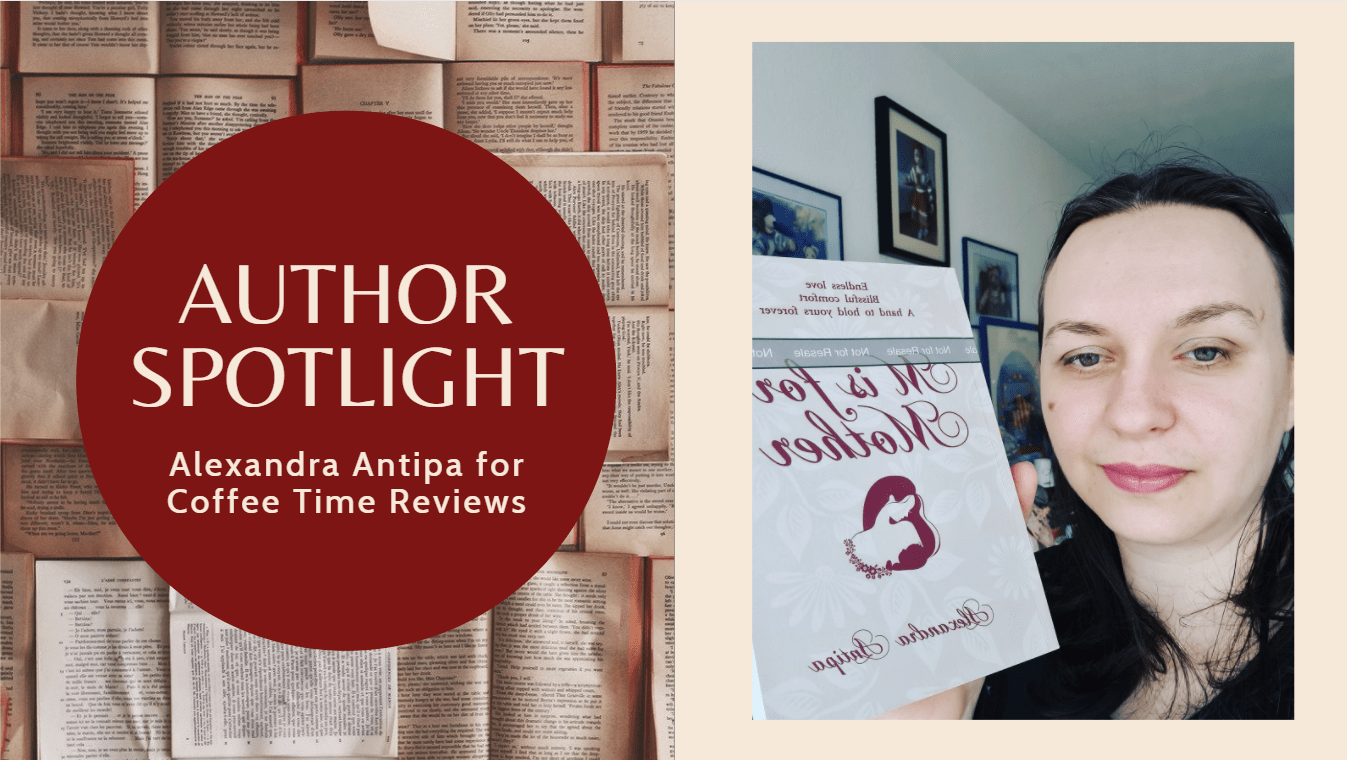
Author Spotlight: The Path That ‘Chose Me’

‘M is for Mother’ author Alexandra Antipa on her writing career, advice, and books she’d like you to read

For the newest article of the ‘Author Spotlight’ series, exclusive to Coffee Time Reviews, I interviewed Alexandra Antipa, author, freelance writer, and translator, whose memoir, M is for Mother: My Journey Into Motherhood I reviewed recently and loved. You can read the review below.

A fellow Romanian now based in Germany, Alexandra is a born writer, who has “been putting words on paper ever since I can remember”. Alongside M is for Mother, she is the author of two more titles: Stories for the Heart: When Memories Become a Treasure — a book exploring coming to terms with grief and finding solace in your memories of a lost person you loved — and the children’s title The LittleBig Detectives: Lorelai and Niami, the True Duo of Crime Solving. A bookworm, like all of us, Alexandra sees books as the main answer-holders to satisfy her curiosity. 

You may never see me on a rollercoaster but, rest assured, I get all the adrenaline I need from my ever-growing personal library. — Alexandra Antipa

I asked Alexandra 5 questions about her career, writing process, balancing being an author with family life, and what books she would recommend to our readers. Her answers did not disappoint, and, dare I say, my TBR list has increased since talking to Alexandra.


CTR: Why did you decide to become an author?

Alexandra: I did not necessarily choose to become an author, I think this road rather chose me. After my dad died, I started to write about him, as a way of dealing with my grief. I then realized that, in losing someone dear, we have the power to keep them alive, by talking about fond memories. I wrote my first book Stories for the Heart: When Memories Become a Treasure to remember all the treasured moments I spent with people I loved, who are sadly no longer alive. The author’s journey started from there, from a point of healing.

CTR: What is your favourite part of writing books?

Alexandra: The way an idea comes to life on the page, I am simply fascinated with how our brain works. I feel lucky, even privileged, to be able to take my thoughts and transform them into words, into books that people read. This is my favorite part, the actual birth of the story.

CTR: What advice would you give an aspiring author?

Alexandra: This might sound like a cliche, but you have to overcome the imposter syndrome. At the beginning of the writing journey, and even as you progress, you might often feel like you don’t belong, like this is not something you should be doing. After all, there are so many authors out there, and they seem to be doing a better job than you. In truth, we are all dealing with anxiety, fearing what others have to say. As an aspiring author, the only way to move is forward, don’t give up, and don’t give in to other people’s assumptions.

CTR: Do you have any tricks to balance writing and family life?

Alexandra: Honestly, this is the most challenging part of being a writer. I think the trick is to choose your moments, rather than wait for everything to be perfect. Yes, it is true you might feel inspired and want to write in that particular moment, but that is not always possible. This is why, whenever I get an idea, I jot it down and return to it later. If you let frustration get the better of you, you will end up in the wrong place, hating the road ahead and its challenges.

CTR: What are 3 books you would recommend to our readers and can you give a short reason why?

Alexandra: This is easy! The first would be The Forty Rules of Love by Elif Shafak because it contains some powerful life lessons and it refers to the teachings of Rumi, which are highly valuable to anyone looking to lead a healthy existence. 

Secondly, Inkheart by Cornelia Funke, a book about books, in which the characters come into the real world, showing how different they are from what we might have expected. 

And thirdly, Shantaram by David Gregory Roberts, because it is the kind of book which leaves you dumbfounded, a book that is written in such a natural style, it feels like the author is standing right next to you.


It’s a beautiful thing to be chosen by the career path you get to follow, instead of you choosing it. Alexandra Antipa’s journey into authorship was one driven by emotion and finding refuge in writing, and that aspect of her shines through her books. Writers are inherently avid readers, and Alexandra’s book recommendations do not fail to prove it. Much like her, I’m also not a real-life daredevil, but finding intense emotions in books and living life to the fullest through stories is one of several things I found to have in common with her. I’m curious to see her flourishing as an author even more.


Thank you for reading Author Spotlight, a series of interviews with authors who are happy to share the tools of the trade with our CTR readers. If you’re an author and would like to be featured, get in touch at ctreviewspub@gmail.com. For any author suggestions, leave us a comment and we’ll try to chase them up. And if you’d like to support our independent publication, please consider doing so through our Donations page.